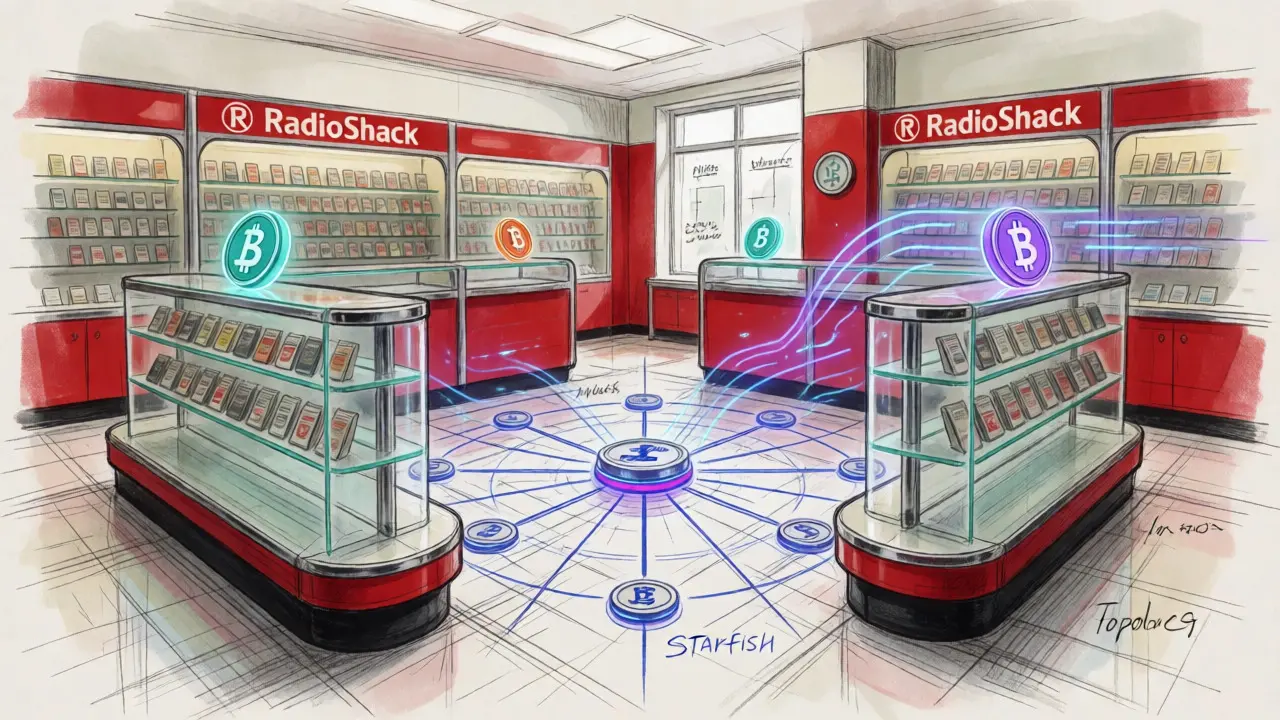
You probably remember RadioShack as that place where you’d buy batteries or a soldering iron. Maybe it was your go-to spot for obscure electronic components before Amazon took over. But what if I told you this historic brand is now trying to trade in cash registers for blockchain ledgers? That’s right, RadioShack has relaunched itself as a cryptocurrency swap platform on the Binance Smart Chain (BSC). The question isn’t whether they can sell electronics anymore; it’s whether their new digital venture, RadioShack Swap, offers anything real to traders in a market flooded with thousands of exchanges.
This review cuts through the nostalgia and looks at the hard numbers. We’re talking about liquidity, fee structures, token performance, and whether this "Starfish Topology" architecture actually solves any problems for you, the trader. If you are looking for the next big thing, you might be disappointed. But if you are curious about how legacy brands pivot into Web3, there is plenty here to dissect.
The Big Picture: What Is RadioShack Swap?
At its core, RadioShack Swap is a decentralized exchange (DEX). Unlike centralized platforms like Coinbase or Binance, you don’t deposit funds into a company vault. Instead, you connect your wallet directly to smart contracts to trade tokens peer-to-peer via an Automated Market Maker (AMM). The platform launched around early 2022, positioning itself as a supplement to their existing online store, which still sells retro-branded apparel and tech gadgets.
The team behind this relaunch recognized a specific pain point in the DeFi world: liquidity fragmentation. In standard AMMs, liquidity is scattered across many small pools. This leads to high slippage (the difference between the expected price and the executed price) when you make large trades. RadioShack claims to fix this with something called "The Starfish Topology." Think of it like a hub-and-spoke model. Instead of every token pair having its own isolated pool, they route everything through a central node-the RADIO token. This theoretically concentrates liquidity, making trades smoother and cheaper.
Technical Deep Dive: The Starfish Topology
Let’s break down that fancy term without getting bogged down in code. Most DEXs use a simple pairing system: Token A pairs with Token B. If you want to trade Token C for Token D, but there is no direct pool, you have to hop through a third token, paying fees twice. This is messy and expensive.
The Starfish Topology creates a single large-degree node-the RADIO node-that pairs with all swappable token pairs. By routing trades through this central hub, the platform reduces the complexity of the token graph. It’s similar to how major airlines use hubs like Atlanta or Dubai. You might not fly directly from your city to your destination, but by flying through the hub, the airline ensures planes are full, seats are available, and prices stay competitive. For traders, this means potentially lower slippage on less popular coins.
However, relying on a single central node introduces a risk. If the RADIO token loses value or liquidity dries up, the entire topology could struggle. It’s a clever design, but it puts all your eggs in one basket.
The RADIO Token: Multi-Chain Reality
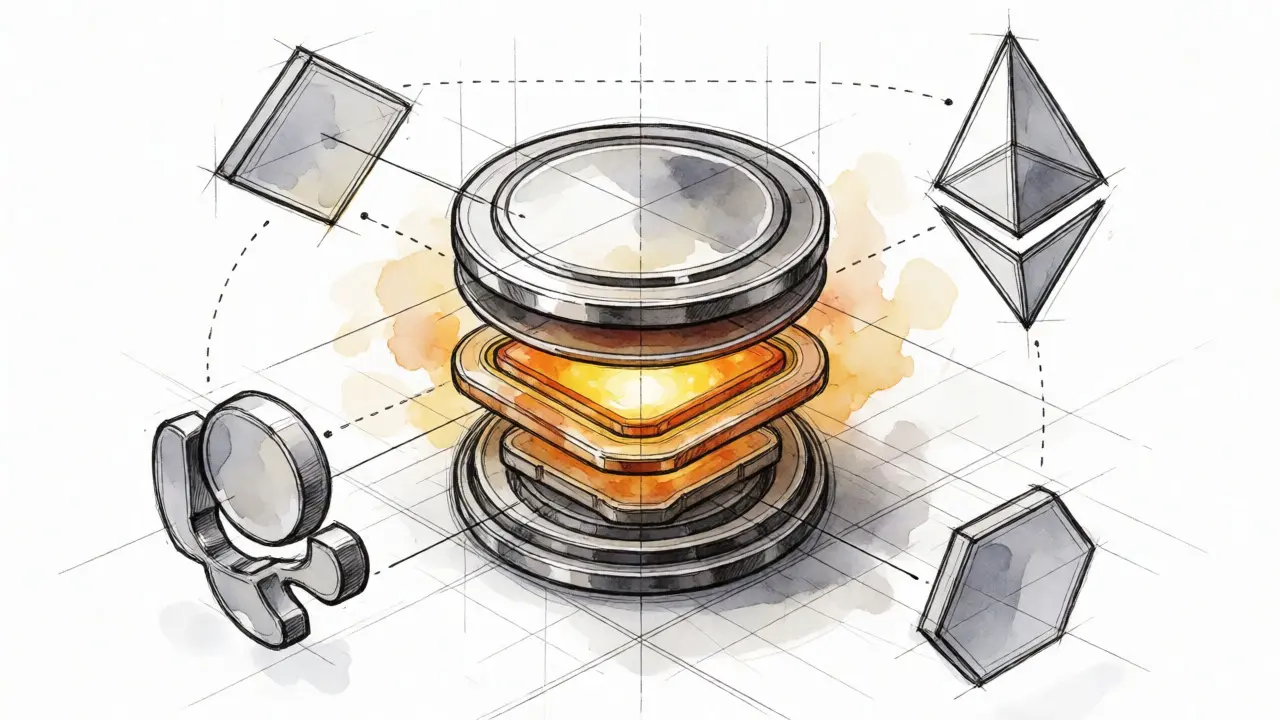
The native asset driving this ecosystem is the RADIO token. It operates across multiple blockchains, including Binance Smart Chain (BSC), Polygon, Avalanche, and Ethereum. Why so many chains? Because accessibility equals volume. By being everywhere, they hope to capture users wherever they hang out.
But let’s look at the data, because that’s where the rubber meets the road. As of recent metrics, the RADIO token ranks around #4993 on CoinMarketCap. That’s deep in the weeds of the crypto market. The price hovers near $0.0002388 USD, with daily trading volumes often dipping below $2,000. Yes, you read that right. Two thousand dollars. Compare that to the hundreds of millions moving through Uniswap or PancakeSwap daily, and you see the scale difference immediately.
On the Binance Smart Chain specifically, the RADIO/WBNB pair accounts for nearly half of the total trading volume. Other pairs like RADIO/BUILD and RADIO/BUSD exist but see minimal activity. This concentration suggests that while the multi-chain strategy is ambitious, actual user engagement remains tightly focused on BSC.
| Metric | Value / Status | Context |
|---|---|---|
| Platform Type | Decentralized Exchange (DEX) | Non-custodial, smart contract-based |
| Primary Chain | Binance Smart Chain (BSC) | Highest volume concentration |
| Native Token | RADIO | Used for governance and liquidity rewards |
| Avg Daily Volume (Launch) | $500k - $2M | Reported in early 2022 reports |
| Cumulative Volume (May 2022) | ~$40 Million | Over first few months of operation |
| Unique Traders | ~10,000 | Active users utilizing swaps |
| Current Token Rank | #4993 (CoinMarketCap) | Indicates low market cap and niche status |
Fees and Trading Experience
Why would anyone trade here instead of PancakeSwap, the giant on BSC? The main selling point is cost. RadioShack advertises lower swap fees compared to competing platforms. In the DEX world, fees usually sit around 0.2% to 0.3%. If RadioShack can consistently offer rates closer to 0.1% or lower, that’s attractive for high-frequency traders or those swapping large amounts.
The interface mirrors most standard DEXs. You connect MetaMask or Trust Wallet, select your input and output tokens, set slippage tolerance, and confirm the transaction. There’s no KYC (Know Your Customer) process, meaning you don’t need to upload your passport. This anonymity is a double-edged sword: great for privacy, bad if you lose your private keys or fall for a scam.
User experience reviews from forums suggest the platform is functional but sparse. It lacks the advanced charting tools, margin trading features, or extensive educational content found on larger exchanges. It’s a bare-bones swap tool. If you just need to convert Token X to Token Y quickly and cheaply, it works. If you want to analyze candlesticks or set complex limit orders, you’ll be frustrated.
Nostalgia vs. Utility: Does the Brand Matter?
Here is the elephant in the room: Does the name "RadioShack" help or hurt? On one hand, brand recognition is powerful. People trust the name more than some random token called "MoonRocketInu." This trust can drive initial traffic. Marketing campaigns leveraging retro aesthetics appeal to millennials who grew up browsing RadioShack aisles.
On the other hand, the association with a failed retail chain can raise eyebrows among serious DeFi investors. Crypto natives often view traditional companies entering Web3 with skepticism, fearing they lack technical expertise. The fact that RadioShack Swap coexists with branded t-shirts and headphones might signal to some that this is a side project rather than a core financial product.
Furthermore, the reliance on nostalgia doesn’t guarantee long-term sustainability. Once the novelty wears off, traders will leave if the liquidity and incentives aren’t better than competitors. Currently, the incentives seem modest. Without massive yield farming opportunities or exclusive partnerships, retaining users requires constant innovation.
Security and Risks
Security is paramount in DeFi. While RadioShack Swap uses established smart contract standards, smaller DEXs are frequent targets for exploits. Comprehensive public audit reports for the specific RadioShack Swap contracts are harder to find compared to industry giants. Always check for recent audits before connecting your wallet with significant funds.
The primary risks include:
- Smart Contract Bugs: Even audited code can have vulnerabilities. Smaller teams may have fewer resources for continuous security monitoring.
- Liquidity Risks: With lower overall volume, large trades can move the price significantly against you.
- Token Volatility: The RADIO token itself is highly volatile. If you hold it for staking rewards, a price crash can wipe out gains faster than interest accrues.
- Regulatory Uncertainty: As a US-associated brand operating globally, regulatory shifts could impact operations differently than fully offshore protocols.
Who Should Use RadioShack Swap?
So, should you put your money here? Let’s segment the audience.
For Nostalgic Collectors: If you love the brand and want to support the revival, buying some RADIO tokens or using the swap occasionally is a fun way to engage. It’s a hobbyist approach.
For Fee-Sensitive Traders: If you are actively trading BSC tokens and notice RadioShack offers consistently lower fees for specific pairs, it’s worth testing. Run a simulation comparing costs against PancakeSwap before committing.
For Serious Investors: Probably not. The low trading volume and limited feature set make it risky for large capital deployment. Liquidity providers face impermanent loss risks without guaranteed high yields. Stick to larger, more liquid exchanges for core portfolio management.
Final Verdict
RadioShack Swap is an interesting experiment in brand revival within the crypto space. The "Starfish Topology" is a legitimate attempt to solve liquidity issues, and the low fees are appealing. However, the platform struggles with the classic startup problem: chicken and egg. Low volume discourages liquidity providers, which keeps volume low. Until they can attract substantial trading activity beyond the initial hype, it remains a niche player.
If you are already in the BSC ecosystem and want to try something different, give it a shot with small amounts. Keep your expectations realistic. This isn’t going to replace Binance or Coinbase anytime soon, but it adds diversity to the decentralized landscape. Just remember: in crypto, always do your own research, especially when dealing with tokens ranked below #5000.
Is RadioShack Swap safe to use?
Like most decentralized exchanges, safety depends on smart contract integrity and user behavior. While the platform uses standard DeFi protocols, it is advisable to check for recent security audits. Start with small transactions to test reliability before moving significant funds.
What wallets are supported by RadioShack Swap?
Since it primarily operates on the Binance Smart Chain (BSC), it supports wallets compatible with EVM (Ethereum Virtual Machine) networks. This includes MetaMask, Trust Wallet, and Binance Wallet. Ensure your wallet is configured for the BSC network to avoid transaction errors.
How does the Starfish Topology benefit traders?
It aims to reduce slippage and improve trade execution speed by routing various token pairs through a central liquidity node (RADIO). This concentrates liquidity, theoretically offering better prices for trades involving less popular tokens compared to fragmented AMM models.
Can I earn passive income on RadioShack Swap?
Yes, typically through providing liquidity. Users can deposit token pairs into liquidity pools and earn a portion of the trading fees. Some platforms also offer staking rewards for holding the native RADIO token, though rates vary based on market conditions and protocol updates.
Is RadioShack Swap connected to the old retail stores?
It is part of the broader RadioShack brand revival efforts, which include online sales of electronics and apparel. While it leverages the brand name for marketing, the crypto exchange operates as a separate digital entity focused on decentralized finance services.