
When you buy an NFT, you’re not just buying a digital image. You’re buying into a system where the original creator might keep earning every time that NFT changes hands. That’s the promise of NFT royalties. But here’s the catch: just because a royalty is set doesn’t mean it’s paid. Across major NFT marketplaces, the rules are messy, inconsistent, and sometimes ignored entirely.
How NFT Royalties Actually Work (The Tech Behind It)
NFT royalties aren’t built into the blockchain itself. They’re a rule written into the smart contract that created the NFT. The standard that makes this possible is called ERC-2981 a technical standard for NFT royalty payments that defines how marketplaces should query royalty information for any NFT sale. Introduced in 2020, it became the default way creators set royalties by 2024.Here’s how it works in practice: when you mint an NFT, you specify two things - who gets paid (a wallet address) and how much (in basis points). One basis point equals 0.01%. So if you set 500 basis points, that’s 5% of every resale. This number is stored on-chain, meaning it’s public and unchangeable unless you built in a way to update it.
What’s powerful about ERC-2981 is that it works across all major NFT standards. Whether your NFT is a single image (ERC-721) or a bundle of items like game skins (ERC-1155), the royalty system stays the same. It also doesn’t care if the NFT is on Ethereum, Polygon, or Arbitrum. The data is there, ready for any marketplace to read.
But here’s the key point: ERC-2981 doesn’t enforce payment. It only tells the marketplace what the creator asked for. It’s like leaving a note on your door saying, “Please leave $5 in the jar.” The person walking by can choose to ignore it. That’s where the real problem begins.
Marketplaces Are Split - Some Pay, Some Don’t
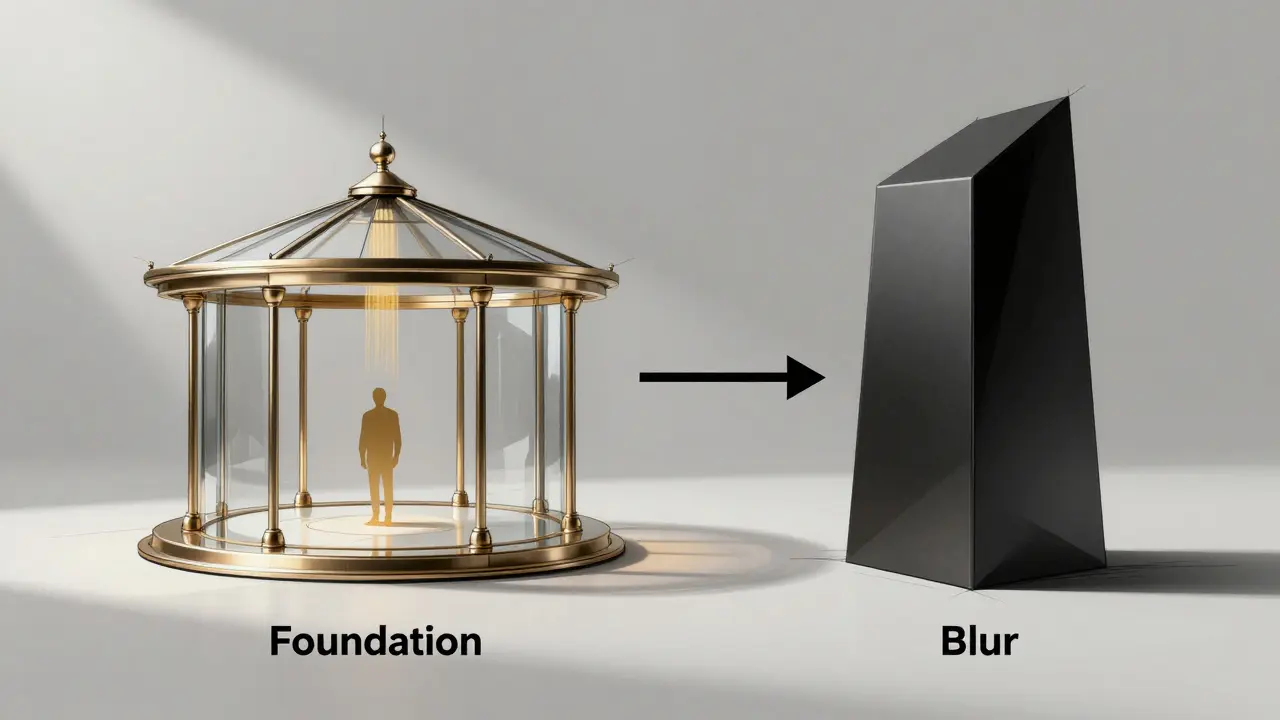
In 2025, the NFT marketplace landscape is divided into two camps: those that honor creator royalties and those that don’t.Platforms like Foundation an NFT marketplace that requires all sales to honor creator-set royalties and Manifold a platform that supports customizable royalty structures and enforces them by default make royalty payments mandatory. If you sell an NFT on Foundation, 5% of the sale goes straight to the original artist. No exceptions.
Then there’s Blur a high-volume NFT marketplace that allows buyers to opt out of paying royalties, prioritizing trader experience over creator compensation. In late 2023, Blur let collectors skip royalty payments entirely. Within months, nearly 40% of all NFT trading volume shifted to platforms like Blur and LooksRare a marketplace that offers zero-royalty trading as a core feature. Why? Because traders wanted to buy and sell without paying extra fees. It made sense from a volume perspective - but not for creators.
Result? Creators saw their income drop. A digital artist who once made $2,000 a month from secondary sales on OpenSea might now make $300 if their work gets listed on a royalty-free platform. That’s not a glitch - it’s a business model.
Why This Matters Beyond Just Money
NFT royalties aren’t just about cash. They’re about trust. When a creator puts months of work into a collection, they’re banking on the idea that their art will keep paying them. That’s what drew musicians, photographers, and illustrators to NFTs in the first place - a chance to earn like traditional artists who get residuals from album sales or prints.When marketplaces ignore royalties, they break that promise. And creators notice. In 2024, several high-profile artists blacklisted Blur and LooksRare entirely. Some even released new collections only on platforms that guaranteed royalty payments. It became a brand decision - not just a technical one.
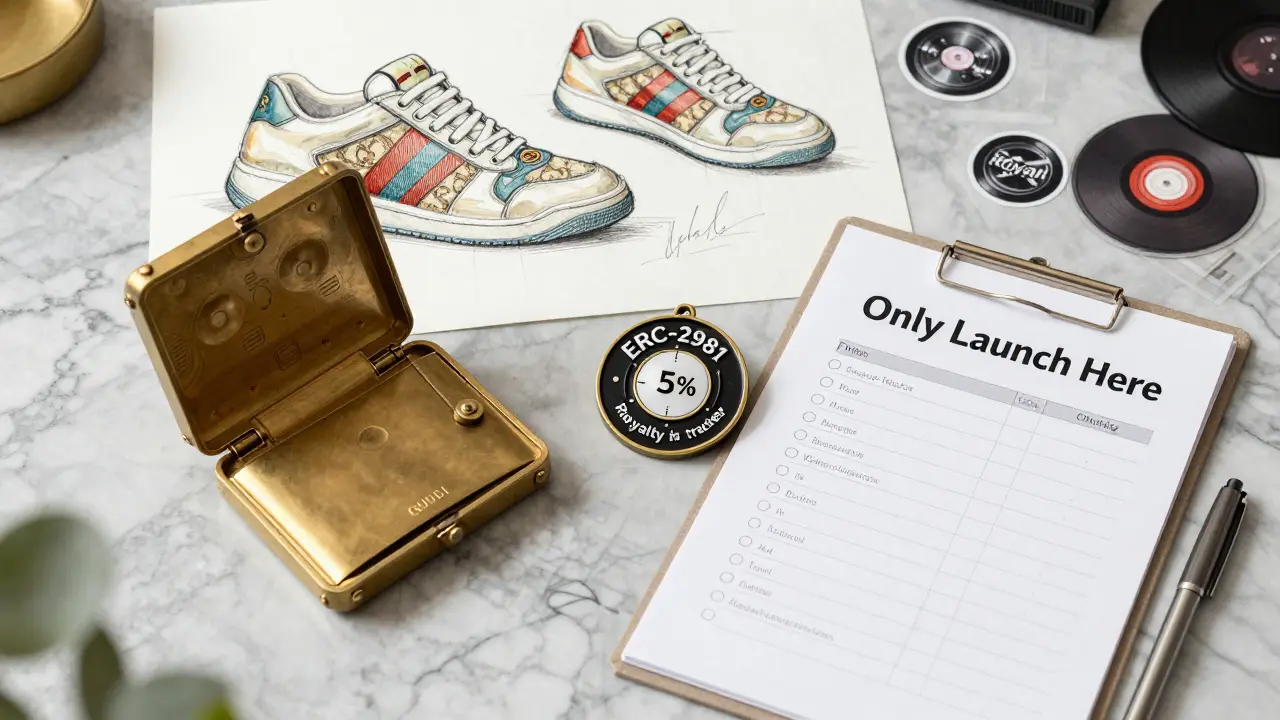
Even big companies are paying attention. Luxury brands like Gucci a fashion brand that uses NFTs as digital twins of physical products with 5% perpetual royalties on secondary sales use NFTs to track authenticity and earn ongoing revenue. Their digital sneakers come with a 5% royalty on every resale - generating over $18 million in 2024 from secondary sales alone. For them, royalties aren’t optional. They’re part of the product.
Regulators Are Starting to Step In
Governments are watching. In June 2024, the European Union’s MiCA a comprehensive regulatory framework for crypto-assets that requires transparency in fees but does not mandate NFT royalties came into effect. It forced crypto platforms to be clear about fees - but didn’t say anything about royalties. That left the door open.By March 2025, the European Securities and Markets Authority (ESMA) announced it would start looking at NFT royalties specifically. Meanwhile, the UK’s Financial Conduct Authority (FCA) a financial regulator that is exploring how intellectual property laws apply to NFTs and secondary sales issued a consultation paper in October 2024 asking whether royalty non-payment should be treated as a breach of creator rights.
This isn’t about banning royalty-free marketplaces. It’s about fairness. If a digital artwork is protected by copyright law, why shouldn’t the creator get paid when it’s resold? The FCA’s stance suggests we’re moving toward treating NFTs more like physical art - where resale royalties are standard in many countries.
What’s Being Done to Fix This?
The industry knows the current system is broken. So people are building fixes.One idea is the NFT Royalty Protocol a decentralized registry allowing creators to set and update royalty preferences across multiple marketplaces. Think of it like a global directory of royalty rules. If you change your royalty on this registry, every compliant marketplace updates automatically. No more juggling 10 different platforms.
Another approach is the royalty-aware order book. Instead of letting buyers bid blindly, the system shows them the royalty amount upfront. If they don’t want to pay it, they can’t bid. It turns royalties into a market condition - not a suggestion.
On the technical side, developers are using OpenZeppelin a security-focused library for Ethereum smart contracts that provides audited ERC-2981 implementations to build safer royalty contracts. After a $2.3 million theft in August 2024 - where hackers changed royalty receivers in poorly secured contracts - the industry started requiring multi-signature approvals and time delays for any royalty changes.
What Should Creators Do Now?
If you’re a creator, here’s your action plan:- Use ERC-2981. Always. If your NFT contract doesn’t support it, it’s not future-proof.
- Set your royalty between 2.5% and 10%. Anything higher scares off buyers. Anything lower doesn’t pay the bills.
- Only launch on marketplaces that enforce royalties. Check their terms. Don’t assume.
- Use a multisig wallet for your royalty payouts. Don’t send royalties to a single private key - it’s too risky.
- Track where your NFTs are being sold. If you see them on Blur or LooksRare, consider a public statement. Your community will notice.
And if you’re building a marketplace? Don’t treat royalties as optional. They’re your differentiator. In Q1 2025, 68% of all high-value NFT sales (over 1 ETH) happened on platforms that honored royalties. Buyers who care about creators are voting with their wallets.
The Future Is Standardized - But Not Yet
By 2026, Gartner predicts 75% of enterprise NFT projects will include royalties. Music platforms like Royal a music-focused NFT platform that distributes streaming-style royalties from secondary sales to artists are proving it works. Artists are getting paid every time their song NFT changes hands - just like a radio play.The path forward isn’t about forcing everyone to pay. It’s about making it easy, transparent, and fair. ERC-2981 gave us the tool. Now we need the will.
Right now, the choice is yours: support creators by buying on platforms that pay royalties - or ignore them and fuel a system where art becomes a one-time cash grab. The technology is ready. The question is, who do you want to win?
Do NFT royalties still work if the marketplace doesn’t support them?
No. ERC-2981 only tells a marketplace what the royalty should be. If the platform chooses not to pay it - like Blur or LooksRare - the creator gets nothing. The smart contract can’t force payment. It’s up to the marketplace to honor it.
Can I change my NFT royalty after it’s minted?
Only if you built that ability into the contract. Most standard ERC-2981 contracts lock the royalty permanently. Some advanced contracts allow updates via multisig or time-locked governance, but that’s not the norm. If you want flexibility, plan for it before minting.
Why do some NFTs have 10% royalties and others only 5%?
It’s up to the creator. Higher royalties (8-10%) are common for small, high-value collections where the artist expects fewer sales. Lower ones (2.5-5%) are used for larger collections aiming for volume. Anything above 10% often discourages buyers, while anything below 2% rarely covers costs.
Are NFT royalties legal?
Legally, they’re untested. No court has ruled on whether a royalty set on-chain is enforceable like a traditional copyright royalty. But regulators in the UK and EU are now asking that exact question. It’s likely we’ll see laws in the next 2-3 years that give creators clearer rights.
Do I need to pay royalties if I buy an NFT on a royalty-free platform?
No - but you’re not supporting the creator. If you value the art and want to see more of it made, pay on platforms that honor royalties. If you’re just trading for profit, royalty-free platforms make sense - but you’re part of the problem if creators stop making NFTs because they can’t earn from them.
Can I get royalties from NFTs on Solana or other blockchains?
Yes - but the system isn’t standardized. Solana uses its own royalty mechanism, which is less reliable than ERC-2981. Many Solana marketplaces don’t enforce royalties at all. Ethereum-based NFTs with ERC-2981 are still the most trustworthy for creators.


Mandy McDonald Hodge
29 December, 2025 . 13:07 PM
just bought my first nft last week and had no idea royalties could be ignored lol. now i feel kinda guilty. gonna stick to foundation from now on.
Adam Hull
29 December, 2025 . 21:43 PM
The entire premise of NFT royalties is a capitalist fantasy dressed up as artist empowerment. ERC-2981 is a glorified suggestion box. You think a blockchain contract can override market dynamics? That’s like expecting a restaurant to honor a napkin scribble that says ‘tip 30%.’ The market doesn’t care about your moral high ground-it cares about liquidity, volume, and arbitrage. If you’re shocked that traders flee from fees, you’ve never traded anything in your life.
Jordan Fowles
30 December, 2025 . 15:28 PM
It’s funny how we talk about royalties like they’re a right, not a courtesy. The blockchain doesn’t enforce payment, and that’s intentional. It’s designed to be permissionless. If you want to force payment, you’re not building an open system-you’re building a walled garden with a velvet rope. The real question isn’t whether marketplaces should pay royalties-it’s whether creators should expect to be paid for something that was never legally binding in the first place.
Andrew Prince
1 January, 2026 . 06:18 AM
Let us not mince words: the erosion of creator royalties is not an accident, nor is it a market correction-it is the inevitable consequence of a speculative asset class that has devolved into a high-frequency trading arena populated by algorithmic bots and degens who view art as a liability. The fact that Blur and LooksRare have become dominant platforms speaks not to innovation, but to moral bankruptcy disguised as user experience. When the primary metric of success becomes transaction volume over cultural value, we are no longer discussing digital art-we are discussing the commodification of aesthetic labor in the service of financial engineering. The EU’s regulatory hesitation is not negligence-it is the result of an incomplete legal framework that has yet to reconcile intellectual property with cryptographic provenance. Until courts recognize on-chain royalty metadata as a binding contractual term under copyright law, we are merely rearranging deck chairs on the Titanic of digital culture.
Jackson Storm
1 January, 2026 . 14:30 PM
if you're a creator, set your royalty at 5% and only list on foundation or objkt. period. no excuses. i've seen too many artists get burned thinking 'it'll be fine on opensea'-it won't. check where your nfts are trading. if you see them on blur, call it out. your community will back you.
Bruce Morrison
2 January, 2026 . 04:43 AM
Creators need to stop hoping marketplaces will do the right thing. Build your own marketplace. Use multisig wallets. Track every sale. The tools are there. It’s not hard-it just takes discipline. And if you’re buying, pay the royalty. It’s not a tax. It’s a thank you.
Raja Oleholeh
2 January, 2026 . 21:02 PM
india has no nft royalty laws yet. but we have 1.4 billion people who respect hard work. if you create, you deserve to be paid. no debate.
Alison Hall
4 January, 2026 . 15:55 PM
just realized my last piece sold 3x on blur. i’m re-listing everything on foundation this week. thanks for the wake-up call.
Mike Reynolds
5 January, 2026 . 14:58 PM
the whole thing feels like watching someone hand you a gift and then asking for a cut every time you show it to a friend. weird, right? but if you care about the person who gave it to you, you leave the tip.
christopher charles
5 January, 2026 . 23:59 PM
why is this even a debate?! if you buy a painting at a gallery and resell it, the artist gets paid. why should digital be different? it’s the same damn thing. just pixels vs. canvas.
dayna prest
6 January, 2026 . 02:57 AM
blur is the crypto equivalent of a greasy spoon that serves you a burger with no meat-still costs the same, but you know you got screwed. and somehow, everyone’s lining up for seconds.
Steve Williams
7 January, 2026 . 00:23 AM
as someone from Nigeria, I see creators here building entire livelihoods on NFTs. Royalties aren’t a luxury-they’re survival. When platforms ignore them, they’re not just ignoring a fee-they’re ignoring a family’s meal, a child’s school fee, a dream deferred. This isn’t about finance. It’s about dignity.
Amy Garrett
7 January, 2026 . 23:55 PM
my first nft sold for 1 eth and i got $0 from the resale… i cried. now i only mint on foundation. no more games.
Haritha Kusal
8 January, 2026 . 22:30 PM
if you buy an nft on blur you're not a collector you're just a speculator. and that's okay… but don't act like you care about art.
Vernon Hughes
9 January, 2026 . 14:31 PM
the real tragedy isn’t that royalties are ignored-it’s that we’ve normalized it. We’ve turned creator compensation into a bargaining chip. That’s not innovation. That’s erosion. And it’s happening quietly, one zero-fee trade at a time.