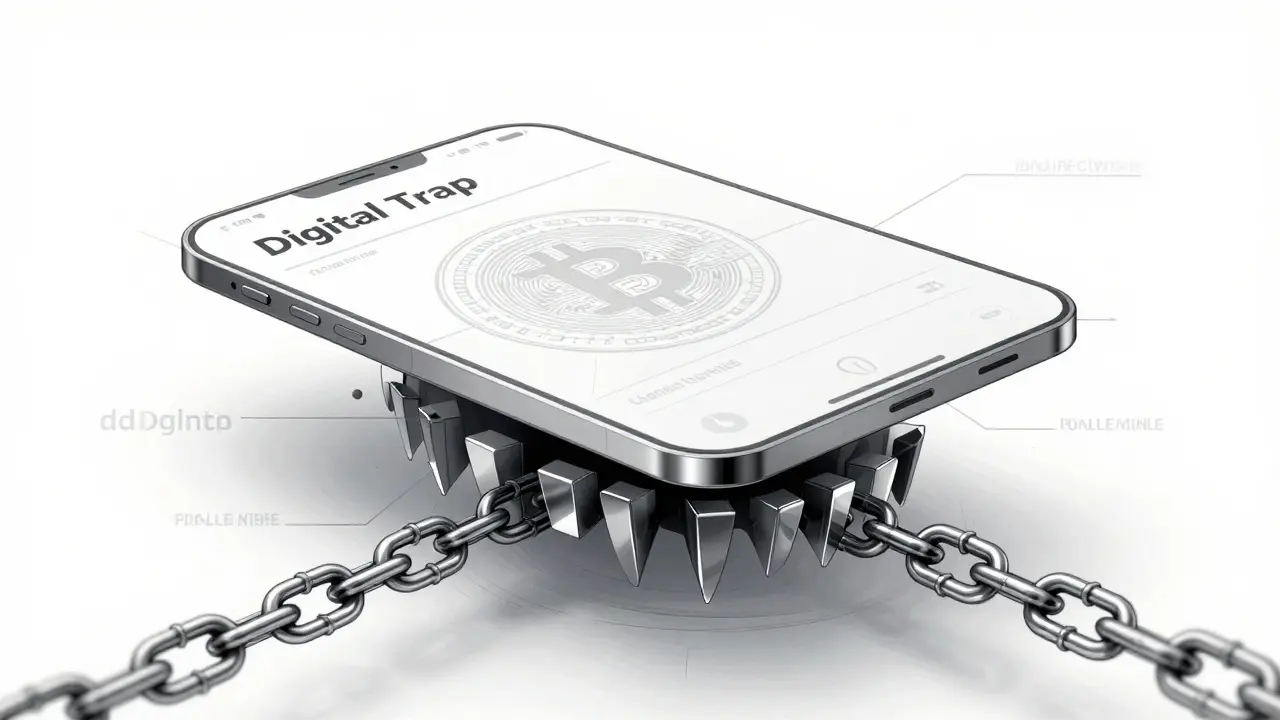
The Red Flags: Where is the Data?
When you evaluate a trading platform, the first thing you look for is a track record. For established giants, this is easy. You can check their volume on CoinMarketCap or read thousands of verified reviews on Trustpilot. With Hswap, we hit a wall. There is a startling lack of public documentation, audited security reports, or transparent company history available from primary industry sources.
In the crypto space, transparency isn't a luxury-it's a survival requirement. A legitimate exchange usually publishes its Proof of Reserves a verifiable way for exchanges to prove they hold the assets they claim to have for their users. If a platform refuses to show where the money is or who is running the show, you're essentially handing your keys to a stranger in a dark alley. This lack of visibility is a massive red flag for anyone who isn't gambling with their funds.
How Hswap Compares to Industry Standards
To understand where Hswap stands, we have to look at what actually works in 2026. Most users today prefer either the heavy security of a Centralized Exchange (CEX) or the total control of a Decentralized Exchange (DEX). Let's look at how a typical, transparent platform operates compared to the vague promises often seen with newer, unverified swaps.
| Feature | Established DEX (e.g., Uniswap) | Hswap (Observed/Reported) |
|---|---|---|
| Source Code | Open Source/Audited | Closed/Unknown |
| Liquidity Source | Automated Market Makers | Unclear |
| User Reviews | Millions of verified users | Very few/Unverified |
| KYC Process | None (Non-custodial) | Vague/Inconsistent |
The Mechanics of a 'Swap' Platform
Before you risk any funds, you need to understand what you're actually using. A Decentralized Exchange a peer-to-peer marketplace where transactions occur directly between crypto traders without an intermediary (DEX) uses DEXs smart contracts to handle trades. This means the platform never actually "touches" your money; the code just swaps one token for another in your own wallet.
If Hswap claims to be a DEX but asks you to deposit your funds into their wallet first, they are lying. That is a custodial service, and if the company disappears tomorrow, your money goes with them. Real swaps happen in your Web3 Wallet a digital wallet that allows users to interact with decentralized applications and store private keys (like MetaMask or Phantom), where you maintain control over your private keys. If you see a "Deposit to Earn" or "Wallet Sync" request that feels off, stop immediately.
Common Pitfalls and 'Honey Pot' Scams
Many people searching for Hswap reviews might have encountered the platform through a social media ad or a "helpful" stranger in a Telegram group. This is a classic entry point for honey pot scams. Here is how it usually works: the platform looks professional, the prices look better than market rate, and your first small trade might even work. This builds trust.
Once you deposit a larger amount, the trap snaps shut. You'll try to withdraw your funds, but the platform will tell you that you need to pay a "tax," a "verification fee," or a "liquidity unlock fee" first. No matter how much you pay, you will never get your original deposit back. Legitimate exchanges subtract fees from the trade itself; they never ask for additional payments to release your funds.
Safe Alternatives for Swapping Crypto
If you're looking for a way to trade tokens without the risk of an unknown entity, there are plenty of proven options. Depending on your needs, you should look at platforms that have survived multiple market cycles and have billions in volume.
- For Maximum Control: Uniswap the largest decentralized exchange on the Ethereum blockchain is the gold standard for swapping ERC-20 tokens.
- For Cross-Chain Moves: If you need to move assets from Ethereum to Solana or Avalanche, Symbiosis a cross-chain liquidity protocol that allows for trustless asset transfers between different blockchains provides a more transparent alternative.
- For Beginners: If the technical side of DEXs scares you, sticking to Coinbase one of the world's largest and most regulated cryptocurrency exchanges or Kraken ensures that you have a legal entity to hold accountable.
Your Safety Checklist Before Swapping
Don't let the hype push you into a bad decision. Before you connect your wallet to any platform like Hswap, run through this mental checklist. If the answer to any of these is "No" or "I don't know," keep your money where it is.
- Is the project open source? Can I find their code on GitHub?
- Is there a third-party audit? Has a firm like CertiK or Quantstamp reviewed their smart contracts?
- Are the reviews organic? Do the reviews sound like a human wrote them, or are they generic "This platform is amazing!" comments from accounts created yesterday?
- Do I keep my keys? Does the platform require me to send my crypto to their address to trade?
- Is the volume real? Does the trading volume match the actual activity seen on the blockchain?
Is Hswap a legitimate crypto exchange?
Based on available industry data and security audits, there is no evidence to suggest Hswap is a recognized or verified exchange. The lack of transparency regarding its team, reserves, and technical infrastructure makes it a high-risk platform. Exercise extreme caution.
What should I do if I already deposited money into Hswap?
Attempt to withdraw your funds immediately. If the platform asks for a "withdrawal fee" or "tax" to be paid upfront, do not send more money. This is a common sign of a scam. Report the incident to your local cybercrime authority and flag the platform on community forums.
How can I tell if a swap platform is a scam?
Look for a few key signs: an absence of official documentation, promises of guaranteed high returns, requirements to pay fees to unlock your own money, and a lack of presence on reputable tracking sites like CoinGecko or CoinMarketCap.
Are decentralized exchanges safer than centralized ones?
They offer different types of safety. DEXs protect you from exchange bankruptcy because you hold your own keys. However, they expose you to smart contract bugs and "rug pulls" where the developer drains the liquidity pool. CEXs provide customer support and regulation but require you to trust them with your assets.
Where can I find a reliable list of crypto exchanges?
Use aggregated data sites like CoinMarketCap or CoinGecko. These platforms track real-time trading volume and provide links to official social media and website domains, helping you avoid phishing clones.

Rob Mitchell
13 April, 2026 . 22:40 PM
Stick to MetaMask and Uniswap if you want to stay safe.
Prasanna Shembekar
14 April, 2026 . 05:07 AM
omg this is literally a nightmare i almost used this site yesterday i can't believe how scary this is
Amanda Faust
15 April, 2026 . 23:08 PM
obviously it is a scam any platform that asks for a tax to withdraw is just a basic honey pot
Aaliyah BROTHERS
16 April, 2026 . 01:29 AM
Typical globalist trash trying to steal from hard-working citizens!!! These scams are probably run by a shadow cabal in a basement somewhere to destabilize our economy!!! Wake up people!!! The lack of transparency is just a smokescreen for the deep state's digital theft!!! Disgusting!!!
Tyler Webb
16 April, 2026 . 23:16 PM
It's really heartbreaking to see people lose their savings to things like this. Please be careful everyone 😔
Tracie and Matthew Hartley
18 April, 2026 . 08:07 AM
idk why ppl still use dexes anyway lol just go back to banks if u r that scared
James Bone
20 April, 2026 . 07:26 AM
The moral bankruptcy of the crypto space is just a reflection of our late-stage capitalist decay. We trade trust for algorithms and then act surprised when the algorithm is just a guy in Dubai with a stolen laptop. It's poetic, really, in a depressing sort of way.
Samson Selleck
20 April, 2026 . 20:45 PM
The lack of a verifiable Proof of Reserves is an elementary failure in risk management. Anyone engaging with a non-audited closed-source liquidity aggregator is essentially exhibiting a cognitive deficit regarding asymmetric risk. The systemic opacity here isn't just a red flag; it's a full-blown crimson banner of insolvency. If you don't understand the difference between a custodial wallet and a non-custodial smart contract, you simply don't deserve the returns you're chasing. It's a basic matter of architectural integrity and cryptographic transparency. Most retail traders are simply fodder for these sophisticated predatory schemes because they lack the intellectual rigor to perform a basic GitHub audit. The sheer incompetence is staggering. I find it almost amusing how people believe 'zero fees' are sustainable in a competitive market environment. Basic economics dictates that if you aren't paying for the product, you are the product. This is textbook arbitrage of human greed and ignorance. Absolutely pathetic.
Adam Auksel
21 April, 2026 . 10:45 AM
Great breakdown! 🚀 Always remember to double check the URLs before connecting your wallet! Stay safe out there everyone! 🛡️✨
Jessie Tayaban
22 April, 2026 . 20:48 PM
Omg yesss!! This is so importnat!! I almos fell for a similer thing last month and it was totaly terrifiying!! 😱
Terrance Hausmann
24 April, 2026 . 01:41 AM
I totally get why this looks tempting, but taking a step back to verify is always the right move. If you're feeling overwhelmed by the tech, just take it slow and use a platform with a long history of trust. It's better to earn slightly less through fees than to lose everything to a scam.
Omotola Balogun
26 April, 2026 . 00:42 AM
The technicality of a honey pot is quite simple, yet many fail to see it. Its laudable that this is highlighted, though the explination could be more rigorous regarding the smart contract interaction.
Kelly Cantrell
27 April, 2026 . 11:40 AM
This is exactly how they get us. They use these fake reviews to lure in patriots. It's a coordinated effort to drain our wealth into offshore accounts. I'm not saying it's a government plot, but it's definitely not a coincidence.
Alan Seiden
27 April, 2026 . 23:23 PM
Absolute rubbish. Why is this even a topic? Only an idiot would use a site with no reviews. Waste of space.
Chidinma Sandra okafor
28 April, 2026 . 03:11 AM
Oh wow, imagine actually believing that a 'zero fee' platform is real. Some people really love being lied to, don't they?
Akshay Gorad
29 April, 2026 . 05:36 AM
I appreciate the caution mentioned here. It is prudent to avoid any platform that lacks transparency.
Will Dixon
1 May, 2026 . 04:13 AM
just use a big one like binence it is way easier lol
Lauren Abrams
2 May, 2026 . 19:46 PM
Interesting read. I've noticed a lot of these pop-ups lately.
william manes
2 May, 2026 . 20:09 PM
Stop being sheep! 🐑 Use your brain or lose your cash! 💸
Rebecca Violette
3 May, 2026 . 01:45 AM
im so tired of all these scams it makes me wanna just delete everythin and go back to cash lol
Terrance Hausmann
3 May, 2026 . 07:57 AM
It's a learning curve for everyone, so don't be too hard on the newcomers. We all start somewhere and just need a bit of guidance to avoid the traps.