Imagine a community that collectively owns millions of dollars in digital assets but has no CEO, no CFO, and no bank account. This is the reality for Decentralized Autonomous Organizations (DAOs), where the treasury serves as the financial backbone, providing essential resources for operations, projects, and governance. Unlike traditional companies that funnel money through centralized banking systems overseen by a small team of executives, DAOs rely on blockchain technology and smart contracts to eliminate central authority over decision-making. If you are part of or starting a DAO, understanding how to manage this shared pool of funds is not just an accounting exercise-it is the difference between long-term survival and total collapse.
The Core Challenge of Decentralized Finance
Managing a DAO treasury is fundamentally different from running corporate finance. In a traditional business, a Chief Financial Officer signs checks and balances books behind closed doors. In a DAO, every transaction is publicly viewable on the blockchain, fostering transparency and accountability. This radical openness means that every move you make with the treasury is scrutinized by token holders and the wider community. The challenge lies in balancing this transparency with effective execution. You need to allocate budgets, pay contributors, and invest in growth without slowing down operations due to endless voting cycles or security fears.
The stakes are incredibly high. According to analysis by LimeChain published in October 2022, proper management of financial resources is crucial for ensuring sustainability, while poor treasury management can lead to the complete destruction of a DAO. Metana’s expert assessment reinforces this, noting that effective management rests on core principles that ensure responsible use of community funds. When a DAO fails to protect its assets or allocates them poorly, it doesn't just lose money; it loses trust. Once trust erodes, attracting new members or investors becomes nearly impossible, potentially jeopardizing the entire organization's future.
Security-First: Protecting the Digital Vault
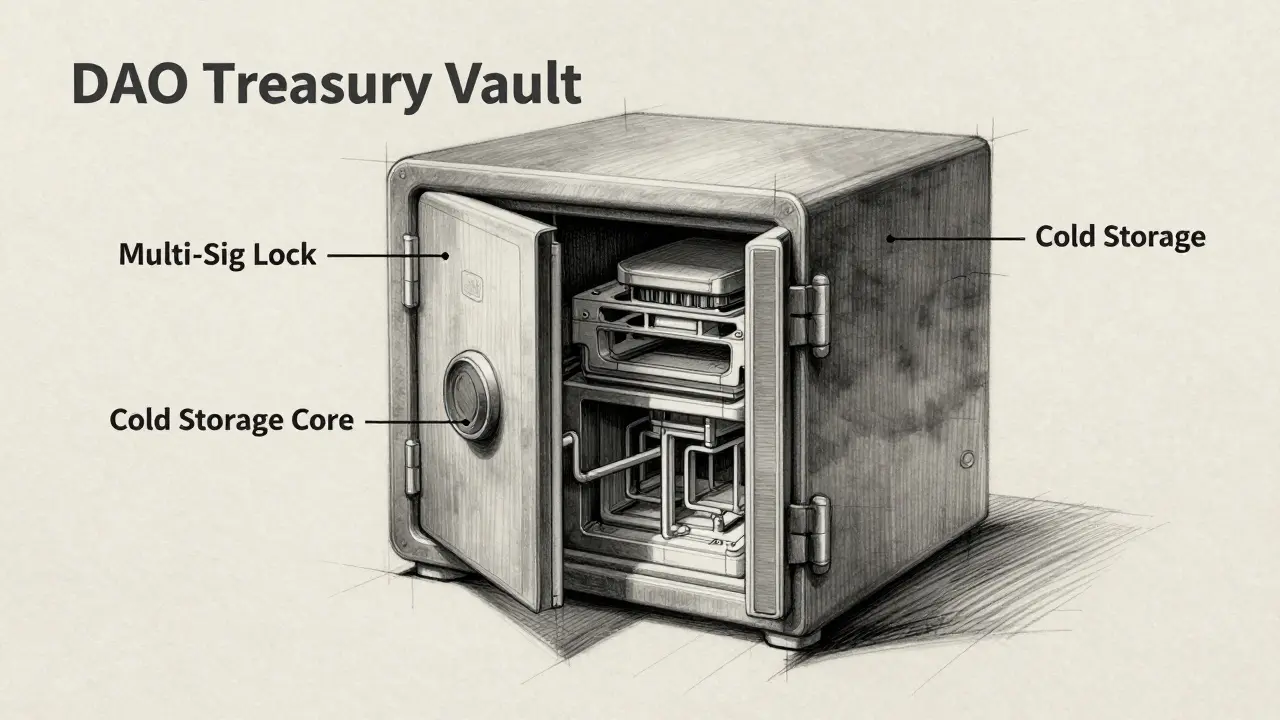
Before you think about investing or budgeting, you must secure the vault. The most common failure point for DAO treasuries is not bad market timing, but technical vulnerabilities or unauthorized access. A security-first approach is non-negotiable. The primary defense mechanism is the multi-signature wallet, which requires approval from multiple authorized members for transactions. This mitigates the risk of single points of failure. If one member's private key is compromised, the treasury remains safe because additional signatures are required to move funds.
However, multi-sig wallets are only as strong as the people managing them. You must implement robust security practices beyond just the wallet structure. This includes conducting regular smart contract audits to identify and address potential vulnerabilities that hackers could exploit. Additionally, implementing cold storage for a portion of holdings provides an extra layer of security by keeping assets offline, away from internet-connected threats. Frequent security assessments should become part of your routine, not an afterthought. Think of it like a physical bank: you wouldn't leave the vault door open during business hours. In the digital world, leaving keys exposed or skipping audits is equivalent to that negligence.
Governance and Collective Decision-Making
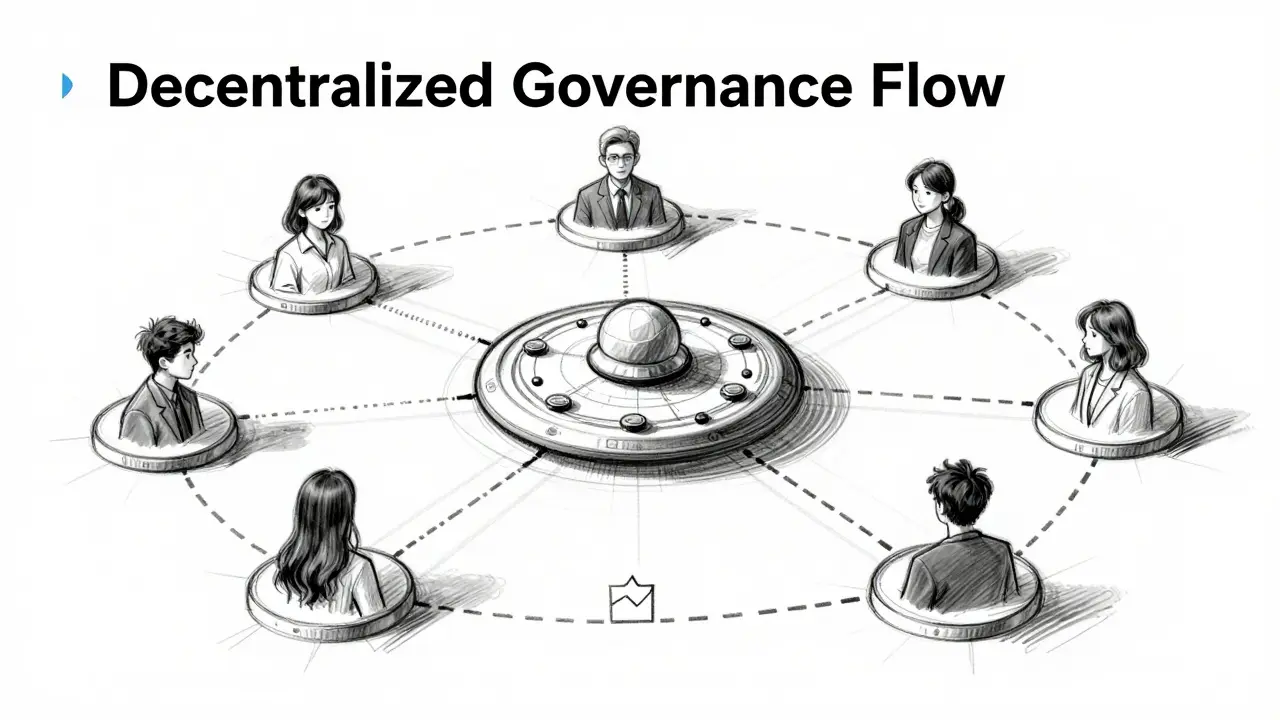
Security protects the assets, but governance determines their purpose. The heart of a DAO is its community, and treasury management must reflect collective will. Token holders have governance rights and actively participate in decision-making through various voting mechanisms. This process ensures that the strategic distribution of funds aligns with the DAO's objectives. For example, when allocating a budget for a new project, the proposal must be submitted, debated, and voted on by the community. This democratic approach prevents any single individual from misappropriating funds for personal gain.
Effective governance also requires clear processes for reporting. Regular, concise reports on the state of the treasury build trust and inform members about resource allocation. Coinmetro’s editorial team noted in May 2024 that adopting transparent treasury practices cultivates dependability among stakeholders, leading to a more engaged community. Without these reports, members may feel disconnected from the financial health of the organization, leading to apathy or suspicion. Transparency isn't just about showing numbers; it's about explaining the 'why' behind every major expenditure. Did you buy Bitcoin? Why? Did you hire a developer? What was the ROI? Answering these questions keeps the community aligned.
Risk Management and Diversification
Holding all treasury assets in a single cryptocurrency is a recipe for disaster. Market volatility in the crypto space is extreme, and a 50% drop in value can cripple a DAO's ability to operate. Effective treasury management prioritizes long-term sustainability over short-term gains through diversification. This involves spreading holdings across various asset classes, such as stablecoins, established cryptocurrencies like Bitcoin or Ethereum, and potentially traditional assets if legally permissible. Diversification mitigates risk and protects the treasury from market volatility.
Risk management frameworks must also account for protocol risk, technical risk, and regulatory changes. The blockchain landscape evolves rapidly. A DeFi protocol that seems secure today might have a hidden vulnerability tomorrow. Similarly, regulatory environments are shifting globally. Your treasury strategy must include continuous updates to remain aligned with current laws and technological standards. Ignoring these external factors can lead to frozen assets or legal liabilities. As 101 Blockchains emphasizes, though DAOs are promising entities, they are still in developmental stages and rely heavily on efficient treasury management to fuel longevity.
Performance Review and Continuous Improvement
A static treasury plan is a dead treasury plan. You must establish performance monitoring systems to track how well the treasury is meeting its goals. Are you generating revenue? Are you paying contributors fairly? Is the treasury growing or shrinking? Performance reviewing and reporting facilitate accountability through regular reviews against desired metrics. These reviews allow for adjustments in strategy to improve future performance.
This iterative process is vital because the context changes constantly. Changes in governance, regulations, market conditions, and technology require continuous updates in treasury management practices. For instance, if a new stablecoin emerges with better yield and lower risk, your treasury committee should evaluate switching allocations. If a new regulation restricts certain types of transactions, you must adapt your multi-sig setup or jurisdictional approach. Flexibility combined with rigorous oversight ensures that the DAO remains resilient against unprecedented events and bear markets.
| Feature | Traditional Organization | DAO Treasury |
|---|---|---|
| Authority | Centralized (CFO/Board) | Decentralized (Token Holders) |
| Transparency | Private/Internal Reports | Public Blockchain Ledger |
| Security | Bank Accounts/Insurance | Multi-Sig Wallets/Cold Storage |
| Decision Speed | Fast (Top-Down) | Slower (Consensus-Based) |
| Accountability | To Shareholders/Regulators | To Community Members |
Practical Steps for Implementation
If you are setting up or improving a DAO treasury, start with these actionable steps. First, define your multi-sig requirements. Decide how many signers are needed and who they are. Avoid having too few signers (risk of collusion) or too many (risk of gridlock). Second, choose your audit firms carefully. Use reputable third-party auditors for your smart contracts and wallet setups. Third, establish a clear budgeting cycle. Whether it's monthly or quarterly, set a timeframe for proposing and approving expenditures. Fourth, create a dashboard for real-time visibility. Tools that visualize treasury health help non-technical members understand the financial status. Finally, foster a culture of stewardship. Encourage active participation in treasury decisions, as shared ownership strengthens the DAO's foundation.
What is a DAO treasury?
A DAO treasury is the collective pool of assets managed by a decentralized autonomous organization. It holds funds raised through token sales, revenue generation, and investments, used to finance operations, pay contributors, and support the DAO's mission. Unlike traditional bank accounts, it is governed by smart contracts and community voting.
Why are multi-signature wallets important for DAOs?
Multi-signature wallets require multiple authorized members to approve transactions before funds can be moved. This eliminates single points of failure, preventing unauthorized access or theft if one member's private key is compromised. It is a fundamental security measure for protecting community-owned assets.
How does DAO treasury management differ from traditional finance?
Traditional finance relies on centralized authority, private records, and top-down decision-making. DAO treasury management is decentralized, with all transactions publicly visible on the blockchain. Decisions are made collectively by token holders through voting, ensuring higher transparency and community accountability.
What are the main risks associated with DAO treasuries?
Key risks include market volatility, smart contract vulnerabilities, regulatory changes, and governance attacks. Poor management can lead to significant financial losses, erosion of trust, and the potential collapse of the DAO. Mitigation strategies involve diversification, regular audits, and robust security protocols.
Can a DAO treasury hold traditional assets?
While primarily holding cryptocurrencies, some DAOs explore holding tokenized versions of traditional assets or stablecoins pegged to fiat currencies. However, this introduces complex regulatory and legal considerations that vary by jurisdiction. Most DAOs currently focus on digital assets for ease of on-chain management.
How often should a DAO review its treasury performance?
Regular reviews are essential, typically on a monthly or quarterly basis. These reviews assess performance against metrics, adjust strategies based on market conditions, and provide transparent reports to the community. Continuous improvement ensures the treasury remains sustainable and aligned with evolving goals.