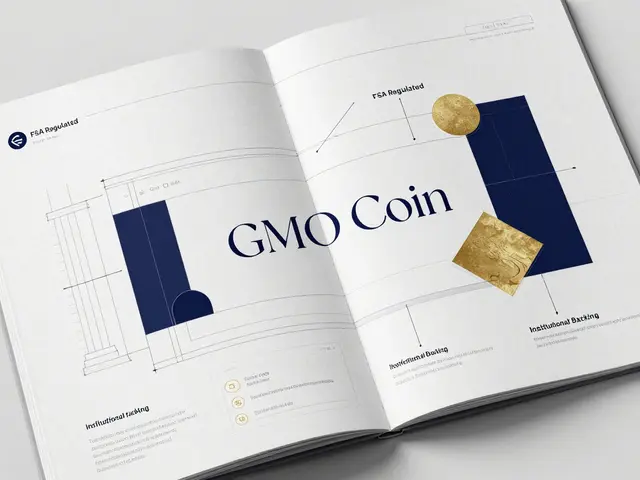
Most crypto reviews focus on global giants like Binance or Coinbase, but GMO Coin is a different beast entirely. If you are outside of Japan, this platform might not even be an option for you. But if you are in Tokyo or Osaka, it’s one of the biggest names in the game. Operated by GMO Internet Group, a company listed on the Tokyo Stock Exchange, GMO Coin carries a lot of institutional weight. It’s not just a random startup; it’s backed by a major Japanese financial player that also handles retail foreign exchange services. The big question is: does that pedigree translate into a good trading experience, or is it just a shiny wrapper around a limited platform?
Key Takeaways
- Japan-Centric: Primarily designed for Japanese residents with strict KYC requirements and Japanese-language support.
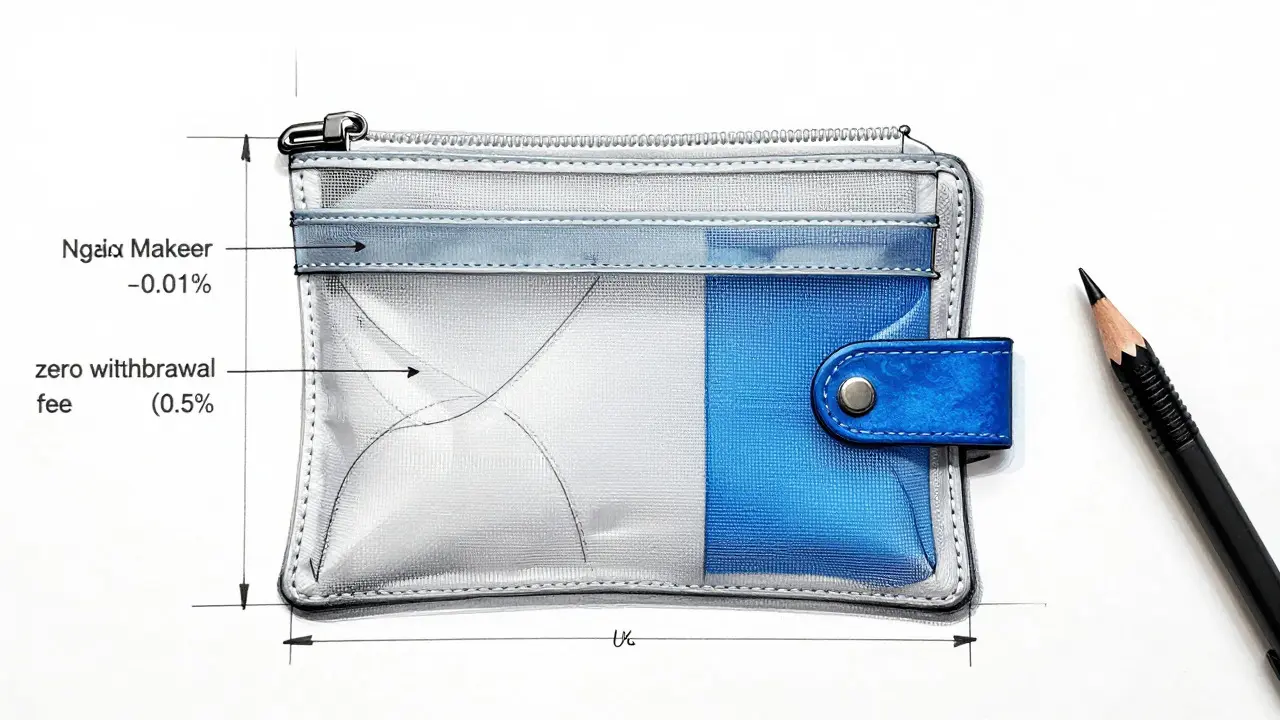
- Fee Structure: Offers a rare negative maker fee (-0.01%) and no withdrawal processing fees, undercutting industry standards.
- Limited Selection: Only supports about 5 trading pairs as of mid-2026, far fewer than global competitors.
- Regulatory Status: Operates under the Financial Services Agency (FSA) in Japan, though recent compliance orders have raised questions about operational stability.
- User Experience: Rated highly for security by domestic users but criticized for slow customer service and complex navigation for non-Japanese speakers.
The Parent Company: Why GMO Matters
To understand GMO Coin, you have to look at who owns it. GMO Internet Group isn’t a small venture capital-backed startup. It’s a massive conglomerate with interests in internet infrastructure, cloud services, and finance. Being listed on the Tokyo Stock Exchange means they are subject to public reporting and corporate governance standards that smaller exchanges often lack. This provides a layer of institutional credibility. When you deposit money here, you’re dealing with a subsidiary of a publicly traded firm, not a shadowy offshore entity. However, this also means the exchange operates within the rigid framework of Japanese financial regulations, which can be both a shield and a chain depending on where you live.
Fees That Actually Make Sense
This is where GMO Coin shines brightest. In a market where taker fees often hover around 0.10%, GMO Coin charges just 0.05% for takers. More impressively, makers receive a rebate of -0.01%. Yes, they pay you to provide liquidity. For high-frequency traders or those using limit orders, this is a significant cost saver compared to platforms like Coinbase or Binance. On top of that, there are no withdrawal fees beyond the standard blockchain network costs. If you move assets frequently, this saves real money. The trade-off? You can only deposit fiat via wire transfer. No credit cards, no debit cards. If you’re used to instant card deposits, this will feel archaic, but it aligns with Japan’s conservative approach to crypto-fiat on-ramps.
| Feature | GMO Coin | Coinbase | Binance |
|---|---|---|---|
| Taker Fee | 0.05% | ~0.40% (Standard) | 0.10% |
| Maker Fee | -0.01% | ~0.40% (Standard) | 0.10% |
| Withdrawal Fee | Network only | Network + Platform | Network only |
| Trading Pairs | ~5 | 200+ | 1,000+ |
| Fiat Deposit Methods | Wire Transfer | Card, Bank, ACH | Card, P2P, Wire |
| Primary Jurisdiction | Japan (FSA) | US/EU | Global/Multi |
Security and Regulatory Reality Check
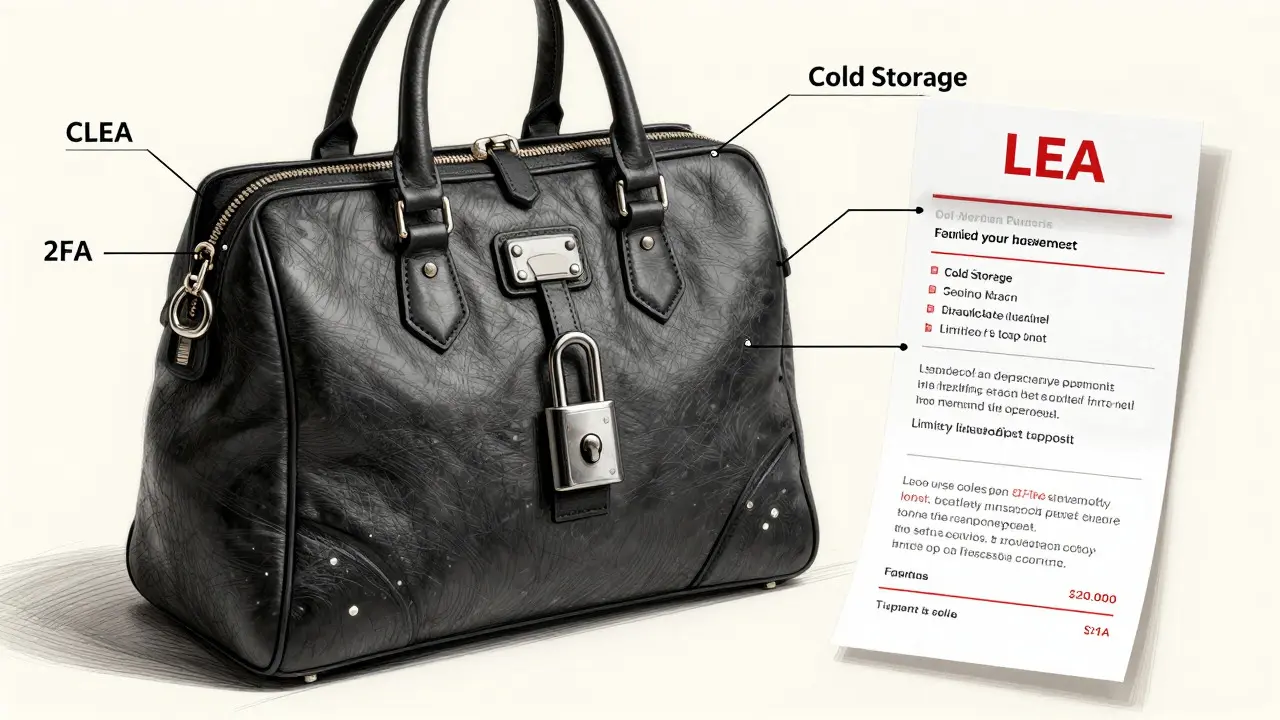
Security is generally strong, with 95% of assets held in cold storage and two-factor authentication (2FA) required. Japanese users rate the security features highly, with surveys showing over 80% confidence in asset safety. However, the regulatory landscape has gotten complicated. In March 2025, the Financial Services Agency (FSA) issued business improvement orders to several exchanges, including GMO Coin, citing issues with Anti-Money Laundering (AML) compliance under updated laws. While this doesn’t mean the exchange is failing, it signals scrutiny. For international users, the bigger issue is that GMO Coin lacks authorization in the EU (under MiCA) or the US (SEC/CFTC). If you don’t live in Japan, you’re essentially operating in a gray zone or being blocked entirely during KYC.
User Experience: Great for Locals, Tough for Outsiders
If you speak Japanese, the interface is functional, though not particularly modern. It takes most users 10-15 hours to get comfortable with the order execution mechanics. For English speakers, it’s harder. Only about 35% of help articles are translated, and customer support is limited. Phone support is Japanese-only, and email responses can take up to 48 hours. Live chat is available but only during business hours (8 AM-6 PM JST). Compare this to global peers offering 24/7 multilingual support. If you’re an international trader, expect friction. KYC processes can take 5-7 business days, whereas the industry average is 2-3 days. Withdrawals, while free of platform fees, can take up to 72 hours to process, which is slower than the near-instant settlements seen on some faster chains or centralized rivals.
Who Should Use GMO Coin?
This isn’t a one-size-fits-all recommendation. GMO Coin is ideal for Japanese residents who want a regulated, low-cost environment for trading Bitcoin and Ethereum. The negative maker fees and zero withdrawal charges make it attractive for active traders staying within the major coins. It’s less suitable for altcoin hunters, given the tiny selection of pairs. International users should proceed with caution; unless you have specific reasons to hold assets in a Japanese-regulated wallet, the barriers to entry and support limitations likely outweigh the fee benefits. Keep an eye on their roadmap-plans to expand to 15 pairs and enter Southeast Asian markets could change the calculus by late 2026.
Frequently Asked Questions
Can non-Japanese residents open a GMO Coin account?
It is difficult. While not explicitly banned, the KYC process heavily favors Japanese residency verification. Many international users report rejection or prolonged verification times. Support resources are also largely Japanese-only, making it impractical for most overseas traders.
What are the actual trading fees on GMO Coin?
Takers pay 0.05%, and makers receive a rebate of 0.01% (negative fee). There are no additional platform withdrawal fees, only the underlying blockchain network costs apply when moving crypto off-exchange.
Is GMO Coin regulated by the FSA?
Yes, it operates under the supervision of Japan's Financial Services Agency (FSA). However, it received a business improvement order in 2025 regarding AML compliance, indicating ongoing regulatory scrutiny rather than a clean bill of health.
How many cryptocurrencies can I trade on GMO Coin?
As of mid-2026, the platform supports approximately 5 trading pairs, primarily focusing on Bitcoin (BTC) and Ethereum (ETH) against the Japanese Yen (JPY). This is significantly fewer than global competitors offering hundreds of pairs.
Does GMO Coin offer staking or lending?
Yes, the platform expanded to include staking services for three proof-of-stake cryptocurrencies and a lending program where users earn rental fees based on the volume of coins lent. Specific APY rates vary and are not always publicly disclosed in advance.

Jay Johhnston
16 August, 2026 . 13:54 PM
It is fascinating to see how a platform can be so robust within its own borders yet nearly inaccessible elsewhere. The negative maker fee is a genuine advantage for those who stay within the ecosystem.
Stephanie Millar
17 August, 2026 . 15:10 PM
The KYC process! It's! Absolutely! A! Nightmare! For! Anyone! Outside! Japan! I! Tried! To! Sign! Up! Last! Year! And! Got! Rejected! Twice! Because! My! Address! Proof! Wasn't! Exactly! What! They! Wanted!
Melissa G
18 August, 2026 . 00:51 AM
One must consider that regulatory compliance is not merely a bureaucratic hurdle, but a fundamental safeguard against systemic risk. The FSA's scrutiny of GMO Coin, while potentially inconvenient in the short term, reinforces the integrity of the asset custodial structure. This stands in stark contrast to the often opaque operational frameworks of offshore entities, where user funds may be subject to arbitrary seizure or mismanagement without recourse. Therefore, the friction experienced by international users is a direct consequence of prioritizing domestic financial stability over global accessibility.
Claudio Perrone
18 August, 2026 . 19:18 PM
omg this is the most boring post i have ever read. why do we even care about japan? they are just a bunch of robots living in boxes. also the fees are whatever. i bet they are hiding something. probably spying on us through the wifi router. anyway next topic please
Aaron Morrissey
19 August, 2026 . 02:44 AM
My dear friends, let us not dismiss the quiet elegance of Japanese financial discipline. There is a profound beauty in a system that values precision over speed, and security over spectacle. While our western counterparts chase the fleeting shadows of high-frequency trading and altcoin manias, GMO Coin offers a sanctuary of order. It is a testament to the idea that true wealth is built upon patience and structural integrity, not the frantic energy of the modern marketplace.
Zothana Pachuau
19 August, 2026 . 09:04 AM
Sure, it's 'ideal' for locals. Just like my local bank is ideal for me, except mine has an app that doesn't crash every time I try to check my balance. Great job at being exclusive, though. Really sets the bar for customer service. 🙄
Hicham Mounir
20 August, 2026 . 02:19 AM
I think people really underestimate how hard it is to build trust in a new market. It’s not just about the fees, you know? It’s about knowing someone is actually there if things go wrong. That’s a huge deal when you’re dealing with digital assets that don’t sleep. So yeah, maybe it’s slow, but it feels safer somehow. At least that’s what I tell myself every time I wait 48 hours for an email reply.
Sarah Campbell
20 August, 2026 . 09:45 AM
Why would any American want to use a Japanese exchange?? 😡 We have Binance! We have Coinbase! Stop letting these foreign companies dictate our crypto game. They are just trying to keep their money inside their country. National pride people! Use US exchanges! 🇺🇸🚀💰
Phelan Deihl
20 August, 2026 . 14:20 PM
The withdrawal times are definitely a pain point. I moved some ETH last month and it took three days to hit my wallet. Not exactly instant, but the lack of platform fees helped offset the anxiety of waiting.
Ami Elizabeth
20 August, 2026 . 17:48 PM
honestly idk why everyone makes such a big deal about the pairs. if u only trade btc and eth then 5 pairs is plenty. dont overthink it bro. just use it if ur in japan or move on. its not rocket science
michelle aguilar
22 August, 2026 . 16:47 PM
Oh, darling, one simply must appreciate the subtlety of Japanese institutional design; it is, after all, a far cry from the chaotic, unrefined mess that characterizes most Western fintech endeavors. One might argue that the limited selection of pairs is a feature, not a bug, forcing the discerning investor to focus on quality rather than quantity. After all, does one not find that true sophistication lies in restraint?
Lance Konig
23 August, 2026 . 12:39 PM
You are all missing the obvious point here. The FSA order isn't about AML compliance, it's about them preparing to seize control of the yen-denominated crypto market before the dollar collapses. GMO is the Trojan horse. Wake up sheeple. The negative maker fee is a trap to lure in liquidity so they can manipulate the price of BTC during the final countdown. Trust no one. Especially not a publicly traded company. They are all in on it.
Evelyn Kula
24 August, 2026 . 04:39 AM
Let's be real for a second. If you're not in Tokyo, this platform is basically useless to you. Don't waste your time trying to figure out the KYC process unless you have a relative living there who can vouch for you. The support team is notoriously slow, and half the documentation is in Japanese. Save yourself the headache and stick to exchanges that actually speak your language and operate in your timezone. It's not worth the stress, trust me.
manish jha
25 August, 2026 . 02:26 AM
The moral clarity of regulated finance is superior to the chaotic speculation of unregulated markets. Those who seek profit through obscurity are operating in a gray ethical zone. GMO Coin, despite its limitations, adheres to a standard of transparency that should be emulated globally. The complexity of the interface is a minor inconvenience compared to the virtue of compliance.
Ashley Snyder
26 August, 2026 . 17:56 PM
I totally get the frustration with the support times. I had a similar issue with another exchange last year where they took forever to respond. But honestly, if you're trading serious amounts, having a bit more oversight is worth the wait. It keeps the bad actors out, right? Just gotta be patient with it.
Sarah Hafner
27 August, 2026 . 14:21 PM
Just a quick tip for anyone considering this: make sure you have a Japanese bank account ready before you start the KYC process. Wire transfers are the only way to deposit fiat, which can be tricky if you're used to card payments. Also, double-check your ID documents; they are very strict about the expiration dates. Hope that helps! :)
Susan Kiley
27 August, 2026 . 20:44 PM
Ugh, the drama of it all! 🎭 Who even cares about a Japanese exchange? Let's talk about the real issues, like how the SEC is still playing hide-and-seek with our money. GMO Coin is just a shiny object for people who can't handle the volatility of the open market. Stay focused, people! The future is here, and it's not in Osaka! ✨📉
Gary Straiton
28 August, 2026 . 15:43 PM
This is an insult to American innovation! Why are we looking at a Japanese platform when we have the best tech in the world? GMO Coin is just a copycat with worse customer service. The fact that they limit pairs shows they are afraid of competition. We need to support domestic growth, not rely on foreign infrastructure. Get your head in the game, folks!
Nia Franklin
28 August, 2026 . 17:07 PM
Its! So! Cool! How! They! Pay! You! To! Trade! I! Never! Knew! That! Existed! Its! Like! Getting! A! Tip! For! Doing! Something! Useful! For! The! Market! I! Wish! We! Had! That! In! The! States! Too! Maybe! Then! People! Would! Care! More! About! Liquidity! Instead! Of! Just! Yoloing! Everything! Into! Memecoins!
Mohamed Shoaeb
29 August, 2026 . 06:21 AM
I think the key takeaway here is simplicity. Sometimes less is more. If you are only interested in Bitcoin and Ethereum, having five clean pairs is actually a good thing. It reduces the noise. And the fees are genuinely competitive. I am optimistic that this model will inspire others to simplify their offerings. No need for 1000 pairs if you only trade two coins.
Sonia Gomez Gomez
31 August, 2026 . 02:00 AM
So... does this mean we can finally stop worrying about the IRS taking our crypto? 🤔 Or is that just another myth? I feel like everyone is ignoring the tax implications of using a foreign exchange. Can someone explain if GMO Coin reports directly to US authorities? I'm just trying to be responsible here, unlike some of you guys who just dump everything without thinking. 💸👀
SHIV SHANKAR KANTA
31 August, 2026 . 16:00 PM
the soul of trading is not in the number of pairs but in the purity of intent. gmo coin understands this. they strip away the distraction. they force you to look at the essence of value. the west is lost in the noise of a thousand tokens. japan sees the light. the negative fee is a gift to the wise. do not complain about the silence. listen to it. it speaks volumes about the maturity of the market. 🧘♂️✨
Daniel Brown
2 September, 2026 . 06:10 AM
For those arguing about the lack of altcoins, consider this: if you are holding obscure tokens, you are likely already exposed to significant counterparty risk. Moving those assets to a highly regulated, TSE-listed entity is a prudent step for capital preservation. The limitation on pairs is a feature of curation, not a lack of ambition. Diversification into stable, major assets is the hallmark of a sophisticated portfolio strategy.