Remember that rush of excitement when you saw a new crypto project popping up with free tokens? That was exactly the vibe around the ByteNext (BNU) airdrop campaign. If you were hunting for easy gains in the NFT space back in mid-2024, you likely stumbled upon this one. But here is the kicker: while the initial buzz was loud, the current market reality for BNU tells a much quieter story. This article breaks down exactly how the ByteNext airdrop worked, what you needed to do to qualify, and where the token stands today.
The Core Concept Behind ByteNext and AvatarArt
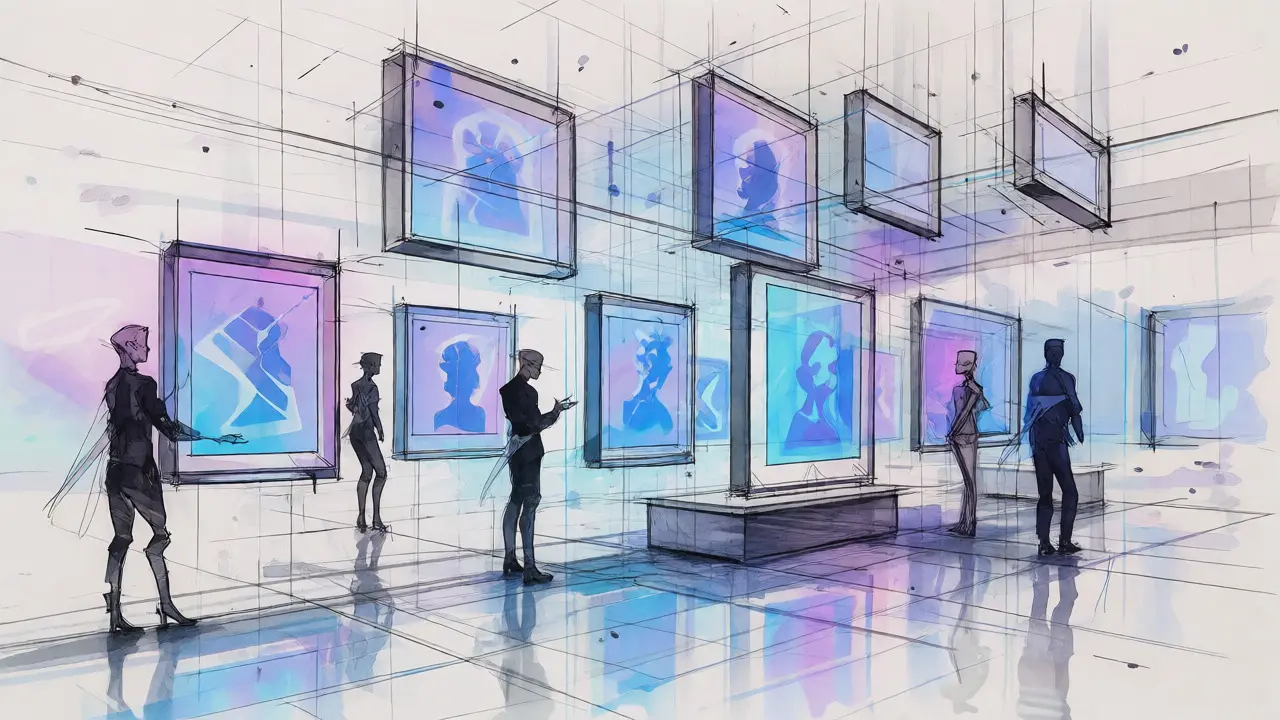
Before we get into the mechanics of the giveaway, let's look at what ByteNext actually is. It isn't just another meme coin trying to ride a wave. The project launched the AvatarArt NFT Marketplace, a platform built on the Binance Smart Chain (BSC). The goal was simple: help artists trade, exhibit, and convert their work into Non-Fungible Tokens (NFTs) without getting eaten alive by high gas fees. The $BNU token served as the lifeblood of this ecosystem. You didn't just hold it for speculation; you used it to pay transaction fees, buy advertising slots in virtual 3D exhibitions, and even stake it to farm rewards. Think of it like the fuel for a digital art gallery. The team distributed tokens via an airdrop to bootstrap the community, hoping these early holders would become active users rather than just flippers.
Airdrop Mechanics: Dates, Rewards, and Winners
The specific campaign we are analyzing ran for five days, from July 3 at 2 PM UTC to July 8 at 2 PM UTC. The prize pool wasn't massive-25,000 $BNU tokens total-but the distribution strategy was designed to cast a wide net. They selected 1,000 winners, giving each person 25 $BNU tokens. Why does this matter? Because 25 tokens might sound tiny, but at the time, it was enough to test the waters. More importantly, it got people interacting with the CoinMarketCap platform and the project's social channels. Winners weren't announced immediately. The team waited until July 15 to reveal who made the cut, with actual token distribution hitting wallets on July 30. If you missed the announcement window, your tokens sat in limbo until that payout date.
Step-by-Step Guide to Qualifying for the Drop
If you are wondering if you could have snagged those tokens, or if you want to understand the standard playbook for similar future drops, here is exactly what participants had to do. These steps were mandatory; miss one, and you were out of the random selection pool.
- Watchlist Addition: Go to the official BNU page on CoinMarketCap and add the token to your personal watchlist. This signals interest to the algorithm.
- Social Follows: Follow both ByteNext's main Twitter account (@Bytenextio) and the venture capital partner, ZeusC Ventures (@zeusc_ventures).
- Telegram Engagement: Join the official Telegram group (t.me/ByteNextOfficial) and the announcement channel (t.me/ByteNextAnnouncement). Staying there was key for updates.
- Retweet and Tag: Find the specific campaign tweet, retweet it, and tag at least five friends in the comments. This boosted organic reach.
- Wallet Preparation: Have a valid Binance Smart Chain wallet address ready. Since BNU is an ERC-20 style token on BSC, sending it to an Ethereum-only wallet would have been a disaster.

Utility: What Could You Actually Do With BNU?
Holding a token is one thing; using it is another. The ByteNext team outlined several utilities to give the $BNU token value beyond pure speculation. Here is how the ecosystem intended to use the currency:
| Function | Description |
|---|---|
| Transaction Fees | Primary payment method for buying/selling NFTs on AvatarArt. |
| Advertising | Purchase placements in 3D VR exhibitions to showcase art. |
| Royalties | Authorization payments to authors upon successful sales. |
| Staking & Farming | Liquidity provider pools allow users to earn yield with NFTs. |
| Governance | Voting rights on platform changes and curation of NFT works. |
The inclusion of governance and staking features was ambitious for a small-cap project. It suggested they wanted a decentralized autonomous organization (DAO) feel, where token holders had a say in which artists got featured. However, the success of these features depends entirely on user adoption, which brings us to the current state of the market.
Current Market Status: Liquidity and Price Action
Fast forward to September 2026. The hype has faded, and the numbers tell a stark story. According to data from CoinGecko and Coinbase, trading activity for BNU has virtually stopped. The 24-hour trading volume hovers around a mere $4.84 to $6.36. Yes, you read that right-single-digit dollars in daily volume across major exchanges.
The price sits at approximately $0.000603 per token. While this is technically 18% below its all-time high of $0.000741, the more concerning metric is the year-over-year performance. The token has dropped over 51% from its previous highs, and weekly changes are flat at 0.00%. This stagnation suggests that most early airdrop recipients either sold off quickly or forgot about the token entirely. With a total market cap of roughly $120,584, BNU is now a micro-cap asset with very little liquidity.
Lessons Learned from the ByteNext Campaign
What can we take away from this specific airdrop? First, verify the utility before you invest time. Many projects promise 3D VR galleries and DAO voting, but few deliver sustained engagement. Second, check the exchange listings. The fact that BNU ceased trading on several platforms highlights the risk of low-liquidity altcoins. If you won 25 BNU, selling them might have been difficult due to thin order books.
Also, note the conservative distribution. Distributing only 0.0125% of the total supply (200 million tokens) through this specific drop shows a cautious approach. They prioritized quality of engagement over quantity of holders. For investors, this means you shouldn't expect massive dilution from a single event, but you also shouldn't expect a viral explosion from such a small sample size.
Frequently Asked Questions
Is the ByteNext airdrop still active?
No, the specific CoinMarketCap airdrop campaign described in this article concluded in July 2024. As of September 2026, there are no active public records of ongoing large-scale airdrop campaigns for BNU. Participants should monitor official social media channels for any future initiatives.
Where can I buy or sell BNU tokens now?
Trading volume is extremely low. While some exchanges may still list the pair, liquidity is minimal. You may need to use decentralized exchanges (DEXs) on the Binance Smart Chain, such as PancakeSwap, to find buyers or sellers. Always check the depth of the order book before executing trades to avoid high slippage.
What network does BNU run on?
BNU operates exclusively on the Binance Smart Chain (BSC). Ensure your wallet supports BEP-20 tokens. Sending BNU to an Ethereum (ERC-20) address will result in lost funds unless the receiving platform explicitly supports cross-chain bridging for this asset.
How many BNU tokens did each winner receive?
Each of the 1,000 selected winners received 25 BNU tokens. The total prize pool was 25,000 tokens, representing a small fraction of the total circulating supply of 200 million tokens.
Is ByteNext a legitimate project?
ByteNext is a registered entity with a website (bytenext.io), GitHub repository, and social media presence. However, current low trading volumes and limited news coverage suggest reduced activity compared to its launch phase. Legitimacy does not guarantee profitability, especially in the volatile NFT sector.
Final Thoughts and Next Steps
If you held onto your BNU tokens from the airdrop, you are currently sitting on a micro-cap asset with stagnant growth. The narrative of "free money" has shifted to a question of long-term viability. For new investors, the lack of volume is a red flag. It’s hard to exit a position when nobody is buying. Keep an eye on the AvatarArt marketplace-if artist activity picks up, demand for the token might follow. Until then, treat BNU as a speculative hold with high risk and uncertain reward.