You’ve probably seen the buzz around XMS airdrop campaigns in crypto groups. The promise of free tokens is tempting, but the reality for the Mars Ecosystem Token (XMS) is more nuanced than just clicking a button and getting rich. If you are looking to claim XMS tokens right now, here is the hard truth: the major public airdrops have already ended. However, understanding how the Mars Ecosystem works, what happened with those distributions, and where the token stands in mid-2026 is crucial if you hold any remaining assets or are considering entering this specific DeFi niche.
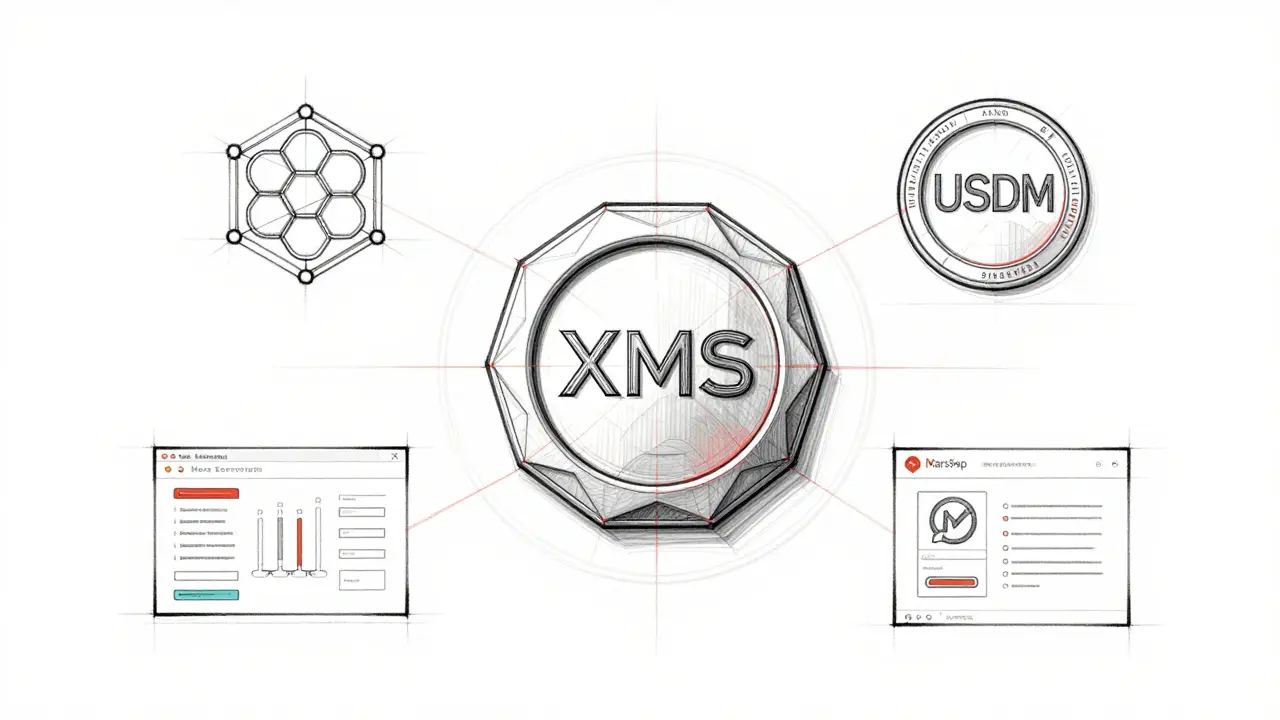
The Mars Ecosystem isn’t just a token; it’s an attempt to build a "central bank" for decentralized finance. This involves a governance token (XMS), a stablecoin (USDM), and a decentralized exchange (MarsSwap). Let’s break down exactly what these components are, why the airdrops closed, and what the current market data tells us about the project’s health.
What Is the Mars Ecosystem Token (XMS)?
To understand the value of the airdrop, you first need to understand the asset itself. Mars Ecosystem Token (XMS) is the native governance token of the Mars Ecosystem, a decentralized finance protocol designed to create a new paradigm for stablecoins. It operates on the Binance Smart Chain (BSC), which means transactions require BNB for gas fees and use BEP-20 wallet addresses.
XMS holders participate in the MarsDAO, the governing body that makes decisions about the ecosystem’s future. This includes voting on protocol upgrades, fee structures, and treasury management. Without XMS, you cannot influence the direction of the platform. But governance rights are only valuable if the underlying platform has users and volume.
The ecosystem revolves around solving what the team calls the "positive externality" problem in stablecoins. In simple terms, most stablecoin protocols bear the cost of maintaining stability, while external parties benefit from the transaction value. Mars aims to fix this by integrating high capital efficiency and scalability directly into their infrastructure.
XMS Airdrop History: What Happened?
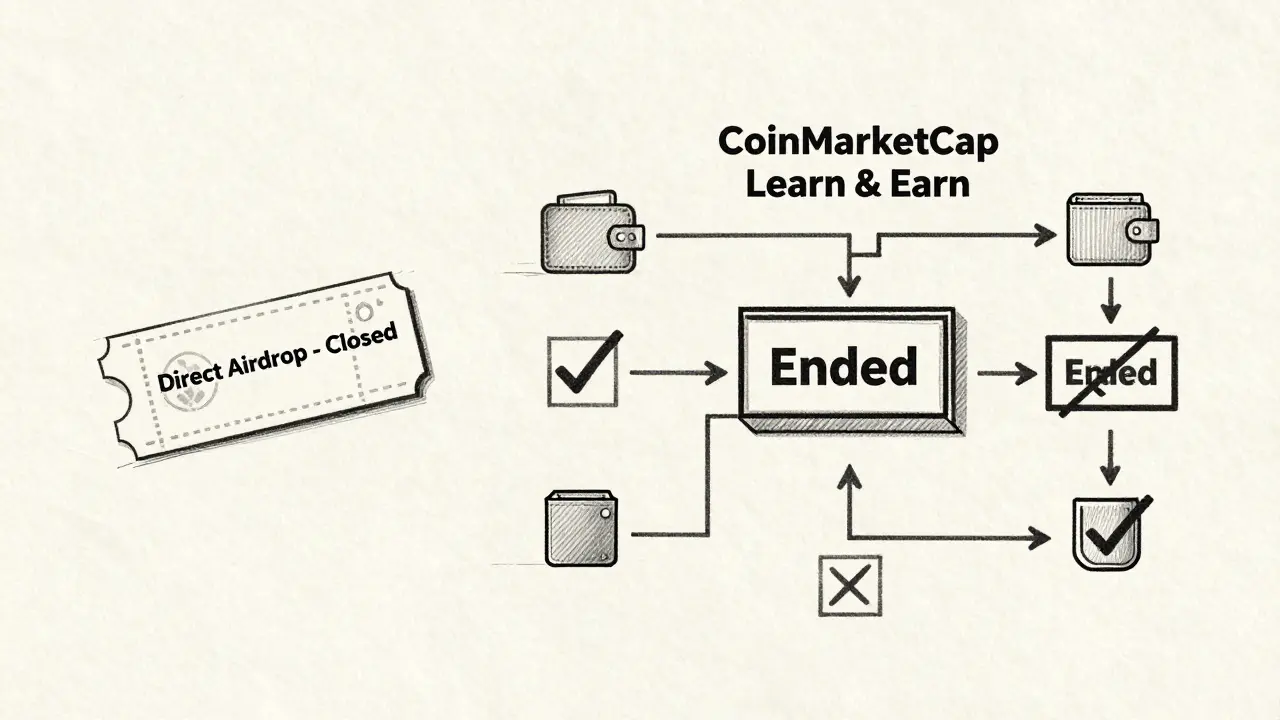
If you are searching for an active link to claim free XMS, you will likely hit a dead end. The two major distribution events that defined the early days of Mars Ecosystem have concluded. Here is a breakdown of those campaigns so you know whether you missed out or if there is still a chance.
| Campaign Name | Prize Pool / Reward | Winners | Status |
|---|---|---|---|
| Mars Ecosystem Direct Airdrop | 50 XMS per winner | 1,000 participants | Closed |
| CoinMarketCap Learn & Earn | $200,000 total pool ($5 per winner) | 40,000 winners | Closed |
The Direct Airdrop: This was a smaller, targeted campaign. Mars selected 1,000 lucky participants to receive 50 XMS tokens each. It was essentially a lottery-style distribution to seed initial community interest. This event closed quickly after the winners were announced.
The CoinMarketCap Collaboration: This was the big one. Mars partnered with CoinMarketCap for a "Learn & Earn" program. To qualify, you needed:
- An active account on both CoinMarketCap and Binance.
- Completion of educational videos explaining the Mars Ecosystem.
- A perfect score on a quiz about the project.
- A valid BEP-20 wallet address submitted for distribution.
Current Market Status and Price Analysis (June 2026)
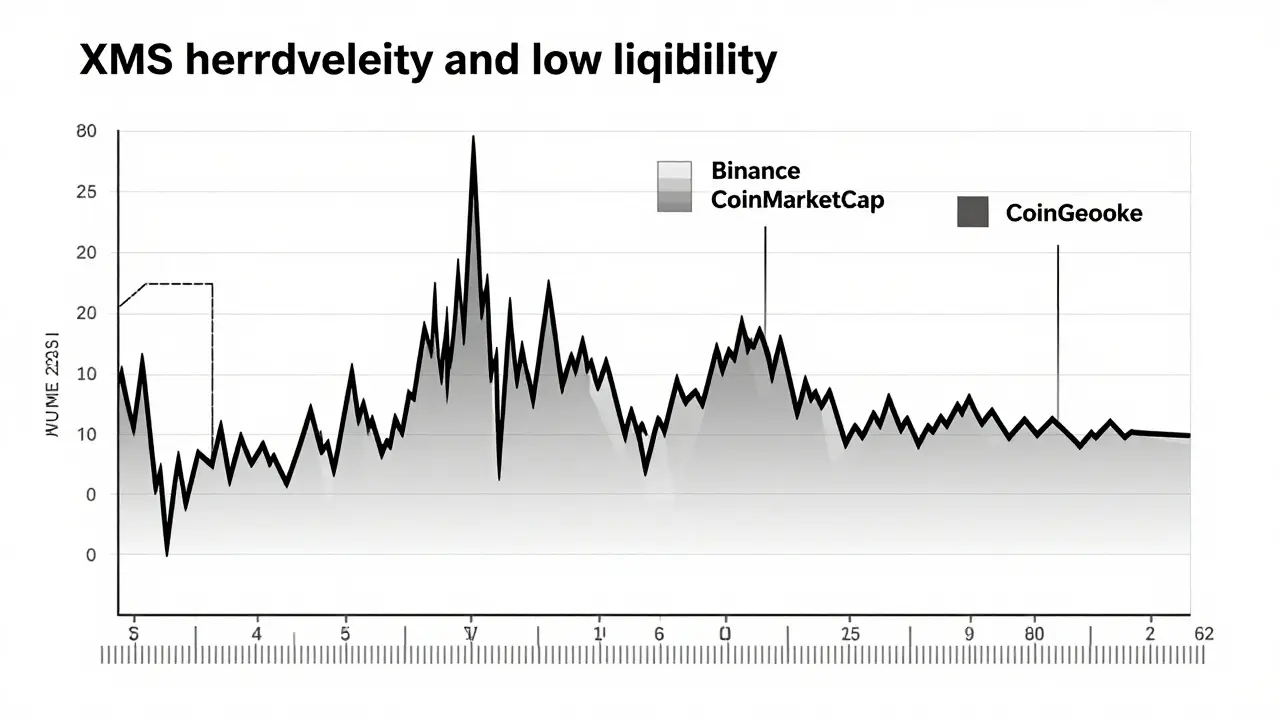
After an airdrop ends, the real test begins: market performance. As of June 2026, XMS shows signs of low liquidity and significant price discrepancies across tracking platforms. This is a critical warning sign for anyone holding the token.
Data from different sources paints a confusing picture:
- Binance: Lists XMS at approximately $0.000297 USD, showing a modest 1.24% increase over 24 hours.
- CoinMarketCap: Reports a higher price of $0.0004989 USD.
- CoinGecko: Places the market capitalization at roughly $314,755, ranking XMS around #5891 globally.
Why the difference? Low trading volume. With a daily trading volume hovering around $2,300 USD, even small buy or sell orders can cause massive price swings. This discrepancy suggests that liquidity is thin, meaning you might struggle to sell a large amount of XMS without crashing the price further. Historically, the token has shown volatility, with 30-day gains fluctuating between 3% and 15%, but these numbers mean little when the overall market cap is under half a million dollars.
The Core Technology: USDM and MarsSwap
The value of XMS is tied to the utility of the broader Mars Ecosystem. If the ecosystem fails, the governance token loses its purpose. Two key components drive this utility:
- USDM Stablecoin: This is the reserve currency of the ecosystem. Unlike USDT or USDC, which are centralized, USDM aims to be fully decentralized. It is designed to maintain a peg to the US Dollar through algorithmic mechanisms and collateral reserves managed by the DAO. The goal is to provide a stable medium of exchange within DeFi that isn't subject to traditional banking regulations or freezes.
- MarsSwap DEX: This is the decentralized exchange where users trade USDM against other assets. MarsSwap provides liquidity pools and automated market making (AMM) services. Fees generated from trades on MarsSwap often flow back into the ecosystem, potentially benefiting XMS holders through buybacks or staking rewards, depending on the current DAO parameters.
The technical architecture emphasizes four pillars: high stability, high capital utilization, strong scalability, and high decentralization. By building on Binance Smart Chain, Mars benefits from lower transaction fees compared to Ethereum, making micro-transactions and frequent trading more viable for average users.
Security and Strategic Partnerships
In DeFi, security is everything. A single bug can drain a protocol’s funds. Mars Ecosystem addresses this through a bug bounty program hosted on Immunefi. They offer rewards up to $10,000 for researchers who find vulnerabilities in their smart contracts. The scope covers common attack vectors like malicious wallet interactions, parameter manipulation, and subdomain takeovers. This proactive approach is a positive signal, indicating that the development team is actively monitoring code integrity.
On the partnership front, Mars has collaborated with MugglePay, a cryptocurrency C2B payment service provider. This integration allows merchants to accept USDM for payments via MarsSwap. This move shifts the narrative from pure speculation to real-world utility. If merchants start accepting USDM, demand for the stablecoin rises, which in turn increases the need for liquidity on MarsSwap and governance via XMS.
Risks and Considerations for Investors
Before you allocate any funds to buy XMS or try to engage with the ecosystem, consider these risks:
- Liquidity Risk: As noted, the trading volume is very low. Exiting a position quickly could result in significant slippage.
- Scarcity of New Opportunities: With major airdrops closed, acquiring XMS now requires buying on the open market, exposing you to immediate market risk rather than receiving it for free.
- Competition: Mars competes with giants like MakerDAO, Curve Finance, and established stablecoins like USDC and DAI. Gaining market share against these entrenched players is difficult.
- Price Discrepancies: The lack of consistent pricing data across exchanges suggests potential issues with order book depth and transparency.
The project’s vision of becoming the "central bank for DeFi" is ambitious. However, execution is key. The closure of marketing-heavy initiatives like the airdrops without clear announcements of future phases may indicate a shift toward organic growth-or a pause in development resources. Always verify information through official channels before making financial decisions.
Is the XMS airdrop still active in 2026?
No, the major XMS airdrop campaigns, including the direct 1,000-participant drop and the CoinMarketCap Learn & Earn program, have concluded. There are no currently active public airdrops for Mars Ecosystem Token.
How do I buy XMS tokens if the airdrop is closed?
You can purchase XMS on supported cryptocurrency exchanges like Binance or through decentralized exchanges on the Binance Smart Chain. Ensure you have a BEP-20 compatible wallet to store your tokens securely.
What is the current price of XMS?
As of June 2026, XMS prices vary significantly between platforms due to low liquidity. Binance lists it around $0.000297, while CoinMarketCap shows approximately $0.000498. Always check multiple sources before trading.
What is the purpose of the USDM stablecoin?
USDM is the native stablecoin of the Mars Ecosystem. It serves as a reserve currency and medium of exchange within the platform, aiming to provide a decentralized alternative to fiat-backed stablecoins with higher capital efficiency.
Is Mars Ecosystem secure?
Mars Ecosystem employs a bug bounty program via Immunefi, offering rewards up to $10,000 for vulnerability discoveries. While this demonstrates a commitment to security, all DeFi investments carry inherent smart contract risks.