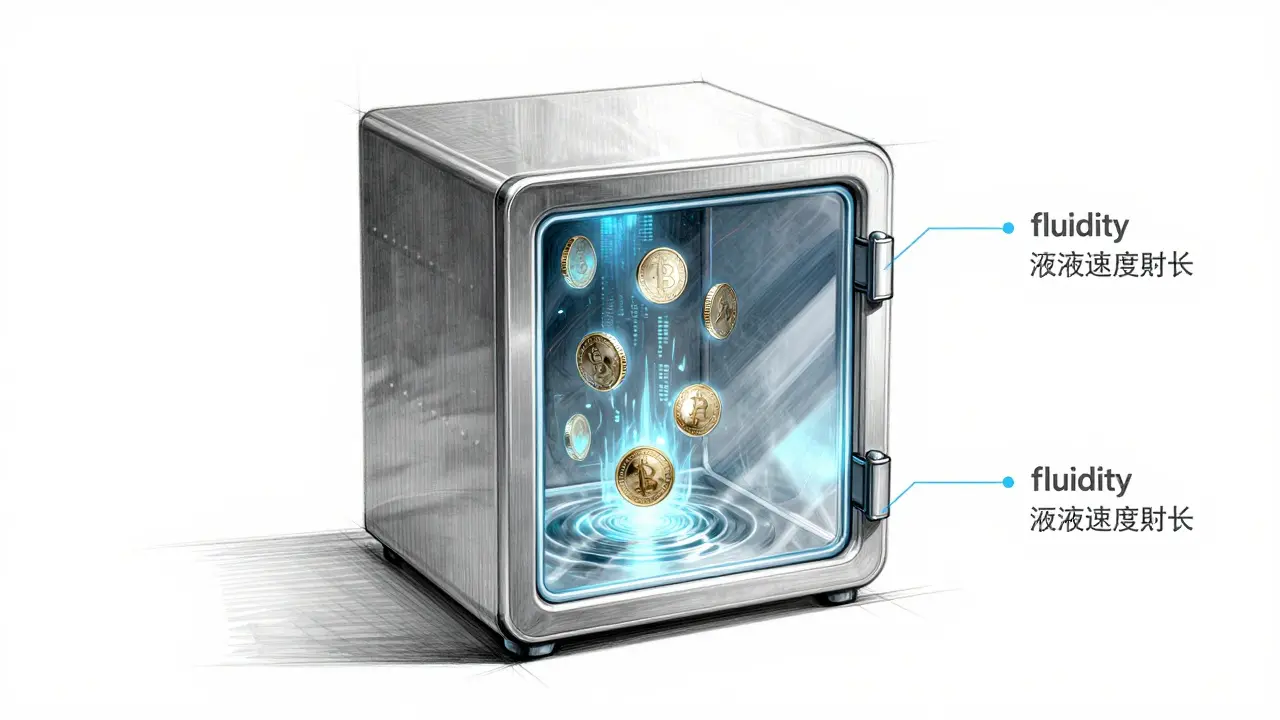
Imagine locking your money in a savings account for a year to get a better interest rate, but you can't touch it until the time is up. That is basically how traditional crypto staking works. You lock your coins to secure the network, but your assets are frozen. Veno Finance is a decentralized liquid staking protocol that lets you earn staking rewards without giving up control of your assets. Launched in 2022, it solves the "frozen asset" problem by giving you a liquid token in exchange for your staked coins, meaning you can earn yield and still trade or move your money whenever you want.
How Veno Finance Actually Works
The magic of Veno Finance lies in its liquid tokens. When you stake a coin through the platform, you don't just wait for a reward; you get a receipt token that represents your stake and the rewards it earns over time. These tokens are auto-compounding, so you don't have to manually claim rewards and pay gas fees every time.
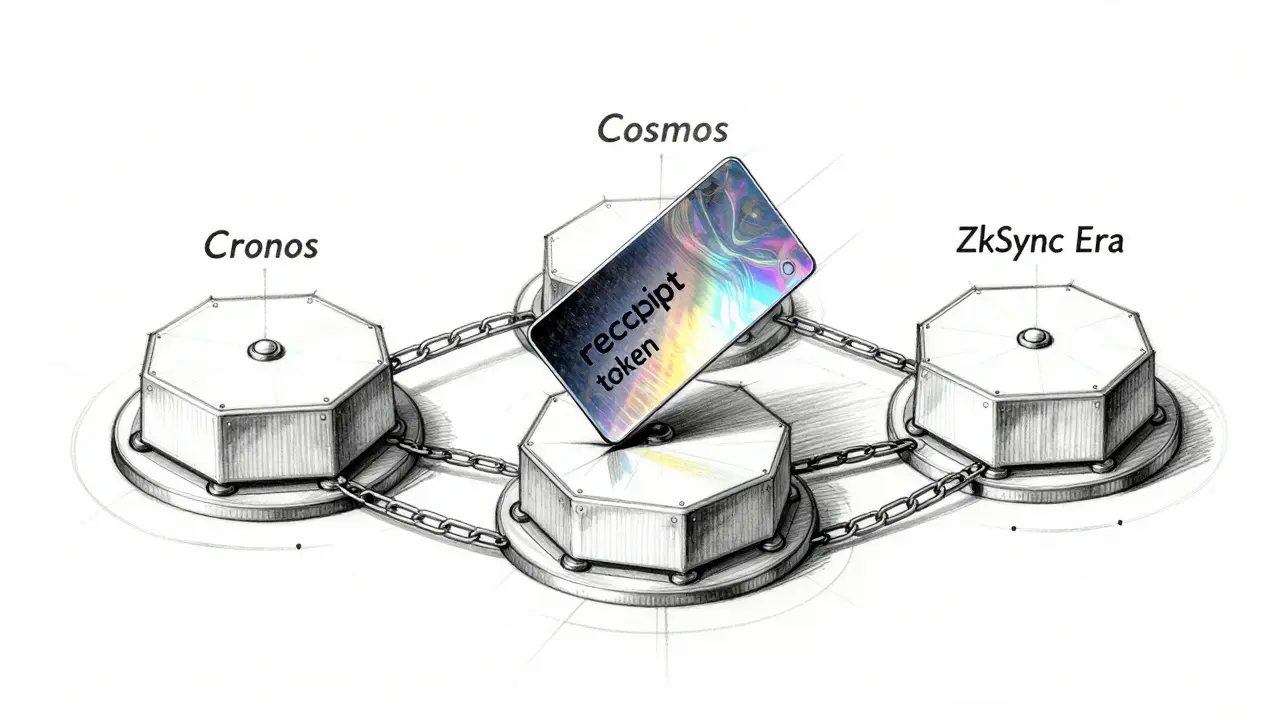
For example, if you stake CRO is the native utility token of the Cronos blockchain on the platform, you receive LCRO is a liquid version of CRO that accumulates staking rewards automatically . Because LCRO is a tradable asset, you can take it to other decentralized finance (DeFi) apps to earn even more money while your original CRO is still staking in the background.
The protocol doesn't just stop at Cronos. It has expanded its reach to other networks. You can stake ATOM is the native token of the Cosmos network to get LATOM, or move over to zkSync Era is a Layer 2 scaling solution for Ethereum that reduces transaction costs to stake ETH and receive LETH. This multi-chain strategy allows users to diversify across different ecosystems without the hassle of managing multiple separate staking processes.
The Role of the VNO Token
While the liquid tokens like LCRO are about utility, the VNO is the native governance and utility token of the Veno Finance protocol is the engine that drives the protocol's growth. VNO holders aren't just speculators; they have a say in how the platform evolves through governance.
The protocol uses VNO in three primary ways to incentivize users:
- The Reservoir: This is where you lock your VNO. In return, you receive "real yield" in the form of ATOM and WCRO rewards that the protocol earns from its staking operations.
- The Fountain: By depositing VNO here, you generate additional VNO rewards, creating a compounding effect for long-term holders.
- Veno Garden: The protocol distributes VNO rewards to people providing liquidity on partner platforms like Ferro and Tectonic, which helps keep the ecosystem healthy.
As of late 2025, the total supply of VNO sits at roughly 1.84 billion tokens, with about 474 million currently circulating in the market. Because it's a smaller token, you might notice some "slippage" (price changes) if you try to execute very large trades at once.
Veno Finance vs. The Giants: How it Compares
When you talk about liquid staking, the first name that usually comes up is Lido is the largest liquid staking protocol by total value locked, primarily focused on Ethereum . While Lido is the industry titan, Veno takes a different approach by targeting the Cronos and Cosmos ecosystems.
| Feature | Veno Finance (VNO) | Lido / Market Leaders |
|---|---|---|
| Primary Ecosystem | Cronos, zkSync Era, Cosmos | Ethereum (Dominant) |
| Reward Method | Auto-compounding tokens | Variable/Staked ETH (stETH) |
| Market Size | Niche / Moderate Growth | Massive (Billions in TVL) |
| Target Audience | Cronos & Cosmos enthusiasts | General ETH stakers |
Veno's advantage is its agility in the Cronos space. If you are heavily invested in the Cosmos-based world, Veno provides a level of liquidity that the bigger, ETH-centric protocols simply don't offer. However, the trade-off is lower liquidity for the VNO token itself and a smaller Total Value Locked (TVL) compared to the billions seen in Lido's ecosystem.

How to Get Started: A Step-by-Step Guide
Getting your assets into Veno Finance is pretty straightforward. You don't need to be a coding expert to make it work. Most users can get their first stake running in under 15 minutes.
- Set Up Your Wallet: Use a compatible web3 wallet like MetaMask or Trust Wallet. Make sure you have the correct network (e.g., Cronos or zkSync Era) added to your wallet.
- Connect to the Dashboard: Visit the Veno Finance app and connect your wallet. This is where you'll manage all your stakes.
- Choose Your Asset: Decide whether you want to stake CRO, ATOM, or ETH.
- Stake and Receive: Confirm the transaction. Once processed, you'll see your liquid tokens (like LCRO or LETH) appear in your wallet.
- Manage Your Yield: You can now either hold these tokens to let rewards grow, or move them into other DeFi protocols to earn extra yield.
One thing to keep in mind is the unbonding period. In crypto, you can't always withdraw instantly. When you decide to leave, Veno uses an NFT-based mechanism. You'll receive an NFT that represents your claim to your original tokens plus rewards, which you can exchange back for your coins once the network's waiting period ends.
Risks and Things to Watch Out For
No crypto project is without risk, and Veno is no different. First, there is the issue of liquidity. Because the trading volume for VNO is lower than that of top-100 coins, selling a large amount of VNO quickly could result in a worse price than you expected.
Second, there is the security aspect. Veno claims to use "enterprise-grade" infrastructure, but some researchers have pointed out that the protocol hasn't always been transparent about which specific firms conducted their audits. In the world of DeFi, where smart contract bugs can lead to total loss of funds, transparency is key.
Lastly, keep an eye on the variable exchange rate. 1 CRO doesn't always equal exactly 1 LCRO. Because LCRO grows in value as rewards accrue, the exchange rate fluctuates. Always check the current rate on the dashboard before staking or unstaking to make sure you're getting the best deal.
Is Veno Finance safe?
Veno Finance uses enterprise-grade staking infrastructure and has a growing community of over 17,000 stakers. However, like all DeFi protocols, it carries smart contract risk. Some security experts have called for more transparency regarding their audit reports, so users should only invest what they can afford to lose.
What happens to my funds during unbonding?
When you request to unstake, you enter an unbonding period (which is required by the underlying blockchain). During this time, Veno issues you an NFT. Once the waiting period is over, you can trade this NFT back for your original tokens plus any rewards earned during the process.
How does LCRO differ from regular CRO?
CRO is the native token of the Cronos network. LCRO is a liquid staking derivative. While CRO just sits in your wallet, LCRO represents CRO that is actively being staked to secure the network. The value of LCRO increases relative to CRO as staking rewards are automatically compounded into the token.
Where can I buy VNO tokens?
VNO is traded across various decentralized exchanges (DEXs) and some centralized markets. Because it has lower liquidity than major coins, it is best to use a DEX where you can monitor the slippage before confirming your trade.
Can I use LETH on other networks?
LETH is issued on the zkSync Era network. While it is a liquid representation of Ethereum, its use is currently limited to protocols that support the zkSync Era ecosystem. You can use it within that network to maintain liquidity while earning ETH staking rewards.




Jimmy vasquez
26 April, 2026 . 08:05 AM
Liquid staking is a game changer for those stuck in the Cronos ecosystem. Using LCRO to keep your yield while staying mobile in DeFi is a huge win for retail investors.
Andrew Todd
26 April, 2026 . 23:08 PM
Only idiots use these niche tokens. America makes the real money and we don't need this junk. Simple as that.
Ryan Nakielny
28 April, 2026 . 09:38 AM
Oh wow, another "revolutionary" protocol that just moves money from one bucket to another. Groundbreaking stuff here.
Sri Astuti
29 April, 2026 . 05:00 AM
The fundamental lack of transparency regarding the audit firms is a massive red flag that simply cannot be ignored by any serious investor, especially when you consider that the total value locked is relatively low compared to the giants like Lido, and the slippage on VNO is basically a nightmare for anyone trying to exit a large position during a market dip 🙄 it's almost comical how these projects promise enterprise-grade security while keeping the actual auditors a secret from the public eye 📉
Nitin Gupta
30 April, 2026 . 16:07 PM
I agree that the multi-chain approach is a smart move. It's nice to see support for both ATOM and ETH in one place.
AP Fisher
2 May, 2026 . 13:02 PM
I'm just trying to understand if the NFT part is safe for a beginner.
Wayne Gillis
2 May, 2026 . 23:48 PM
JUST STAKED MY WHOLE BAG! 🚀🚀🚀 let's go moon! 🌙
edie rosa
3 May, 2026 . 09:03 AM
The lack of audit transparency is a moral failure. You can't call yourself decentralized and secure while hiding the people who actually checked the code.
Michael Repak
4 May, 2026 . 14:32 PM
This is a great breakdown!!! Very helpful for newcomers!!!
debra hoskins
4 May, 2026 . 17:12 PM
A niche play for a niche crowd. The liquidity is a wasteland.
Mitali Rajvanshi
5 May, 2026 . 22:29 PM
Seems like a steady option for Cronos holders.
Ralph Espinosa
7 May, 2026 . 17:05 PM
The auto-compounding feature is actually the best part here!!! Saves so much on gas!!!
Lex Harley
7 May, 2026 . 20:00 PM
Tbh the l-assets seem kinda buggy in the UI... do we know if the smart contract has a re-entrancy guard or is it just basic? I'm worried about the slippge on VNO if i try to swap back to CRO via a dex
Rushell Perry
7 May, 2026 . 20:31 PM
just remember to check the exchange rate before you swap. it changes a lot
its me
9 May, 2026 . 13:34 PM
We all seek liquidity in a world of frozen assets, but perhaps the real liquidity is the friends we make while waiting for our unbonding period to end.
Carli Bates
10 May, 2026 . 14:31 PM
imagine needing a guide for this. just read the docs lol
Aaron Zeiler
11 May, 2026 . 07:59 AM
if you want to maximize yield go for the reservoir it pays out in real assets not just more vno
Kathleen Warren
11 May, 2026 . 11:08 AM
It's okay to be nervous about the NFT part. Just take it slow and start with a small amount.
Barbara Jones
13 May, 2026 . 00:42 AM
i think it's a pretty good deal for long term holders lol
Gabrielle Danis
14 May, 2026 . 10:04 AM
The distinction between the utility of LCRO and the governance of VNO is critical for understanding the project's long-term viability.
Abhishek Verma
15 May, 2026 . 05:07 AM
Wow, a whole 17,000 stakers. Truly a global empire. 🙄
Brendan Thraxton
17 May, 2026 . 02:12 AM
keep learning and keep experimenting everything is a lesson in this space
Janis Naglis
18 May, 2026 . 11:36 AM
This is such a bullish setup!!! The synergy between the Reservoir and the Fountain is literally insane for compounding!!! Just be mindful of the slippage on those VNO trades!!!