You might have seen the ticker TATSU flash across a trading chart or heard whispers about it in niche crypto circles. But what actually is Taτsu? It isn’t just another meme coin riding the hype train. It sits at a complex intersection of artificial intelligence, hardware design, and blockchain identity verification.
If you are looking to understand whether this asset belongs in your portfolio, you need to look past the price charts. You need to understand the machinery behind the token. Taτsu is an ecosystem built on Ethereum that aims to decentralize how we verify digital identities and how we design the chips that power AI. Here is the breakdown of what makes it tick, who uses it, and where the risks lie as we move through mid-2026.
The Core Identity: More Than Just a Token
At its foundation, Taτsu (TATSU) is an ERC-20 cryptocurrency launched on February 15, 2024, designed to power a decentralized ecosystem for AI, hardware innovation, and digital identity verification. Unlike tokens that simply facilitate payments or govern a single DeFi protocol, TATSU acts as the economic glue for a multi-layered infrastructure.
The project positions itself against the centralization of big tech. While major corporations control both the AI models running our services and the silicon chips processing them, Taτsu aims to open this up. It does this by integrating tightly with the Bittensor (TAO) network, a decentralized machine learning network that incentivizes contributors to share compute resources and data. By leveraging Bittensor’s architecture, Taτsu creates subnets-specialized networks within the larger system-that focus on specific tasks like identity scoring and chip design.
This means when you hold TATSU, you aren't just holding a speculative asset. You are holding a utility token that grants access to services, allows for staking rewards, and gives you a voice in the governance of an ecosystem trying to democratize AI infrastructure.
How the Ecosystem Works: Identity, AI, and Silicon
To grasp the value proposition, you have to look at the three pillars supporting the Taτsu architecture. These aren't abstract concepts; they are active components of the network.
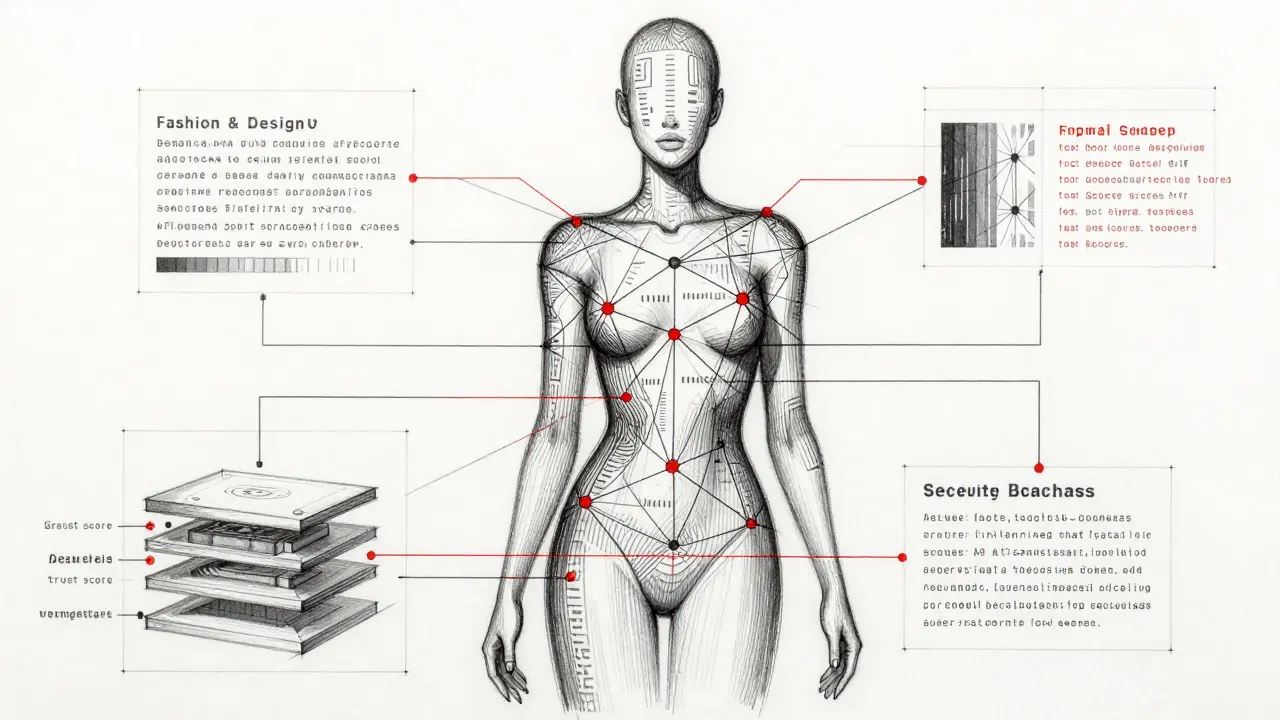
- Decentralized Identity Verification: The Taτsu Identity protocol uses machine learning to create a "human score" for users. This score analyzes behavioral and network metrics to authenticate individuals in decentralized environments. In a world rife with bots and fraud, this trust layer is crucial for Web3 applications. Contributors who help maintain this verification process earn TATSU.
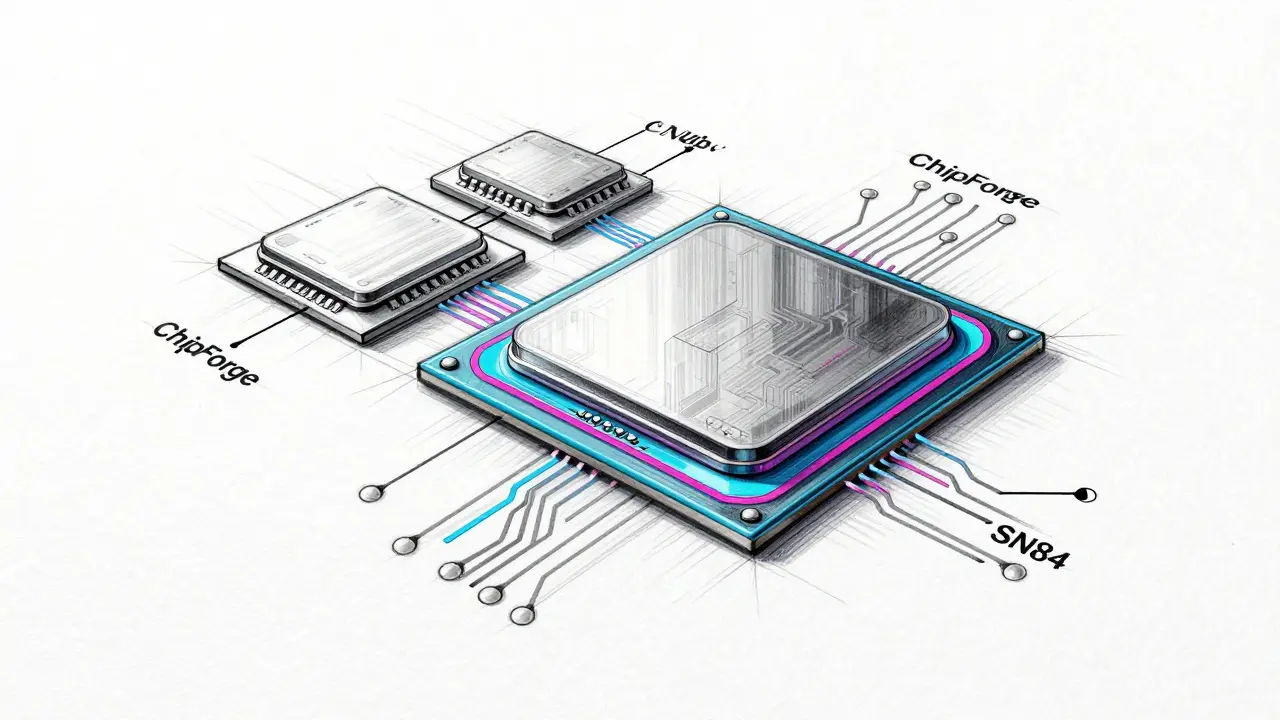
- ChipForge (SN84): This is perhaps the most unique aspect of the project. ChipForge is a decentralized subnet dedicated to designing modular processors. Instead of relying solely on centralized giants like NVIDIA or AMD, this subnet allows collaborative design of AI chips. Developers and engineers can contribute to these designs and be rewarded economically through the TATSU token.
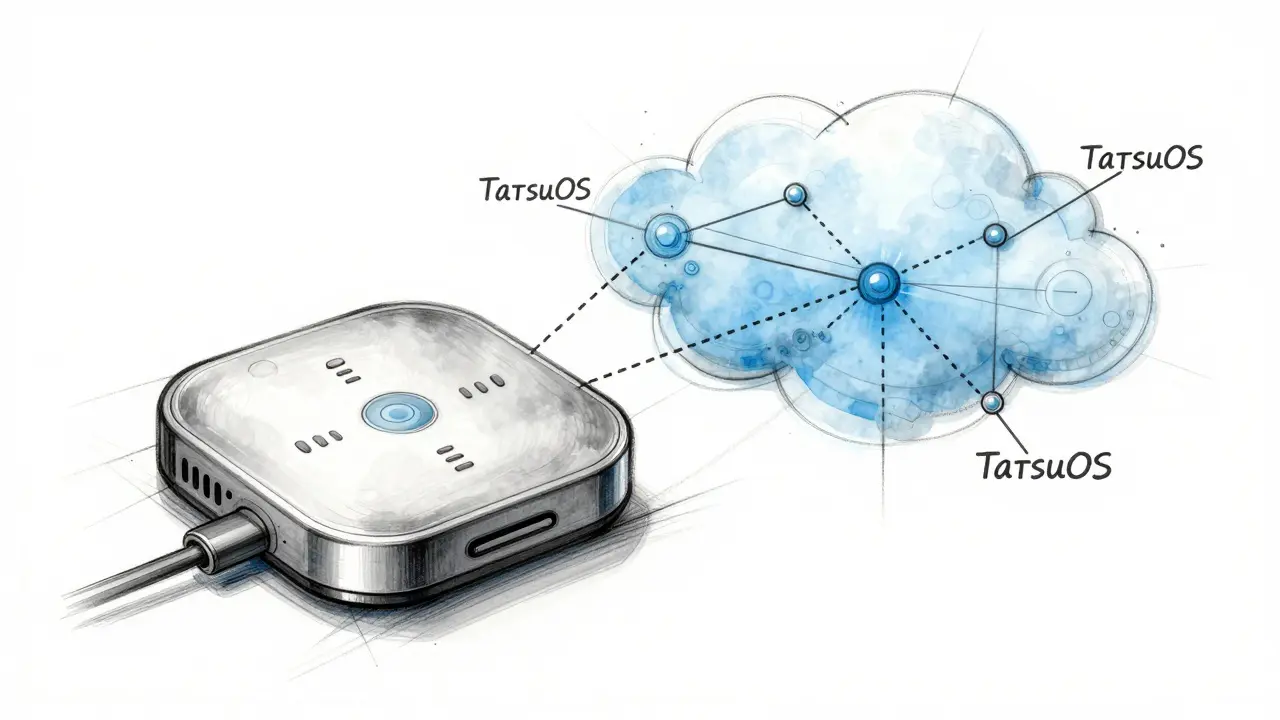
- TaτsuOS: Think of this as the operating system for the physical layer. TaτsuOS connects Internet of Things (IoT) devices from raw silicon all the way to a live presence on the network. It handles device provisioning, telemetry, and network registration, ensuring that hardware is securely integrated into the decentralized ecosystem.
These components work together. A user verifies their identity via the protocol, interacts with AI models coordinated by Bittensor subnets, and potentially runs these models on hardware designed through ChipForge. TATSU facilitates the transactions and incentives across all these layers.
Tokenomics: Supply, Distribution, and Staking
When evaluating any crypto asset, the tokenomics tell you if the model is sustainable. Taτsu has a very strict, fixed supply structure, which is a key differentiator from inflationary tokens.
| Category | Amount (Tokens) | Percentage |
|---|---|---|
| Circulating Supply | 910,000 | 91% |
| Team Allocation | 50,000 | 5% |
| Ecosystem Development | 40,000 | 4% |
| Total Fixed Supply | 1,000,000 | 100% |
There are exactly one million TATSU tokens. All were preminted at genesis on Ethereum, meaning no new tokens will ever be created. This hard cap prevents dilution, a common complaint in many other projects. The contract address is 0x92F419fB7a750aeD295B0ddF536276bf5a40124F, and it follows the standard ERC-20 interface with 18 decimal places, ensuring compatibility with wallets like MetaMask and exchanges like Bybit or Bitget.
So, why would anyone hold onto it? Staking. Holders can stake their TATSU to receive a share of the ecosystem's revenue. This creates a yield-bearing mechanism tied directly to platform usage. If more people use the identity verification or the chip-design subnets, the revenue pool grows, and stakers benefit. This aligns the long-term interests of holders with the health of the network.
Market Performance and Volatility Reality Check
Let’s talk numbers, because the market reality is starkly different from the technical ambition. As of late June 2026, TATSU is classified as a micro-cap asset. Prices have hovered between $0.62 and $0.70, with a market capitalization ranging from roughly $621,000 to $690,000.
Here is the critical context: Taτsu has experienced extreme volatility since its launch. Data from exchanges shows an all-time high (ATH) of around $70.24 back in March 2024. Currently, the price is down approximately 98% from that peak. Exchanges like Bitget explicitly label TATSU as "high-risk." This isn't just minor fluctuation; it represents a massive drawdown typical of early-stage, niche crypto projects that haven't yet achieved mass adoption.
However, there are signs of active interest. In the week leading up to late June 2026, some platforms reported weekly gains exceeding 60%, indicating speculative enthusiasm persists. On-chain data from Etherscan shows over 5,000 unique holders, which suggests a dedicated, albeit small, community. Furthermore, the Taτsu validator on the Bittensor network surpassed 200,000 TAO in delegations in February 2025, showing that serious participants in the Bittensor ecosystem are backing Taτsu’s infrastructure operations.
Who Is Taτsu For?
Understanding your role helps determine if this fits your strategy. Taτsu appeals to three distinct groups:
- DeFi and AI Enthusiasts: If you believe in the thesis that AI should be decentralized and run on open hardware rather than closed corporate servers, Taτsu offers a direct way to support that infrastructure.
- Bittensor Network Participants: Since Taτsu operates heavily within the Bittensor subnet ecosystem, existing TAO holders and validators often interact with TATSU as part of their broader strategy to maximize yields from AI-related subnets.
- High-Risk Speculators: Given the low market cap and high volatility, traders looking for asymmetric upside potential might view TATSU as a lottery ticket. The risk is total loss; the reward is significant growth if the ecosystem achieves mainstream adoption.
It is likely not suitable for conservative investors seeking stability or those unfamiliar with the complexities of Ethereum-based smart contracts and Bittensor mechanics.
How to Get Started with TATSU
If you decide to proceed, the process involves standard Web3 steps but requires attention to detail due to the niche nature of the token.
First, ensure you have an Ethereum-compatible wallet. MetaMask is the most common choice. Because TATSU is an ERC-20 token, you can import it manually using the contract address mentioned earlier if it doesn't appear automatically. Next, acquire ETH to pay for gas fees and to swap for TATSU. You can trade TATSU on exchanges like Bybit or Bitget, or use decentralized aggregators like Matcha to find the best swap rates on Ethereum.
Once you hold TATSU, consider staking. The official Taτsu ecosystem encourages staking to strengthen the network and earn revenue shares. Look for the official staking contract addresses on their verified website or trusted documentation to avoid phishing scams. Never connect your wallet to unverified links found in social media comments.
Future Outlook and Key Risks
The future of Taτsu hinges on execution. The roadmap includes expanding TaτsuOS to seamlessly integrate IoT devices and scaling ChipForge to compete with traditional chipmakers. If they succeed in creating a viable decentralized alternative for AI hardware and identity, the demand for TATSU could rise significantly.
However, the risks are substantial. The primary challenge is competition. Centralized tech giants have billions in R&D budgets. Convincing the industry to adopt decentralized chip design and identity protocols is a monumental task. Additionally, the token's liquidity remains relatively low compared to major cryptocurrencies, meaning large buy or sell orders can drastically impact the price.
As we move further into 2026, watch for updates on ChipForge’s progress and any new integrations with major AI platforms. These milestones will be better indicators of value than short-term price spikes. Remember, in the world of decentralized AI and hardware, patience and due diligence are your best tools.
Is Taτsu (TATSU) a safe investment?
No crypto investment is guaranteed, but TATSU is considered high-risk. It is a micro-cap asset with extreme volatility, having dropped nearly 99% from its all-time high. It is suitable only for investors who can afford to lose their entire capital and understand the niche AI/hardware sector.
What is the maximum supply of TATSU?
The maximum supply of TATSU is fixed at exactly 1,000,000 tokens. All tokens were minted at launch in February 2024, and no new tokens will ever be created, preventing inflation.
How does Taτsu relate to Bittensor (TAO)?
Taτsu is deeply integrated with the Bittensor network. It operates as a subnet within Bittensor, focusing on identity verification and chip design. Taτsu validators participate in the Bittensor consensus mechanism, and the project benefits from the decentralized AI infrastructure provided by TAO.
What is ChipForge (SN84)?
ChipForge is a decentralized subnet within the Taτsu ecosystem dedicated to designing modular AI processors. It aims to compete with centralized chip manufacturers by allowing collaborative, community-driven hardware design, rewarding contributors with TATSU tokens.
Can I stake TATSU for rewards?
Yes, TATSU holders can stake their tokens to earn a share of the ecosystem's revenue. Staking also helps secure the network and allows participants to engage in governance decisions regarding the Taτsu ecosystem's development.

Drew M
11 July, 2026 . 03:28 AM
Oh, look at you, trying to dress up a 98% drawdown as some kind of 'complex intersection' of innovation. 🙄 It’s adorable, really. The rest of us are busy making actual money while you’re here dissecting the tokenomics of a ghost town. But sure, keep telling yourself it’s about 'democratizing AI infrastructure' and not just a rug-pull waiting to happen with better PR. 💅✨
Tuan Nguyen
12 July, 2026 . 04:53 AM
The fundamental flaw in this entire thesis is that decentralized chip design is an engineering fantasy for the uninitiated. You cannot simply vote on transistor layouts via a subnet. The physics of heat dissipation and signal integrity do not care about your governance votes or your Bittensor delegation. This is vaporware wrapped in buzzwords to extract liquidity from retail investors who think they understand semiconductor manufacturing because they watched one YouTube video.
Deep Rahman
13 July, 2026 . 10:49 AM
I have been thinking deeply about the nature of identity in the digital age and how we define what it means to be human when machines can mimic our every move so perfectly now. The idea that a score could determine your worthiness to participate in these networks feels very much like the old systems of control we tried to leave behind but perhaps there is something to be said about having a verifiable proof of humanity that is not controlled by any single corporation or government entity anymore. It makes me wonder if we are moving towards a world where trust is no longer given freely but earned through data points that we all contribute to collectively over time.
Melissa Beckwith
15 July, 2026 . 07:34 AM
Let's be clear about the mechanics here because most people gloss over the critical details. The integration with Bittensor isn't just a marketing partnership; it's a structural dependency. If TAO validators decide that the Taτsu subnet doesn't provide sufficient value relative to its compute cost, the entire revenue model for staking collapses. The 200,000 TAO delegation mentioned is impressive on paper, but it represents a tiny fraction of the total TAO supply. This creates a fragile equilibrium where the token's utility is entirely contingent on the continued goodwill of a niche group of validators who might pivot to more profitable subnets at any moment.
Josephine Finlayson
17 July, 2026 . 06:08 AM
I think it is wonderful that there are projects attempting to decentralize hardware design! 🌟 It really shows the spirit of collaboration in the crypto space. I hope everyone stays safe and does their own research though, because volatility can be quite stressful for some folks. Let's support each other and share knowledge kindly. 😊
Hazel Fruitman
18 July, 2026 . 23:01 PM
its actually pretty shady how they market this as 'democratizing' anything when the team holds 5% and the ecosystem fund is another 4% locked away from real users. its basically a pyramid scheme with extra steps. why should i trust a project that has dropped 99% and still tries to sell me on 'future potential'? its morally bankrupt to encourage people to stake into a black hole like this. wake up sheeple.
Autumn Story
19 July, 2026 . 23:41 PM
I totally see where you're coming from Hazel! It is scary to see such big drops, but maybe there is hope? 🙏 I always try to stay positive because sometimes these dips are just temporary setbacks before a big rebound! Just be careful out there ok? Don't invest more than you can afford to lose sweetie!! 💖✨
Eric Braddock
21 July, 2026 . 23:13 PM
You're all missing the bigger picture here. This isn't just a coin; it's a surveillance tool disguised as privacy tech. The 'human score' is clearly a mechanism for social credit scoring by proxy, allowing bad actors to identify and exclude dissenters from the network. The fact that it's built on Ethereum doesn't make it free; it just makes the censorship resistant layer slightly harder to crack. They are building the infrastructure for the next generation of digital authoritarianism, and you're cheering them on. The Bittensor connection is just a way to launder the legitimacy of the project using the hype around AI. Wake up.
Andrew Schneider
23 July, 2026 . 14:33 PM
Oh, please. Eric, put down the tin foil hat for five seconds. 🎩🚫 It’s not a conspiracy, it’s just capitalism doing what it does best: chasing yield. And honestly? If this thing goes to zero, I’ll be the first to buy the dip... wait, no, I won’t. I’m just saying, the drama is delicious. 🍿💀
Ella Collinson
24 July, 2026 . 06:20 AM
The alpha here is negligible unless you understand the underlying subnet incentive structures. Most retail participants fail to grasp that the revenue share from staking is derived from transaction fees within the ChipForge and Identity subnets. Until those subnets achieve significant throughput, the APY is essentially theoretical. The tokenomics are deflationary in theory due to the fixed supply, but without demand-side pressure, the price discovery mechanism remains broken. It's a classic case of supply shock without demand elasticity.
Ray Arney
25 July, 2026 . 21:16 PM
I guess it depends on your risk tolerance. I'm not really into high-risk plays myself, but I can see why someone interested in the Bittensor ecosystem would want exposure to this. It seems like a small piece of a larger puzzle. Just don't bet the farm on it, right?
Nick G
27 July, 2026 . 16:05 PM
It is fascinating to observe how different cultures approach the concept of digital identity. In my experience, Western audiences tend to focus heavily on individual privacy and rights, whereas other regions might prioritize security and verification efficiency. This project attempts to bridge that gap by offering a universal 'human score,' which is a bold endeavor indeed. However, one must consider the ethical implications of such a metric being applied globally without cultural nuance. It is a delicate balance between technological advancement and social responsibility that requires thoughtful dialogue and inclusive participation from diverse stakeholders around the world.
Mark Tuason
28 July, 2026 . 17:25 PM
I appreciate the detailed breakdown provided in the original post. It is important to acknowledge both the potential benefits and the significant risks associated with such niche assets. While the technology sounds promising, the market performance indicates that adoption is still in its early stages. Investors should proceed with caution and ensure they fully understand the technical aspects before committing any capital.