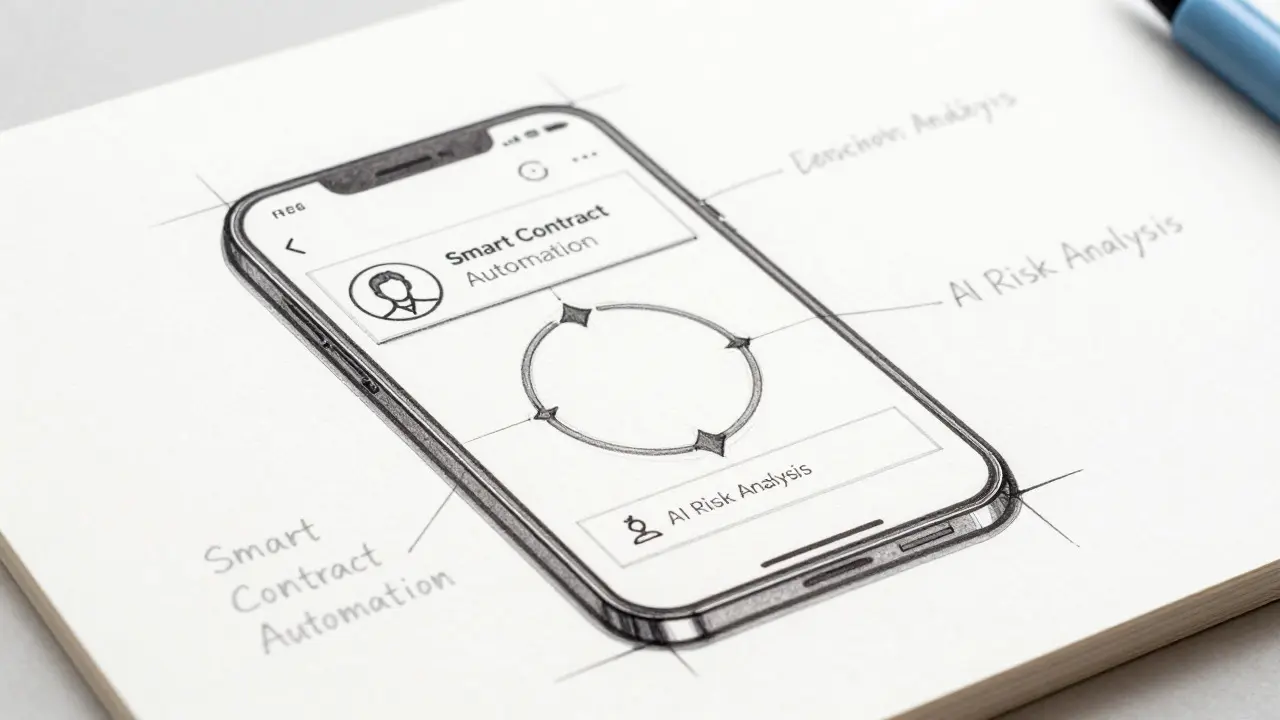
Imagine running a SaaS business or a membership site where customers pay you monthly. Now imagine they want to pay in Bitcoin or Ethereum, but every time the price swings, your revenue looks like a rollercoaster chart. That is the problem Paynetic AI, represented by the PYN token, aims to solve. It is not just another meme coin hoping for a viral moment. Instead, it positions itself as infrastructure for the future of Web3 commerce: specifically, handling recurring payments and subscription billing using blockchain technology and artificial intelligence.
If you have stumbled upon PYN on a chart or heard whispers about it in crypto communities, you are likely asking what makes it different from standard payment tokens. The short answer is automation. Paynetic uses smart contracts to handle the "subscription" part-ensuring money moves automatically each month-and AI to manage the risks that come with volatile assets. But before you buy or integrate it, you need to understand exactly how it works, who built it, and whether the numbers add up.
The Core Problem: Subscriptions Don't Work Well in Crypto
Traditional crypto payments work great for one-off transactions. You send $100 worth of ETH to buy a coffee, and it’s done. But subscriptions are different. They require trust, predictability, and stability. If a user authorizes a $50 monthly fee in crypto, what happens if the value of their wallet drops by 20% before the next billing cycle? Do they owe more? Do they get less service?
Paynetic AI (PYN) is a cryptocurrency token built on the BNB Chain designed to facilitate automated recurring payments for businesses while utilizing AI-driven analytics for risk management. The platform replaces legacy billing systems with a blockchain-based infrastructure. This allows users to connect their wallets, authorize recurring payments, and manage their subscriptions without needing to manually approve every single transaction. For businesses, this means predictable cash flow streams denominated in crypto, backed by real-time risk analysis to prevent fraud or failed payments.
Technical Foundation: Built on BNB Chain
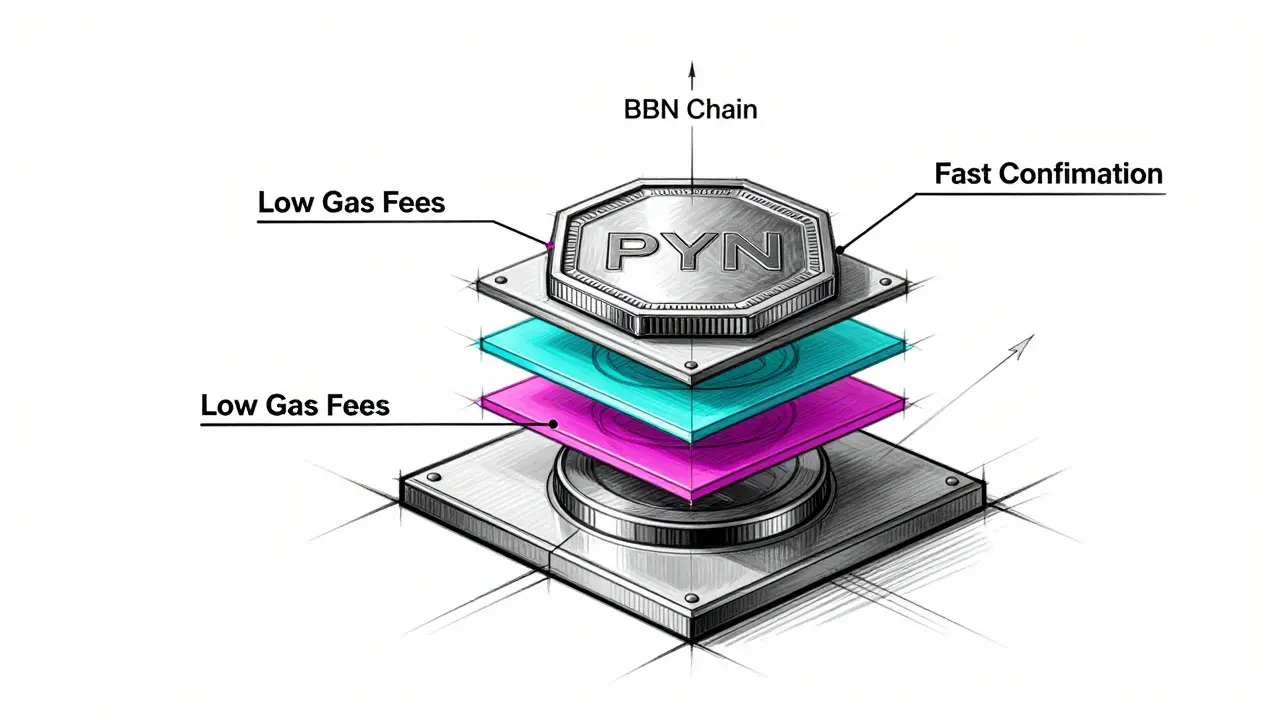
To understand PYN, you first need to look at where it lives. Paynetic is deployed as a BEP-20 token on the BNB Chain. This choice is strategic. Ethereum, while secure, often comes with high gas fees that can eat into small subscription profits. BNB Chain offers lower transaction costs and faster confirmation times, which is critical when processing hundreds or thousands of micro-payments daily.
The token follows the standard 18-decimal format common to most ERC-20 and BEP-20 tokens. Its smart contract address is 0x26b20ea5c29b12abeb27b521045d823b24222fc8. If you are using a non-custodial wallet like Trust Wallet or MetaMask, you won’t see PYN automatically listed. You will need to manually import it using this address. This is a standard procedure for newer tokens but adds a slight friction point for casual users compared to major coins like BTC or USDT.
Tokenomics and Supply Structure
When evaluating any new crypto project, the tokenomics-the economic model governing the supply and distribution-are crucial. Here is the breakdown for Paynetic AI:
- Total Supply: 10,000,000,000 (10 Billion) PYN
- Max Supply: 10,000,000,000 (10 Billion) PYN
- Circulating Supply: Approximately 6.2 Billion (as per self-reported data)
However, the story gets interesting when you look at how these tokens are distributed. Not all 10 billion tokens are freely tradable right away. The project has implemented vesting schedules to ensure long-term commitment from key stakeholders. Here is how the 10 billion supply is allocated:
| Category | Percentage | Amount (PYN) | Vesting Schedule |
|---|---|---|---|
| Ecosystem Fund | 40% | 4,000,000,000 | 10% unlocked at TGE; linear vesting over 24 months |
| Development | 20% | 2,000,000,000 | 10% unlocked at TGE; linear vesting over 23 months |
| Marketing | 15% | 1,500,000,000 | 10% unlocked at TGE; linear vesting over 25 months |
| Investors | 10% | 1,000,000,000 | 12-month cliff; linear vesting over 35 months |
| Liquidity Reserve | 5% | 500,000,000 | 18-month cliff; linear vesting over 37 months |
| Escrow Funds | 5% | 500,000,000 | 10% unlocked at TGE; remainder vests over 27 months |
| Team & Advisors | 5% | 500,000,000 | 12-month cliff; linear vesting over 29 months |
This structure suggests a focus on long-term growth. The largest chunk (40%) goes to the ecosystem fund, followed by development (20%). Only a small fraction was available during the public sale. The Initial Exchange Offering (IEO) took place between June 26 and July 1, 2025, offering 2.4 million PYN tokens-which is roughly 0.02% of the total supply. All tokens sold in this IEO were subject to 100% unlock at generation, meaning early buyers could sell immediately, contributing to initial volatility.
Market Performance and Volatility
Let’s talk about the numbers, because in crypto, price action tells a story. Paynetic AI launched in January 2025 and held its IEO in late June 2025. Like many new tokens, it experienced extreme volatility in its early days.
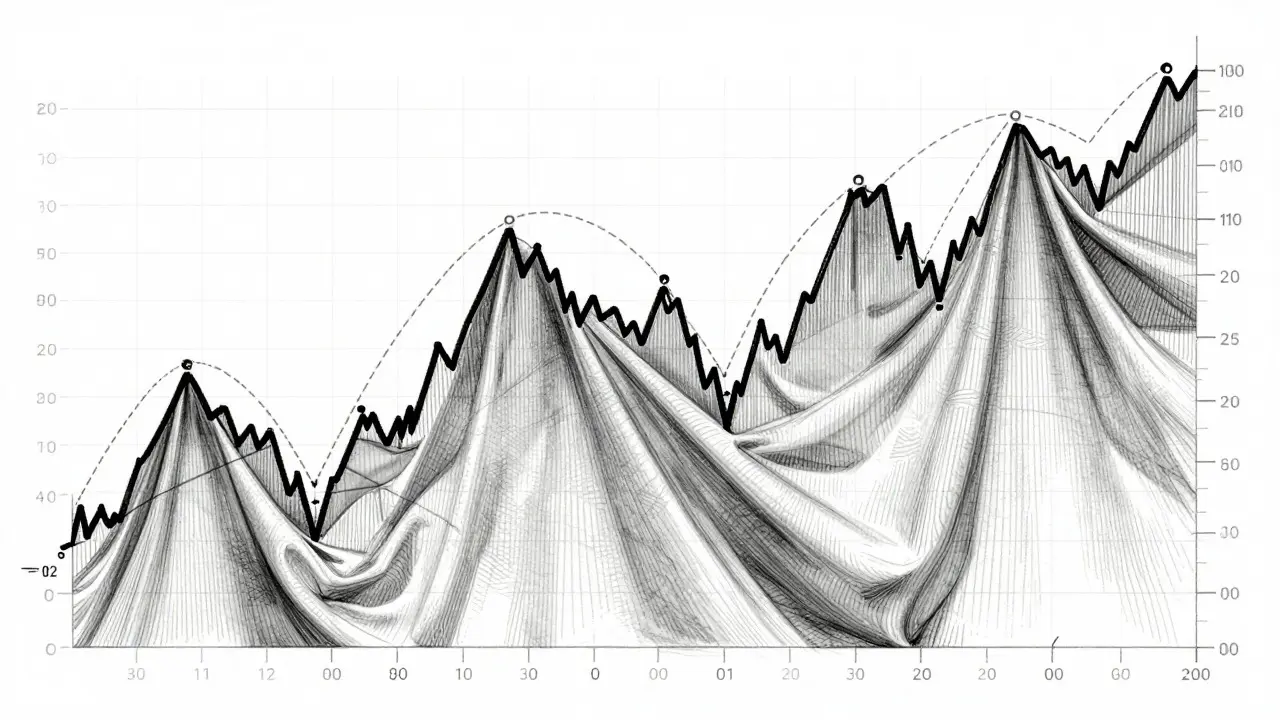
The token reached an All-Time High (ATH) of approximately $0.0520 on July 1, 2025. However, shortly after this peak, the price corrected sharply. By mid-July 2025, prices were fluctuating between $0.000018 and $0.000124 depending on the exchange and liquidity pool. This represents a drawdown of nearly 99% from its peak. While this sounds alarming, it is a common pattern for micro-cap tokens post-IEO. Early speculators take profits, and the market seeks a stable floor.
As of August 2026, PYN remains a low-capitalization asset. Market capitalizations have hovered in the range of $64,000 to $285,000 (Fully Diluted Valuation). Trading volume varies significantly, with some snapshots showing quiet periods under $5,000 in daily volume, while others spike to over $12 million during active trading sessions. This inconsistency highlights that PYN is still in the early adoption phase, with liquidity concentrated primarily on mid-tier centralized exchanges like LBank and Gate.io.
How to Buy and Store PYN
If you decide to invest in Paynetic AI, here is the practical path forward. Since PYN is not yet widely supported by major retail apps out-of-the-box, you will likely need to use a centralized exchange (CEX) that lists it.
- Create an Account: Register on an exchange that supports PYN, such as LBank or Gate.io. Complete the necessary KYC (Know Your Customer) verification.
- Fund Your Wallet: Deposit USDT or BNB into your exchange account. These are the primary trading pairs for PYN.
- Trade for PYN: Navigate to the PYN/USDT or PYN/BNB pair and execute a market or limit order.
- Withdraw to Cold Storage (Optional): For long-term holding, withdraw your PYN to a compatible BNB Chain wallet. Remember, you must manually add the token using the contract address mentioned earlier.
Keep in mind that because PYN is a BEP-20 token, ensure you are sending it to a BNB Chain address, not an Ethereum address. Sending it to the wrong network could result in permanent loss of funds.
Risks and Considerations
No investment is without risk, and micro-cap tokens carry specific dangers. First, there is the issue of liquidity. With relatively low daily volumes on some platforms, large sell orders can cause significant slippage, meaning you might get a much worse price than expected when selling.
Second, consider the competition. The space for crypto payments is crowded. Established players like Lightning Network (for Bitcoin) or various stablecoin solutions already handle recurring payments effectively. Paynetic AI’s unique selling proposition is the integration of AI for risk analysis and churn prediction. Whether this technical edge translates into widespread merchant adoption remains to be seen. Currently, there is limited public documentation on major merchants actively using the platform, suggesting that user adoption is still emerging.
Finally, regulatory uncertainty looms over all crypto projects. As governments worldwide tighten rules around digital assets, payment-focused tokens may face additional scrutiny regarding compliance and anti-money laundering (AML) standards.
Future Outlook
Paynetic AI is betting on the normalization of crypto subscriptions. If Web3 commerce grows, the need for seamless, automated billing will increase. The team’s allocation of resources toward development and ecosystem growth indicates a serious intent to build lasting infrastructure rather than a quick cash-out scheme.
For investors, PYN represents a high-risk, high-reward play. If the platform gains traction among SaaS companies and content creators, the utility demand for PYN could drive significant value appreciation. However, until we see verifiable, large-scale adoption beyond the initial IEO hype, caution is advised. Keep an eye on their official channels for updates on partner integrations and technological milestones.
What is the primary use case for the PYN token?
The PYN token is designed to facilitate recurring payments and subscription billing in the cryptocurrency space. It allows businesses to accept crypto for subscriptions using smart contract automation and AI-driven risk analysis, replacing traditional legacy billing systems.
Which blockchain is Paynetic AI built on?
Paynetic AI is built on the BNB Chain as a BEP-20 token. This choice provides lower transaction fees and faster processing speeds compared to networks like Ethereum, making it suitable for frequent micro-transactions associated with subscriptions.
What is the total supply of PYN tokens?
The total and maximum supply of PYN tokens is fixed at 10,000,000,000 (10 billion). Approximately 6.2 billion tokens were reported as circulating in early data, with the rest allocated to ecosystem funds, development, marketing, and vested for team and investors.
Where can I buy PYN tokens?
PYN tokens can be traded on centralized cryptocurrency exchanges. As of recent data, LBank and Gate.io are among the primary venues where PYN is listed for trading against pairs like USDT or BNB.
Is Paynetic AI a safe investment?
Like all micro-cap cryptocurrencies, PYN carries high risk. It has experienced extreme volatility, including near-100% drawdowns from its all-time high. Investors should consider the low liquidity, competitive landscape, and early-stage adoption metrics before investing. Always do your own research (DYOR).
How does the AI component work in Paynetic?
The AI component in Paynetic is used for real-time risk analysis and streamlined user experience. It helps detect fraud, assess payment reliability, and potentially predict customer churn, allowing businesses to manage their subscription revenue more securely and efficiently.


Aryan MISHRA
14 August, 2026 . 14:49 PM
The tokenomics are fundamentally flawed. The vesting schedules are merely a smokescreen for insider liquidity events. You are looking at a classic pump-and-dump structure disguised as 'infrastructure'. The AI component is vaporware. It is a solution in search of a problem that does not exist. Do not touch this with a ten-foot pole.
Ryan Robinson
14 August, 2026 . 18:46 PM
hey guys, i think this could be cool if they actually get some big companies to use it. the fees on eth are insane so bnb makes sense for small stuff like subscriptions. just wish there was more info on who the team is though. feels a bit sketchy but maybe im overthinking it lol
SUBHAM CHOUDHURY
15 August, 2026 . 02:32 AM
You have to look past the noise and see the potential here! Every new technology faces skepticism in its early stages. If you believe in the vision of Web3 commerce, this is a chance to support innovation. Keep an open mind and focus on the long-term value proposition rather than short-term price action. Stay positive!
amy miranda
15 August, 2026 . 12:30 PM
This entire project reeks of desperation and poor planning. The fact that the price dropped 99% should tell you everything you need to know about the lack of genuine interest from the market. It is morally questionable to promote such volatile assets to unsuspecting retail investors. The regulatory risks alone make this a ticking time bomb. Who is actually using this? No one. It is a ghost town.
Pernelia Wahkan
16 August, 2026 . 10:55 AM
I’ve been digging into the smart contract code because I’m curious how the AI risk management actually functions on-chain. It’s fascinating to see how they’re trying to automate churn prediction without off-chain oracles messing up the trust model. The integration with BNB Chain is clever for gas efficiency, but I wonder if the latency affects real-time fraud detection. Has anyone else looked at the audit reports?
Subhash Kashyap Dm
18 August, 2026 . 09:40 AM
its all rigged. the insiders dump on the little guy. bnb chain is just a casino for whales. they say ai but its just marketing buzzwords to fool the masses. wake up sheeple. the centralization is hidden in plain sight. trust no one.
Billy Cunningham
19 August, 2026 . 19:25 PM
Another day another coin trying to solve a problem nobody has 😩 Why do we need crypto for Netflix subscriptions? Just use a credit card. This feels like another waste of time and energy for everyone involved 📉
Ed Wallace
20 August, 2026 . 18:33 PM
Consider the philosophical implications of automating trust through algorithms. We are moving away from human-to-human agreements toward machine-mediated contracts. Is this progress or a loss of agency? The convenience of automated recurring payments is undeniable, but what happens when the algorithm decides you are a risk? The intersection of AI and finance is a wild west of ethics.
Joshua Hofford
22 August, 2026 . 08:22 AM
Hey everyone! Let's keep the vibes good here. Crypto is all about taking calculated risks for massive rewards. If Paynetic AI succeeds, early supporters will benefit greatly. Embrace the volatility as part of the journey. We are building the future together! 🚀✨
Marcia Albert
23 August, 2026 . 17:17 PM
I'm just sitting back watching the show. The charts are pretty wild, honestly. One minute it's up, next minute it's down. Reminds me of those penny stocks from the dot-com era. I'll wait until someone else figures out if it's legit before I put any money in. Low stakes observation mode activated.
Emma Smith
24 August, 2026 . 10:59 AM
the decentralization narrative is crumbling under the weight of centralized exchanges listing these tokens. why do we need gate.io to validate a blockchain protocol? it’s ironic really. the tech is supposed to disintermediate but here we are relying on kyb and kyc again. typical.
Ed Mitchell
25 August, 2026 . 06:54 AM
It is evident that this is a coordinated effort to launder money through subscription services. The AI is a front for surveillance capitalism. They want your data and your soul. The low liquidity is by design to manipulate prices. Do not fall for the hype. It is a trap set by the globalist elite to control your financial autonomy.
Erica Johnson
26 August, 2026 . 04:12 AM
I read the whitepaper and it seems overly complicated for what it does. Why not just use stablecoins for subscriptions? That solves the volatility issue without needing a new token. The PYN token adds unnecessary complexity and risk. Seems like a job for USDC, not a speculative asset. 🤷♀️
Ken G
26 August, 2026 . 19:35 PM
another scam wrapped in fancy words. the rich get richer while we chase pixels. they say it’s for business but i bet most holders are degens. simple truth: if it sounds too good to be true it is. stay away from this garbage.
Lorraine Surringer
28 August, 2026 . 03:50 AM
oh my gosh, reading this makes my head spin! 😱 why is everyone so negative? i mean sure the price dropped but thats normal right? i hope it goes up soon because i really want to buy some coffee with crypto someday. please tell me it’s going to moon! 🌙💖
Eden Tadesse
28 August, 2026 . 15:14 PM
I respect the attempt to innovate, but the execution needs work. The user experience for adding the token manually is a huge barrier. Most people won’t bother. If you can’t make it seamless, you won’t get mass adoption. Just my two cents. Hope it gets better tho.
Eric Zehr
28 August, 2026 . 18:54 PM
Let’s break this down logically. The problem of volatility in crypto subscriptions is real. Stablecoins solve price stability but not necessarily the automation and risk analysis aspects. If Paynetic can prove their AI reduces churn and fraud effectively, there is utility here. However, the current market cap suggests low confidence. Proceed with caution and diversify.
Namrata Mapgaonkar
28 August, 2026 . 23:31 PM
in india we are used to high risk investments so this doesnt scare me much. but yes the liquidity is low which is bad. hope they list on bigger exchanges soon. otherwise its hard to exit. fingers crossed for growth! 🙏🇮🇳
Carl Michaud
29 August, 2026 . 21:35 PM
The semantic layer of this project is deeply flawed. They conflate payment processing with subscription management. The AI claims are unsubstantiated by any peer-reviewed research or transparent methodology. It is a parasitic entity feeding on the ignorance of retail investors. The tokenomics are designed to enrich the founders at the expense of the community. Avoid.
Matt Kay
30 August, 2026 . 19:22 PM
boring. same old story. another token another rug pull waiting to happen. pass.
Dave Kjendal
1 September, 2026 . 12:50 PM
life is short why waste it on crypto trash? go outside. touch grass. this is just numbers on a screen meant to make you anxious. the whole thing is a joke. stop pretending it matters.