Online gambling has always had a trust problem. You hand over your money to a centralized platform, and you have to hope they aren't rigging the games behind the scenes. Arcadeum, represented by its native ARC token, tries to fix this by moving the entire operation on-chain. It is a decentralized casino built on the Arbitrum blockchain that promises verifiable fairness, transparent odds, and a clear stance against predatory industry practices.
If you are looking at ARC as an investment or just curious about how decentralized betting works, you need to understand what makes this project different from traditional online casinos or other crypto gambling sites. The core promise is simple: no hidden algorithms, no opaque house edges, and total transparency in how wins and losses are calculated. But like any high-risk crypto asset, there are nuances you need to grasp before connecting your wallet.
How Arcadeum Works: The On-Chain Advantage
Traditional online casinos run their games on private servers. They claim to use Random Number Generators (RNGs), but you cannot verify them independently. Arcadeum flips this model. By building on Arbitrum, a Layer 2 scaling solution for Ethereum, the platform ensures that every game outcome is recorded on the public ledger.
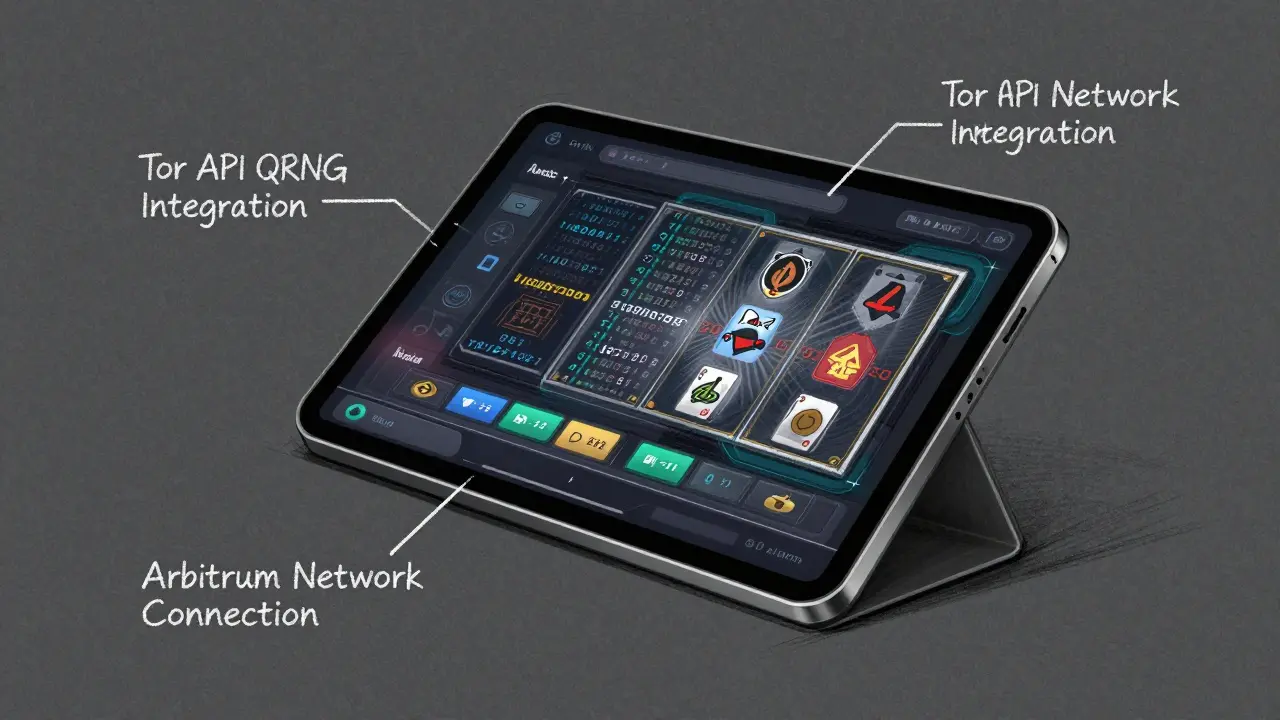
The key technology here is Tor API 3 QRNG air node. This system generates random numbers using atmospheric noise, which is then verified on-chain. This means when you play a slot machine or a card game on Arcadeum, the result isn't decided by a black-box server owned by the company. It is decided by cryptographic proof that anyone can audit. For players who value sovereignty and transparency, this is a significant shift. You don't have to trust the operator; you trust the code.
The platform also emphasizes self-custody. In many crypto casinos, you deposit funds into a hot wallet controlled by the exchange. With Arcadeum's infrastructure, the goal is to keep users in control of their assets until the moment of the bet, reducing the risk of platform insolvency or hacks draining user balances.
The ARC Token: Utility and Supply Dynamics
The ARC token is the fuel that powers the Arcadeum ecosystem. It is not just a speculative asset; it has specific utility within the platform. Here is what you need to know about its structure:
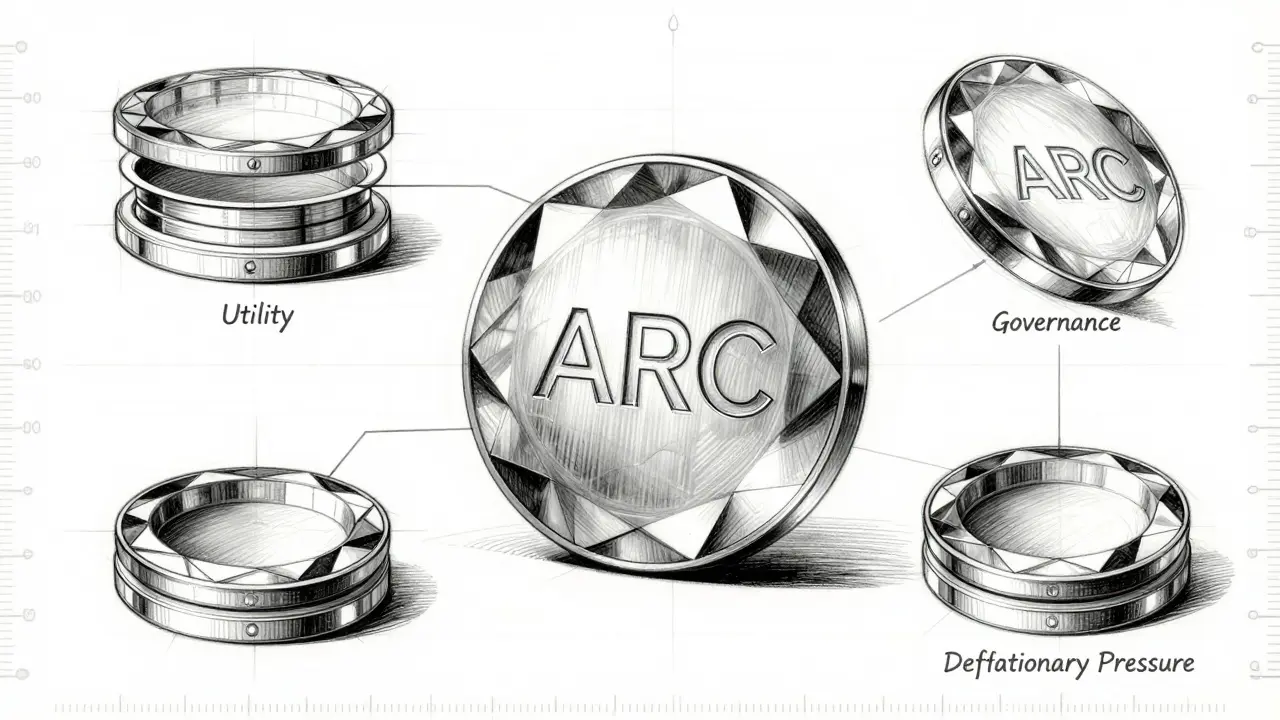
- Fixed Supply: The total maximum supply of ARC is capped at 10 million tokens. No new tokens can be mined or minted beyond this limit. This deflationary pressure is often cited by supporters as a positive factor for long-term value retention, assuming demand increases.
- Circulating Supply Confusion: Data on how many tokens are actually in circulation varies wildly across tracking platforms. Some sources report around 7.98 million in circulation, while others list figures closer to 9.98 million. This discrepancy makes calculating accurate market capitalization difficult and adds a layer of uncertainty for investors relying on standard metrics.
- Utility: ARC is used for placing bets, paying transaction fees within the casino, and potentially participating in governance decisions regarding the platform's future development.
Because the supply is fixed, the price action is heavily driven by trading volume and liquidity rather than inflationary emissions. However, low liquidity can lead to extreme volatility, which we will explore in the next section.
| Attribute | Value / Detail |
|---|---|
| Blockchain | Arbitrum One |
| Token Type | ERC-20 Compatible |
| Total Supply | 10,000,000 ARC |
| All-Time High | $2.48 (March 18, 2023) |
| All-Time Low | $0.000431 |
| Primary Use Case | Decentralized Gambling & Betting |
Price Volatility and Market Reality
If you bought ARC at its all-time high of $2.48 in March 2023, you are currently looking at a loss of approximately 99%. As of May 2026, the price hovers between $0.015 and $0.05 depending on the exchange. This extreme drawdown is common in niche crypto sectors, especially those tied to gambling, which faces regulatory headwinds globally.
One of the most striking aspects of ARC's current market data is the discrepancy between exchanges. Binance reports a price of roughly $0.015 with significant daily volume, while Coinbase lists it higher at $0.031, and other trackers show values up to $0.05. These differences highlight the fragmented nature of liquidity. If you are trading ARC, you must check multiple platforms to find the best rate, as arbitrage opportunities exist but may be hard to exploit due to withdrawal limits or bridge times.
The trading volume is also inconsistent. While Binance shows healthy daily turnover, smaller decentralized exchanges (DEXs) like Uniswap V3 on Arbitrum show minimal activity. This suggests that retail interest is concentrated on major centralized exchanges, while the decentralized ethos of the project hasn't yet translated into massive on-chain trading volume. For investors, this means slippage could be an issue if you try to move large amounts of ARC quickly.
Ethical Positioning and Regulatory Risks
Arcadeum differentiates itself not just through technology, but through its mission statement. The project explicitly positions itself against the dark side of the gambling industry. Traditional online casinos have been linked to human trafficking, forced labor, and predatory marketing tactics targeting vulnerable individuals. Arcadeum claims to operate with censorship resistance and ethical standards, ensuring that players understand the risks and odds clearly.
This ethical stance is appealing, but it doesn't shield the project from regulatory scrutiny. Gambling laws vary drastically by jurisdiction. In some countries, decentralized gambling is a legal gray area. Because Arcadeum is fully on-chain and accessible globally, it bypasses geographic restrictions, which is great for freedom but risky for compliance. Users should be aware that accessing gambling services may violate local laws, regardless of whether the platform is decentralized or not.
The lack of formal security audits from top-tier firms is another point of caution. While independent reviewers have given the project a subjective legitimacy score of around 75%, citing its institutional parameters and exchange listings, the absence of a publicly available, comprehensive smart contract audit report leaves a gap in trust. In the world of DeFi, unverified code is always a risk.
Is Arcadeum Legitimate?
Determining legitimacy in crypto is rarely binary. Arcadeum is listed on reputable exchanges like Binance, Gate.io, and LBank, which provides a baseline level of credibility. Scams rarely get listed on these major platforms due to strict KYC and due diligence processes. Furthermore, the project has been active since 2023, surviving the bear market crash that wiped out countless competitors.
However, "legitimate" does not mean "safe investment." The project operates in a high-risk sector with volatile tokenomics. The conflicting data on circulating supply and the lack of unified market cap reporting suggest that the project's financial transparency is still maturing. Investors should treat ARC as a high-risk, speculative asset rather than a stable store of value.
How to Get Started with ARC
If you decide to engage with the Arcadeum ecosystem, here is the practical path forward:
- Choose Your Exchange: For easiest access, look at centralized exchanges like Binance or Gate.io where liquidity is deeper. For a more decentralized experience, use Uniswap V3 on the Arbitrum network.
- Set Up a Wallet: You will need a non-custodial wallet like MetaMask. Ensure it is configured to interact with the Arbitrum network to minimize gas fees.
- Bridge Assets: If you are buying on a CEX, withdraw ARC directly if supported. If trading on DEX, bridge ETH or USDC to Arbitrum first, then swap for ARC.
- Verify Contracts: Always double-check the ARC token contract address on official Arcadeum channels to avoid phishing scams. Fake tokens are common in the gambling sector.
Remember, the primary utility of ARC is within the casino platform. If you are not planning to gamble, you are purely speculating on the token's price appreciation, which depends on the adoption of the Arcadeum platform and broader sentiment toward crypto gambling.
What blockchain is Arcadeum (ARC) built on?
Arcadeum is primarily built on the Arbitrum blockchain, which is a Layer 2 scaling solution for Ethereum. This allows for faster transactions and lower fees compared to the Ethereum mainnet, making micro-bets feasible for users.
What is the total supply of ARC tokens?
The total maximum supply of ARC tokens is fixed at 10 million. No additional tokens can be created or mined, which creates a deflationary supply model.
Why do ARC prices differ so much between exchanges?
Price discrepancies arise due to fragmented liquidity. Major exchanges like Binance have higher trading volumes and different order books compared to smaller DEXs or other CEXs. Additionally, delays in arbitrage bots correcting these differences can lead to temporary price gaps.
Is Arcadeum safe to use?
Arcadeum uses provably fair technology via Tor API 3 QRNG air nodes to ensure game outcomes are random and verifiable. However, as with any DeFi platform, users face risks related to smart contract vulnerabilities, personal wallet security, and regulatory changes in their jurisdiction.
Can I buy ARC on Coinbase?
Yes, ARC is listed on Coinbase, though availability may vary by region. Other major exchanges supporting ARC include Binance, Gate.io, LBank, and CoinEx. Always check the latest listing status on the exchange directly.
What happened to the price of ARC after its all-time high?
After reaching an all-time high of $2.48 in March 2023, the ARC token experienced a significant decline, dropping over 99% from its peak. This is consistent with the broader bear market trends seen in the cryptocurrency sector during that period.