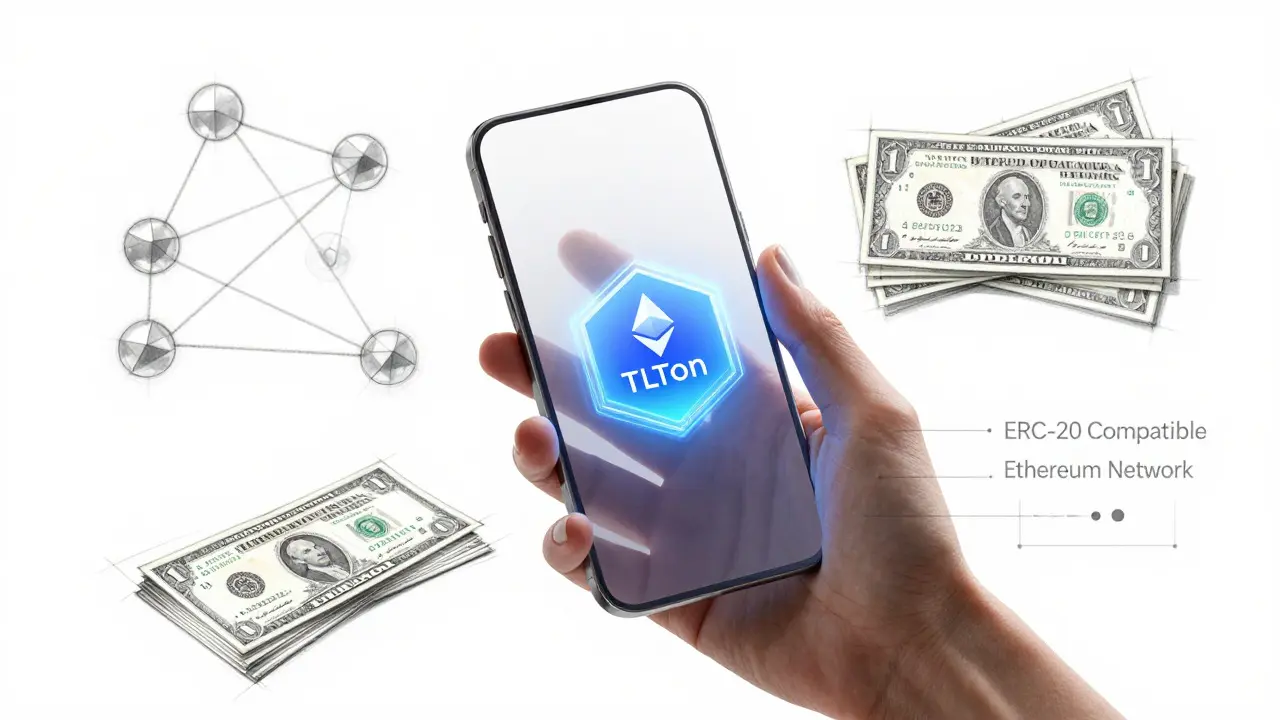
Imagine holding a piece of the U.S. government's debt in your digital wallet, trading it at 3 AM on a Tuesday without calling a broker. That is exactly what TLTon is. It is an Ethereum-based cryptocurrency token that represents fractional ownership in the iShares 20+ Year Treasury Bond ETF (TLT). Issued by Ondo Finance, this asset bridges traditional fixed-income markets with decentralized finance (DeFi), allowing global investors to gain exposure to long-duration U.S. Treasuries while keeping their assets on-chain.
The Core Structure: How TLTon Works
To understand TLTon, you first need to look at what sits underneath it. The underlying asset is the iShares 20+ Year Treasury Bond ETF, commonly known as TLT. Managed by BlackRock, TLT tracks the ICE U.S. Treasury 20+ Year Bond Index and invests primarily in U.S. Treasury bonds with maturities greater than 20 years. This makes it highly sensitive to interest rate changes; when rates go down, TLT usually goes up, and vice versa.
TLTon wraps this ETF into a digital format. Each TLTon token is backed by real TLT shares held by trusted U.S. custodians. As of May 2026, the conversion ratio stands at 1.0362, meaning one TLTon token equals approximately 1.0362 shares of the TLT ETF. This slight premium reflects how Ondo packages the holdings and reinvested dividends into the token’s structure. Unlike a standard stablecoin like USDC, which aims for a flat $1.00 price, TLTon’s value fluctuates with the bond market. If you hold TLTon, you are effectively holding a leveraged version of the TLT ETF's performance, complete with dividend reinvestment benefits.
Why Use a Tokenized Bond ETF?
You might wonder why anyone would buy a tokenized version of an ETF they could buy directly on a stock exchange. The answer lies in accessibility and utility. Traditional brokerage accounts often have geographic restrictions, high minimums, or limited trading hours. TLTon removes these barriers. Because it operates on the Ethereum network, it is transferable 24/7. You don't wait for the New York Stock Exchange to open to swap your position or use your asset as collateral.
This 24/7 availability opens the door to DeFi applications. You can lend out TLTon on lending protocols, provide liquidity in automated market makers, or use it as collateral for borrowing stablecoins. For investors in Asia, Europe, or Latin America who lack easy access to U.S. financial infrastructure, TLTon offers a seamless way to participate in the U.S. Treasury market. It turns a static, off-chain asset into a dynamic, programmable component of your crypto portfolio.

Market Performance and Liquidity
As of August 2026, TLTon has established itself as a niche but significant player in the Real-World Asset (RWA) sector. Data from multiple providers shows a circulating supply hovering around 225,000 tokens, with a market capitalization near $19 million to $20 million. The price per token typically ranges between $85 and $88, reflecting the current state of long-term U.S. interest rates.
Liquidity is moderate but sufficient for most retail and small institutional trades. Daily trading volumes generally fall between $800,000 and $2 million across 12 to 15 active markets. While this is far lower than top-tier cryptocurrencies like Bitcoin or Ethereum, it is robust enough to prevent excessive slippage for trades under $500,000. The asset is listed on major data aggregators like CoinGecko and CoinMarketCap, where it ranks in the mid-600s among all cryptocurrencies. This ranking indicates that while TLTon is not a mainstream meme coin, it holds a respected position in the specialized RWA category.
| Metric | Value | Description |
|---|---|---|
| Price Range | $85.00 - $88.00 USD | Fluctuates with U.S. Treasury yields |
| Circulating Supply | ~225,000 TLTon | Backed by custodial TLT shares |
| Market Cap | ~$19.5 Million USD | Total value of all issued tokens |
| Daily Volume | $0.8M - $2.0M USD | Average 24-hour trading activity |
| Conversion Ratio | 1.0362 TLT per TLTon | Reflects dividend reinvestment packaging |
Risks and Considerations
No investment is without risk, and TLTon carries specific challenges that differ from holding cash or equities. The primary risk is interest rate sensitivity. Since TLT holds bonds with over 20 years to maturity, its duration is high-often exceeding 17 years. This means that even a small increase in U.S. interest rates can cause a significant drop in TLTon’s price. For example, a daily decline of 1.3% is considered routine volatility for this asset class during periods of macroeconomic uncertainty.
There is also structural counterparty risk. While the tokens are backed by real assets, you are relying on Ondo Finance’s legal framework and its custodial partners to enforce your claims. If there were a failure in the custody chain or a regulatory hiccup in the tokenization process, redemption might become complicated. Additionally, because TLTon is a cross-border security, tax treatment varies by jurisdiction. Investors in the EU, UK, Singapore, or elsewhere should consult local advisors to understand how gains from TLTon are classified-whether as capital gains, income, or something else entirely.
How to Buy and Use TLTon
Getting started with TLTon is straightforward if you already have a crypto wallet. First, you need an Ethereum-compatible wallet, such as MetaMask. Next, you must acquire some ETH to pay for gas fees, which can range from under $1 to over $10 depending on network congestion. Once set up, you can purchase TLTon directly through the Ondo Finance platform or via centralized exchanges that list the pair. The initial onboarding process may include KYC (Know Your Customer) checks, given the securities nature of the asset.
Once you hold TLTon, you have two main options. You can hold it passively, letting the underlying TLT dividends work in your favor, or you can deploy it into DeFi. Using TLTon as collateral allows you to borrow stablecoins against your bond exposure without selling your position. This strategy is popular among yield optimizers who want to maintain their bond allocation while generating additional income through lending rates. Just remember to monitor your liquidation price carefully, especially during volatile rate environments.
FAQ
Is TLTon a stablecoin?
No, TLTon is not a stablecoin. Its price fluctuates based on the performance of the iShares 20+ Year Treasury Bond ETF (TLT). While it is backed by low-risk U.S. government debt, it is subject to interest rate volatility, unlike fiat-backed stablecoins such as USDC or USDT which aim to stay pegged to $1.00.
Who issues TLTon?
TLTon is issued by Ondo Finance, specifically through their Ondo Global Markets platform. The tokens are minted and redeemed on the Ondo platform, ensuring a direct link between the on-chain token and the off-chain ETF shares held by custodians.
What blockchain does TLTon operate on?
TLTon operates on the Ethereum network as an ERC-20 compatible token. This means you need ETH in your wallet to pay for transaction fees (gas) when transferring or interacting with the token in DeFi protocols.
Can I trade TLTon 24/7?
Yes, TLTon is transferable 24/7 on the Ethereum network. However, minting and redeeming new tokens against the underlying TLT ETF shares typically align with U.S. equity market hours, so large-scale arbitrage opportunities may be limited outside of those windows.
What is the main risk of holding TLTon?
The primary risk is interest rate volatility. Because the underlying TLT ETF holds long-duration bonds, rising interest rates can cause significant price drops in TLTon. Additionally, there is counterparty risk associated with relying on Ondo Finance and its custodians to manage the underlying assets.