You might have heard a rumor floating around online that Thailand charges a flat 15% tax on all cryptocurrency profits. If you’re planning to trade Bitcoin or Ethereum from Bangkok, Chiang Mai, or anywhere in the Kingdom, this sounds like a heavy burden. But here is the twist: for most individual residents trading on the right platforms, that 15% figure is largely irrelevant to your personal wallet right now. In fact, if you follow the rules set out in late 2025, you could be paying zero percent on your capital gains until the end of 2029.
The reality of the Thai cryptocurrency tax framework is more nuanced than a single headline number suggests. The government has implemented a strategic exemption designed to pull traders away from unregulated offshore sites and into the local ecosystem. Understanding where the 15% rate actually applies-and where it doesn’t-is the difference between keeping your profits and handing them over to the revenue department unnecessarily.
The Big Shift: Zero Tax on Capital Gains (2025-2029)
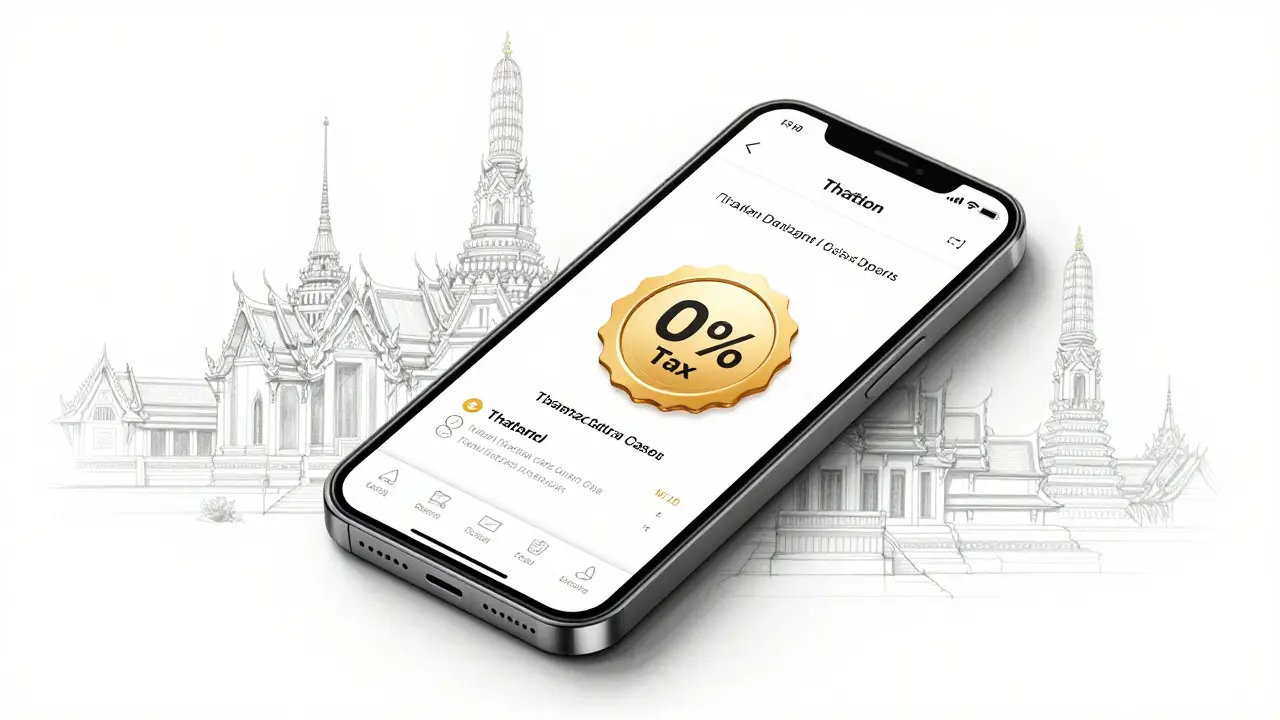
Let’s clear up the confusion immediately. Under Ministerial Regulation No. 399 (a legal decree published in the Royal Gazette on September 5, 2025), individual taxpayers in Thailand enjoy a complete exemption from personal income tax on cryptocurrency capital gains. This isn't a small deduction; it is a total waiver. The regulation covers the period from January 1, 2025, through December 31, 2029.
This move was officially approved by the Cabinet on June 17, 2025, with Deputy Finance Minister Julapun Amornvivat describing it as a critical step to boost economic potential. The goal? To transform Thailand into a global "Digital Asset Hub." By removing the tax friction for individuals, the government hopes to stimulate market activity, attract foreign investment, and encourage domestic consumption. They project this strategy will generate roughly $1 billion annually through broader economic stimulation, even though the direct tax revenue from these trades drops to zero.
So, if you buy Bitcoin today and sell it next year for a profit, do you pay tax? Generally, no. But there is a massive "if" attached to that statement. The exemption is not universal; it is conditional based on where you trade.
Where the 15% Rule Actually Applies
If the 15% rate isn't for individual capital gains, why does it keep appearing in search results? The 15% figure refers to a specific withholding tax applied to foreign entities earning cryptocurrency income within Thailand. This is a corporate-level mechanism, not a personal one. It targets non-resident companies or organizations generating crypto-related revenue in the country.
For the average retail investor living in Thailand, this 15% withholding tax is usually a non-issue unless you are operating a business structure that classifies you as a foreign entity earning passive income locally. However, mixing up corporate withholding taxes with personal capital gains tax is a common mistake. Don't let the 15% scare you off if you are an individual trader. Your primary concern should be whether your trading platform qualifies for the exemption.
The Golden Rule: You Must Use Licensed Exchanges
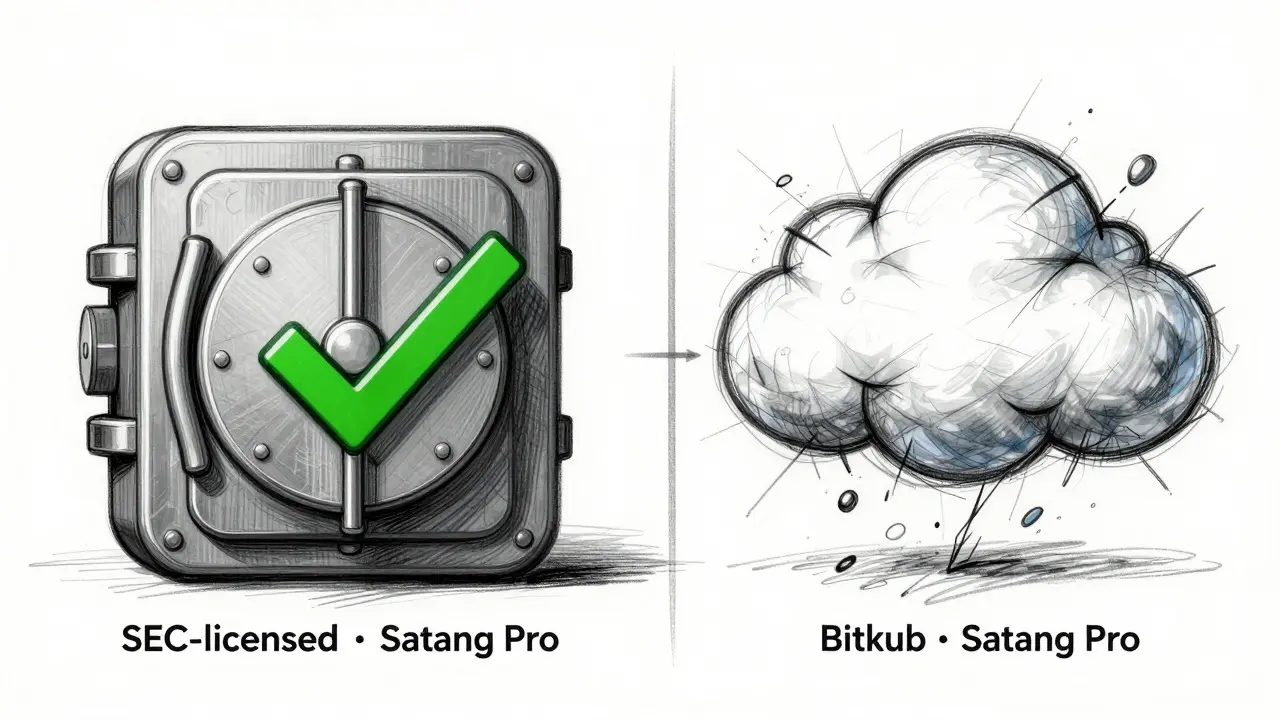
Here is where many traders trip up. The tax exemption under Ministerial Regulation No. 399 is strictly limited to transactions conducted on digital asset exchanges licensed by the Thai Securities and Exchange Commission (SEC). These are platforms authorized under the 2018 Digital Asset Business Decree.
If you trade on Binance Global, Coinbase, Kraken, or any other international exchange that does not hold a specific Thai license, your profits are not exempt. In those cases, your gains are treated as ordinary personal income and taxed at your marginal income tax rate, which can range from 0% to 35% depending on your total annual earnings. This is a crucial distinction. The government wants you trading on local, regulated platforms like Bitkub, Satang Pro, or Zipmex (if still operational and compliant), where they can monitor compliance and ensure market integrity.
To qualify for the zero-tax status, your entire transaction chain-buying and selling-must occur on these SEC-licensed platforms. Moving funds to a cold wallet and then selling via a peer-to-peer method might disqualify you, depending on how the sale is executed and recorded. The safest path is to keep your assets on the licensed exchange until the moment of sale.
What Is Not Covered: P2P, DeFi, and Staking
The exemption is narrow. It covers capital gains from the sale or transfer of cryptocurrencies on licensed exchanges. It does not cover other forms of crypto income. If you are engaging in more complex strategies, you need to know what falls outside the safety net.
- Peer-to-Peer (P2P) Transactions: Selling crypto directly to another person using cash or bank transfers is not covered. These profits remain taxable as ordinary income.
- Decentralized Finance (DeFi): Swapping tokens on decentralized exchanges (DEXs) like Uniswap or PancakeSwap is not exempt. Since DEXs are not licensed by the Thai SEC, any gains here are fully taxable.
- Yield Farming and Lending: Interest earned from lending your crypto or providing liquidity is considered interest income, not capital gains. It is taxed as ordinary income.
- Staking and Mining Rewards: Currently, staking rewards and mining income are presumed to be taxable as ordinary income. The regulations do not explicitly exempt these activities, so you should report them accordingly to avoid penalties.
- Derivatives: Profits from futures, options, and other derivative contracts are excluded from the capital gains exemption.
This means that while simple spot trading on a local exchange is tax-free, active yield generation and decentralized trading require careful tax planning. You cannot simply assume all crypto money is free money.
How to Stay Compliant: Record Keeping Is Key
Even though you might owe zero tax on your capital gains, you still have obligations. The Thai Revenue Department requires taxpayers to maintain detailed records of all cryptocurrency transactions. Why? Because you need to prove that your trades occurred on licensed platforms to claim the exemption.
You should track:
- Date and time of every buy and sell order.
- The platform used for each transaction (ensure it is SEC-licensed).
- The amount of crypto bought/sold and the fiat currency value at the time of transaction.
- Transaction fees paid, as these can affect your net gain calculation if you ever fall into a taxable category.
If you mix exempt trades (on licensed exchanges) with non-exempt activities (like P2P sales), you must separate these clearly in your accounting. Failure to provide documentation during an audit could result in the denial of the exemption, meaning you’d owe back taxes plus penalties.

Comparison: Licensed vs. Unlicensed Trading
| Trading Activity | Tax Status (Individual Resident) | Key Requirement |
|---|---|---|
| Spot Trading on Thai SEC-Licensed Exchange | Exempt (0%) | Must use platform authorized under 2018 Decree |
| Spot Trading on International Exchange (e.g., Binance Global) | Taxable (0-35%) | Treated as ordinary personal income |
| Peer-to-Peer (P2P) Sales | Taxable (0-35%) | No exemption; full reporting required |
| DeFi Swaps / DEX Trading | Taxable (0-35%) | Not covered by Regulation No. 399 |
| Staking / Mining Rewards | Taxable (Ordinary Income) | Presumed taxable until further guidance |
| Crypto Lending Interest | Taxable (Ordinary Income) | Treated as interest income |
Strategic Planning for 2026 and Beyond
With the exemption running through the end of 2029, you have a four-year window to optimize your portfolio. For long-term investors, this is a prime opportunity to accumulate assets without the drag of capital gains tax. However, remember that the policy is subject to review. The Ministry of Finance is monitoring the $1 billion revenue projection closely. If the market fails to deliver the expected economic boost, the rules could change after 2029.
For now, the smartest move is to consolidate your trading activity onto Thai SEC-licensed platforms. Avoid the temptation to use offshore exchanges for better prices or token variety unless you are prepared to declare those gains as ordinary income. The convenience of a lower fee on an international site might cost you significantly more in taxes later.
Also, consider tax-loss harvesting. Even though gains are exempt, losses on licensed platforms might still be usable to offset other taxable income, depending on specific Revenue Department interpretations. Consult with a local tax advisor to see if you can leverage losses from exempt trades against your regular salary or business income.
Frequently Asked Questions
Is the 15% crypto tax in Thailand real?
The 15% rate is a withholding tax applied to foreign entities earning crypto income in Thailand, not individual residents. For individual residents trading on licensed exchanges, the capital gains tax is currently 0% due to the exemption under Ministerial Regulation No. 399.
Which exchanges are tax-exempt in Thailand?
Only exchanges licensed by the Thai Securities and Exchange Commission (SEC) qualify for the tax exemption. Examples include Bitkub, Satang Pro, and other platforms authorized under the 2018 Digital Asset Business Decree. Trading on international exchanges like Binance Global does not qualify.
Do I pay tax on staking rewards in Thailand?
Yes. Staking rewards, mining income, and yield farming profits are not covered by the capital gains exemption. They are treated as ordinary income and taxed at your personal income tax rate (0-35%).
When does the crypto tax exemption expire?
The current exemption for capital gains on licensed exchanges runs from January 1, 2025, to December 31, 2029. After this date, the government may reassess the policy based on market performance and revenue goals.
Can I trade on Binance and still pay 0% tax?
No. Unless you are using a specific Thai-licensed version of an exchange (if available), trading on global platforms like Binance, Coinbase, or Kraken subjects your gains to standard personal income tax rates, not the 0% exemption.
Do I need to report my crypto trades if I pay no tax?
Yes. You must maintain detailed records of all transactions to prove they occurred on licensed platforms. While you may not owe tax on the gains, failure to report or document can lead to audits and penalties.