Getting a crypto license in Dubai isn't just about filling out forms. It is about proving you can handle millions of dollars securely while following strict global anti-money laundering rules. Since VARA is the Virtual Assets Regulatory Authority, the primary regulator for virtual assets in Dubai outside of financial free zones took over in 2022, the landscape has shifted from a wild west to a highly structured environment. By 2025 and into 2026, VARA has tightened its grip, introducing specific bans on privacy coins and demanding rigorous capital reserves. If you are planning to launch an exchange, a wallet, or a token issuance platform in Dubai, understanding these restrictions is your first step toward survival.
Who Actually Needs a VARA License?
You might think only big exchanges need this, but VARA’s reach is broad. The authority oversees Virtual Asset Service Providers (VASPs) is any entity providing services related to virtual assets, including exchanges, custody, and trading operating on the Dubai mainland or in designated free zones. This includes:
- Crypto Exchanges: Platforms where users trade virtual assets for fiat or other virtual assets.
- Custody Services: Companies holding private keys on behalf of clients.
- Broker-Dealers: Entities facilitating transactions between buyers and sellers.
- Wallet Providers: Digital wallets that store and manage virtual assets.
- Token Issuers: Projects launching new tokens, especially those classified as utility or asset-backed.
If your business falls outside the Dubai International Financial Centre (DIFC) is a special economic zone in Dubai with its own common law legal system and regulatory body, the DFSA, you likely report to VARA. Inside DIFC, you deal with the DFSA. In Abu Dhabi’s Global Market (ADGM), it’s the FSRA. For most international companies setting up a general presence in Dubai, VARA is the gatekeeper.
The Cost of Entry: Capital and Fees
One of the biggest shocks for new entrants is the financial commitment. VARA doesn’t just want your paperwork; they want proof of financial stability. The paid-up capital requirements vary by activity, but they are non-negotiable.
| License Category | Paid-Up Capital (AED) | Application Fee (AED) | Annual Supervision Fee (AED) |
|---|---|---|---|
| Exchange Services | 5,000,000 | 100,000 | 200,000 |
| Broker-Dealer | 1,000,000 | 80,000 | 150,000 |
| Custody Services | 4,000,000 | 100,000 | 200,000 |
| Wallet Provision | 1,000,000 | 80,000 | 150,000 |
| Token Issuance | Varies (Min 100,000) | 40,000 | 80,000 |
Note that if you plan to run multiple services, the costs stack up. A firm wanting to offer both Broker-Dealer and Custody services needs AED 5 million in total capital. This structure ensures that licensed entities have enough buffer to absorb operational risks without jeopardizing client funds.
Key Restrictions and Bans You Must Know
VARA is not a passive observer. They actively restrict certain activities to protect investors and maintain Dubai’s reputation. Here are the critical restrictions enforced in 2025 and continuing into 2026:
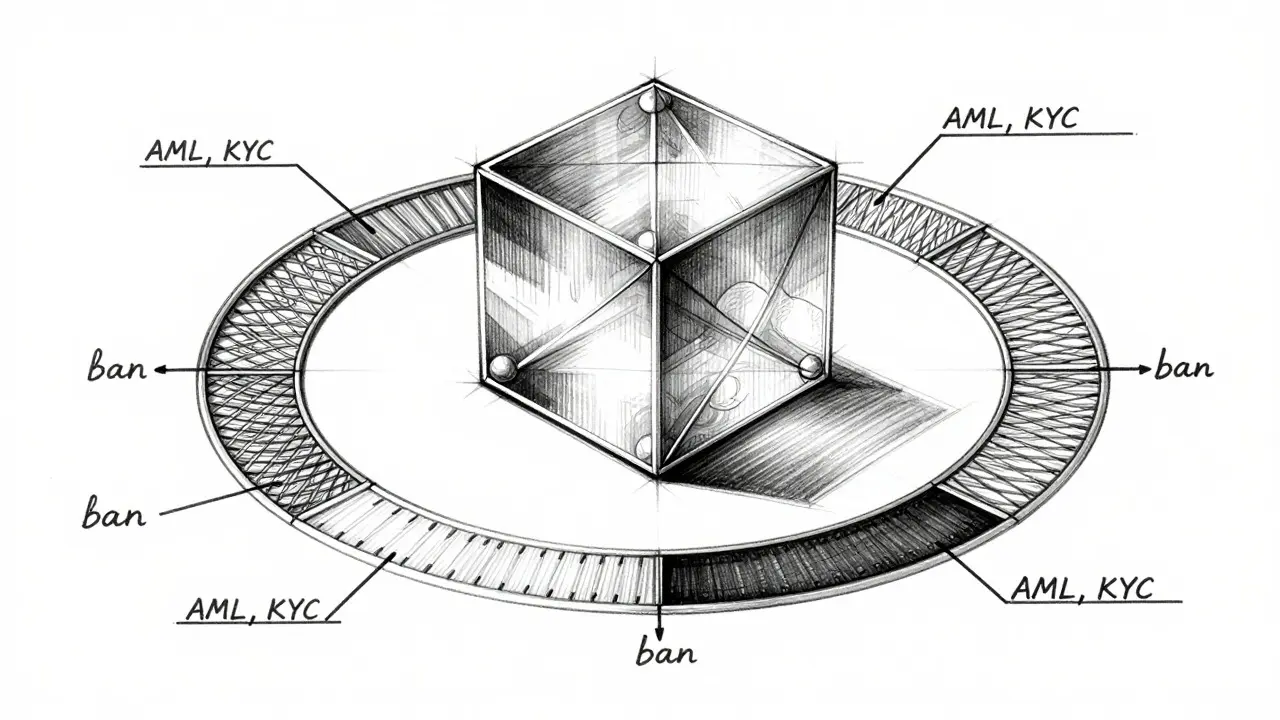
- Ban on Privacy Coins: Under Administrative Order 2023/2024, all VASPs must delist privacy-focused cryptocurrencies like Monero (XMR) is a cryptocurrency designed for enhanced anonymity and untraceable transactions and Zcash (ZEC) is a privacy-centric cryptocurrency using zero-knowledge proofs to obscure transaction details. These are considered high-risk for money laundering and terrorism financing.
- Marketing Approval: You cannot just run ads. All marketing materials targeting retail investors in Dubai require prior approval from VARA. This prevents misleading claims about guaranteed returns or low risk.
- Token Categorization: Tokens are split into three categories. Category 1 (asset-backed/stablecoins) needs full licensing. Category 2 (utility tokens) requires licensed distributors. Exempt tokens (like loyalty points) still need oversight but not a full license.
- Fit-and-Proper Checks: Every director, shareholder, and key employee undergoes strict background checks. Any past criminal record or regulatory breach can disqualify your application.
The Application Process: Step-by-Step
Applying for a VARA license is a digital-first process, but it demands heavy preparation. Here is how it works:
- Entity Incorporation: First, incorporate your company in Dubai mainland or a relevant free zone. Foreign investors can hold 100% ownership in many free zones.
- Document Preparation: Gather your business plan, compliance framework, IT architecture diagrams, and security protocols. VARA wants to see how you will prevent hacks and fraud.
- Online Submission: Submit your application through VARA’s digital portal. Pay the application fee.
- Regulatory Review: VARA reviews your documents. They may ask for clarifications. Be ready to explain your AML/KYC procedures in detail.
- Approval and Licensing: Once approved, pay the annual supervision fee and receive your license. Compliance doesn’t end here-you must submit regular reports and undergo audits.
Expect the process to take several months. Delays often happen due to incomplete compliance frameworks or weak IT security descriptions. Hiring a local compliance consultant can speed this up significantly.
Compliance Culture: More Than Just Paperwork
VARA emphasizes a “compliance culture.” This means your staff must genuinely understand Anti-Money Laundering (AML) and Counter-Financing of Terrorism (CFT) rules. It’s not enough to have a policy document gathering dust. Your systems must automatically flag suspicious transactions. Your customer onboarding (KYC) must verify identities robustly. Regular external audits are mandatory. Companies that treat compliance as a core business function get faster approvals and fewer headaches down the line.
Why Choose VARA Despite the Hurdles?
So why go through this? Because VARA offers clarity. Unlike jurisdictions with vague laws, VARA provides a clear rulebook. Major players like Binance, Crypto.com, OKX, and Bybit have already obtained VARA licenses. This signals trust. Plus, Dubai’s tax advantages-no corporate tax on most crypto profits until 2027, and no personal income tax-make it financially attractive. The city’s strategic location also connects you to Europe, Asia, and Africa markets easily.
Future Outlook: What’s Next for VARA?
VARA is evolving. Expect tighter rules on Decentralized Finance (DeFi) protocols and potentially new licensing categories for Decentralized Autonomous Organizations (DAOs). The authority is aligning closely with Financial Action Task Force (FATF) standards, meaning global best practices will become local requirements. Stay updated on VARA’s website for any changes in 2026.
How long does it take to get a VARA license?
The process typically takes 3 to 6 months, depending on the complexity of your business model and the completeness of your documentation. Applications with strong compliance frameworks and clear IT security plans tend to move faster.
Can foreign-owned companies apply for a VARA license?
Yes. Foreign investors can establish a 100% owned entity in Dubai free zones or mainland and then apply for VARA licensing. Many major international exchanges have successfully done this.
Are privacy coins like Monero completely banned in Dubai?
Yes. Under VARA’s Administrative Order 2023/2024, all licensed VASPs must delist privacy coins such as Monero and Zcash to mitigate money laundering risks. Individuals can still hold them, but exchanges cannot trade them.
What is the difference between VARA and DFSA licensing?
VARA regulates virtual assets across Dubai mainland and most free zones. DFSA regulates financial services within the Dubai International Financial Centre (DIFC). If your office is inside DIFC, you deal with DFSA. Otherwise, you deal with VARA.
Do I need a local sponsor to get a VARA license?
No. With recent reforms, foreign investors can own 100% of their companies in many Dubai free zones and mainland sectors, eliminating the need for a local sponsor for crypto businesses.
What happens if my VARA application is rejected?
VARA usually provides reasons for rejection, such as insufficient capital, weak compliance plans, or failed fit-and-proper checks. You can address these issues and reapply. Consulting with a regulatory expert before reapplying is highly recommended.
Is VARA regulation favorable for DeFi projects?
VARA is currently developing specific frameworks for DeFi. While traditional centralized entities have clear paths, DeFi protocols face more scrutiny regarding governance and user protection. Expect detailed guidelines to emerge in late 2026.