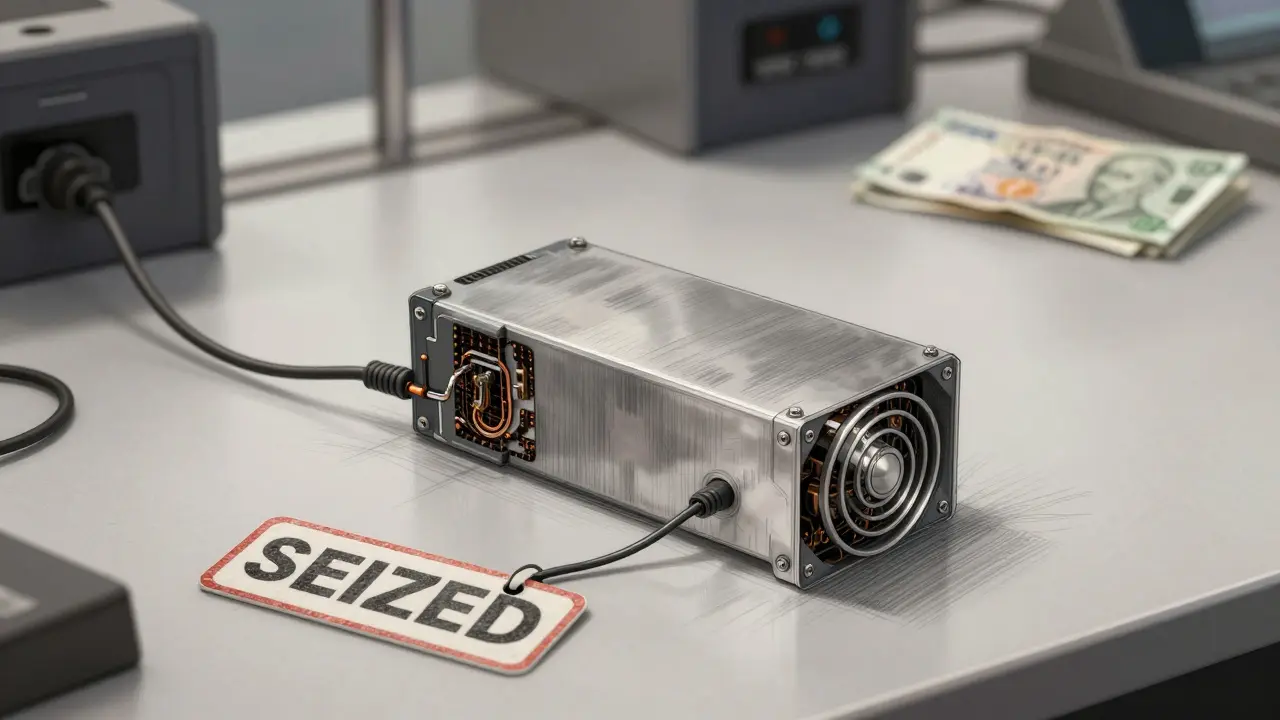
Tunisia has one of the strictest cryptocurrency policies in the world. Since May 2018, the Central Bank of Tunisia (the national monetary authority responsible for issuing currency and regulating financial institutions) has outlawed every form of cryptocurrency use - no trading, no mining, no payments, no exchanges. It’s not just discouraged. It’s illegal. And people have gone to jail for it.
What’s Actually Banned?
If you’re in Tunisia, you can’t buy Bitcoin on Binance. You can’t accept Ethereum as payment for your freelance design work. You can’t mine Litecoin using a rig you brought in from abroad. Even holding crypto in a wallet is technically a violation under the country’s currency control laws.
The ban covers everything:
- Buying or selling cryptocurrencies on any platform, local or foreign
- Accepting crypto as payment for goods or services
- Operating a crypto exchange or wallet service inside Tunisia
- Importing mining hardware like ASICs
- Converting mined coins into Tunisian dinars
- Marketing or promoting crypto projects to the public
Violations can land you in prison for up to five years. Fines are steep. Customs officers at Tunis-Carthage Airport have been instructed to seize mining equipment on sight. Banks are required to block any card transactions linked to foreign crypto exchanges. There’s no gray area - the rule is absolute.
Why Did Tunisia Ban Crypto So Hard?
The ban didn’t come out of nowhere. Between 2013 and 2017, Bitcoin was traded informally through WhatsApp groups and Telegram channels. No one regulated it. No one taxed it. People used it to send money abroad, bypassing strict currency controls. That’s when the Central Bank of Tunisia got worried.
Capital flight was the main concern. Tunisia’s economy was already under pressure. Foreign reserves were shrinking. The dinar was weak. If people could easily move money out of the country using crypto, the central bank would lose control over monetary policy. So in May 2018, they shut it all down.
They weren’t alone. Countries like China, Egypt, Algeria, and Morocco took similar steps. But Tunisia’s enforcement has been unusually aggressive. In 2021, a 17-year-old student was arrested for exchanging $50 worth of Bitcoin. The case made headlines. It sparked public debate. And then - nothing changed. The government doubled down.
Who’s in Charge?
The Central Bank of Tunisia is the main enforcer. But they don’t act alone. They work with the Ministry of ICT & Digital Economy and the Financial Market Council (CMF). The CMF would oversee tokenized securities if the ban were ever lifted - which it hasn’t been.
The legal basis comes from the 2016 law that gave the central bank independence - a condition tied to an IMF loan. But lately, that independence has been tested. The government has been borrowing heavily from domestic banks, undermining the central bank’s ability to control inflation. That tension makes crypto even more dangerous in their eyes: if people lose faith in the dinar, they might turn to crypto faster than expected.

But They’re Not Against Blockchain - Just Crypto
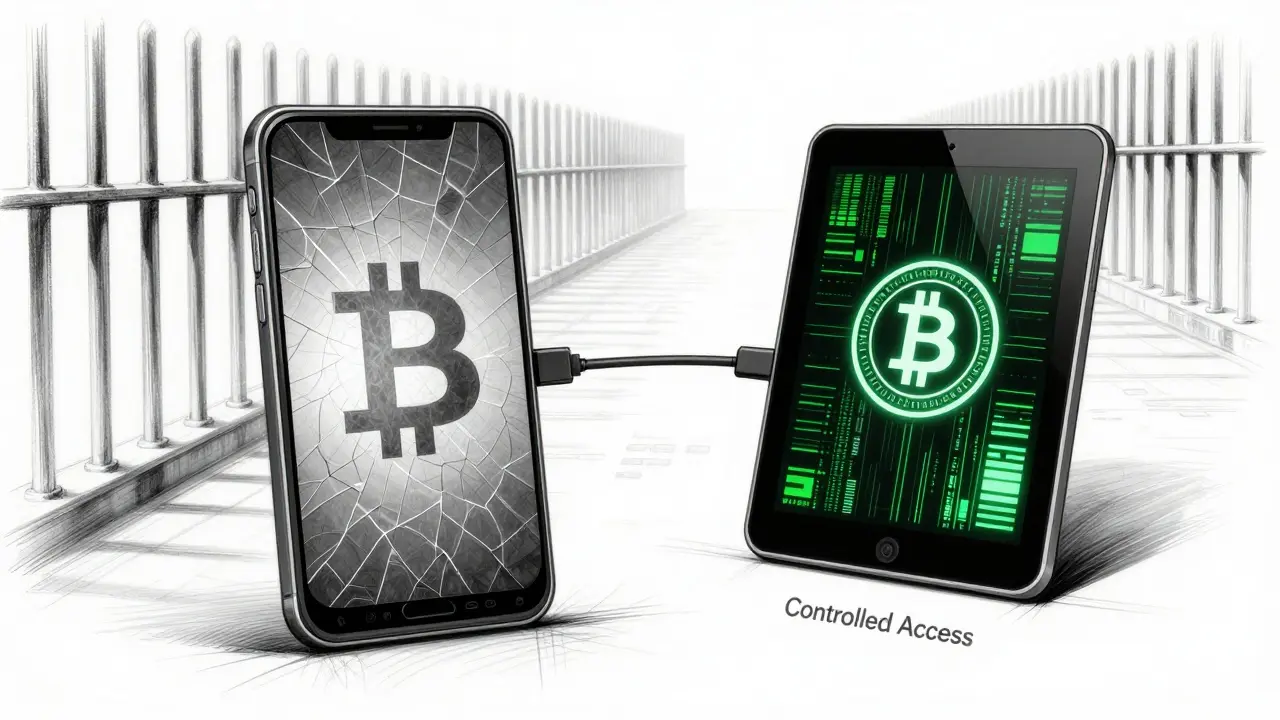
Here’s the twist: Tunisia doesn’t hate technology. It hates uncontrolled money. That’s why since 2020, the Central Bank of Tunisia has run a regulatory sandbox - a controlled lab where startups can test blockchain applications under strict supervision.
These aren’t crypto projects. They’re permissioned blockchain tools:
- VFunder - testing blockchain for transparent crowdfunding
- Hydro E-Blocks - tracking carbon credits on a private ledger
- No Phobos - creating AI-generated NFTs, but only for research, not sale
All of them host their servers outside Tunisia. None of them let the public trade tokens. The sandbox lets them experiment with traceability, supply chains, and digital identity - all while keeping money flows locked inside the official banking system.
This isn’t hypocrisy. It’s strategy. The government wants blockchain’s benefits - efficiency, transparency, fraud reduction - without letting crypto disrupt the dinar.
Digital Tunisia 2025: Blockchain Only, Crypto Never
The national digital strategy, called Digital Tunisia 2025, spells this out clearly. It lists blockchain as a key tool for modernizing government services - land registries, subsidy distribution, public procurement. But it says nothing about crypto. Not once.
Government pilots are already using private blockchains to track fertilizer subsidies and manage public asset records. These systems don’t use tokens. They don’t allow public access. They’re closed, controlled, and monitored by state authorities.
The message is simple: technology yes. Decentralized money no.
What Happens If You Try to Use Crypto Anyway?
People still try. Some use VPNs to access foreign exchanges. Others buy crypto from friends. A few even mine in basements. But the risks are real.
Bank accounts can be frozen. Phones and laptops seized. Criminal charges filed under Article 24 of the Currency Control Law. The 2021 teen case proved the government will prosecute even small-scale users. There’s no “just this once” exception.
Even e-commerce sites that list prices in Bitcoin end up moving their operations offshore. No Tunisian business dares to advertise crypto payments. The legal exposure is too high.
Is There Any Hope for Change?
The 2025 regulatory sandbox is still running. That’s the only sign of movement. Experts say the government is watching. If the sandbox proves blockchain can boost efficiency without triggering capital flight, maybe - just maybe - they’ll reconsider.
But don’t expect a crypto market anytime soon. The original fears haven’t gone away. Tunisia still has one of the lowest foreign reserve levels in North Africa. The dinar is volatile. The government still needs to control every dollar that leaves the country.
And with elections looming, political risk is high. No politician wants to be blamed for letting crypto destabilize the economy. So the ban stays - for now.
How Tunisia Compares to the Rest of the World
Most countries are moving toward regulation, not bans. The U.S., EU, Japan, and Singapore all have clear rules for exchanges, taxes, and consumer protection. Even India, which once threatened a ban, now taxes crypto and lets exchanges operate.
Tunisia is in a tiny club: China, Egypt, Algeria, Morocco, Qatar, Nepal, Bangladesh. These are the only countries with total bans. Even Russia, which restricts crypto, still allows it as property.
Tunisia’s stance is extreme. But it’s consistent with its economic reality. It’s not about ideology. It’s about survival.
What’s Next?
The Central Bank of Tunisia won’t announce a policy shift overnight. But if the sandbox produces successful models for digital identity or cross-border remittances, pressure will grow to open a narrow window - perhaps for CBDCs or licensed institutional use.
Don’t hold your breath for Bitcoin ATMs or crypto exchanges in Tunis. But keep an eye on government blockchain pilots. That’s where Tunisia’s real innovation is happening - quietly, safely, and under tight control.

Don Grissett
12 January, 2026 . 02:14 AM
So Tunisia bans crypto but lets blockchain experiments fly? That’s like banning gasoline but letting electric cars run on solar power. Cool logic. 🤔
Katrina Recto
12 January, 2026 . 05:03 AM
The real story here isn't the ban-it's the quiet, controlled innovation happening under the radar. Tunisia’s playing 4D chess while everyone else is stuck on checkers.
Veronica Mead
13 January, 2026 . 15:56 PM
It is imperative to recognize that the Central Bank of Tunisia is operating within the bounds of its sovereign mandate to preserve monetary integrity. To permit decentralized currencies would constitute an existential threat to national economic sovereignty.
Mollie Williams
14 January, 2026 . 10:50 AM
There’s something almost poetic about banning the currency but embracing the ledger. It’s like outlawing fire but allowing the hearth. The state wants the warmth without the danger. But can you really separate the tool from the flame? Or is this just control dressed up as pragmatism?
Surendra Chopde
15 January, 2026 . 08:02 AM
Interesting. India also has strict rules but allows exchanges. Tunisia’s approach feels more like fear than foresight. Still, if it keeps the dinar stable, maybe it works for them.
Tiffani Frey
17 January, 2026 . 06:26 AM
The sandbox projects-VFunder, Hydro E-Blocks-are actually brilliant. They’re using blockchain’s transparency without touching decentralization. This isn’t anti-tech. It’s anti-chaos. And honestly? In a country with weak institutions, that’s not a bad trade.
Tre Smith
17 January, 2026 . 11:55 AM
Let’s be clear: this isn’t ‘strategic.’ It’s authoritarian. The government doesn’t trust its citizens with financial autonomy. That’s not economic policy-that’s control disguised as stability. And yes, I’ve seen this script before. It always ends with innovation fleeing the country.
Ritu Singh
17 January, 2026 . 12:22 PM
The Central Bank is a puppet of the IMF. The ban? A distraction. They’re using crypto as a scapegoat so they don’t have to fix their own corruption, inflation, and stolen public funds. The blockchain sandbox? A smokescreen. Watch how fast it vanishes when the next crisis hits
kris serafin
19 January, 2026 . 09:38 AM
Honestly? I’d move to Tunisia just to mine crypto in a basement. The risk is part of the thrill. 🔥💰
Jordan Leon
20 January, 2026 . 15:15 PM
There’s a quiet dignity in their approach. They’re not rejecting technology. They’re rejecting the chaos that comes with it. In a world obsessed with disruption, maybe restraint is the rarest form of wisdom.
Rahul Sharma
20 January, 2026 . 21:04 PM
Tunisia is smart. Crypto = risk. Blockchain = tool. No confusion. Simple. Clear. Good for economy.
Gideon Kavali
22 January, 2026 . 17:44 PM
This is what happens when you let weak governments panic. America wouldn’t tolerate this. We’d riot. Tunisia’s just letting them lock people up for owning Bitcoin. Pathetic.
Allen Dometita
23 January, 2026 . 14:38 PM
The sandbox is where the future is. Not in Bitcoin ATMs. In digital land titles and subsidy tracking. That’s real change. Crypto’s just noise. 🚀
Brittany Slick
23 January, 2026 . 21:11 PM
I love how they’re building the future without burning the present. Quiet. Thoughtful. Not flashy. Sometimes the most revolutionary thing isn’t breaking rules-it’s knowing when not to break them.
greg greg
24 January, 2026 . 23:05 PM
It’s fascinating how the central bank’s independence, granted under IMF conditions, has now become a tool for enforcing capital controls that contradict the very spirit of financial liberalization the IMF claims to promote. The irony deepens when you consider that the government’s domestic borrowing undermines the central bank’s ability to manage inflation, which in turn makes the population more vulnerable to crypto’s appeal as a store of value-thus creating a feedback loop where the ban becomes more rigid precisely because the underlying economic instability grows. It’s not a policy-it’s a symptom.
LeeAnn Herker
25 January, 2026 . 09:17 AM
Oh so now blockchain is ‘good’ because it’s controlled? So if the state owns the ledger, it’s not surveillance-it’s ‘efficiency.’ And the teen arrested for $50 in Bitcoin? That’s not tyranny, that’s ‘protecting the dinar.’ I’m sure the IMF is giving them a standing ovation.
Sherry Giles
26 January, 2026 . 04:20 AM
They’re not banning crypto-they’re banning freedom. The blockchain sandbox? That’s the state’s private playground. Meanwhile, regular people get locked up for using tech that doesn’t need their permission. This isn’t economics. It’s feudalism with Wi-Fi.
Andy Schichter
28 January, 2026 . 03:36 AM
So they ban crypto but let startups run blockchain projects overseas? That’s not innovation. That’s outsourcing control. They want the benefits without the accountability. Classic.
Michael Richardson
29 January, 2026 . 10:39 AM
Ban crypto. Let blockchain. Sure. Next they’ll ban knives but allow forks.
Krista Hoefle
29 January, 2026 . 17:25 PM
so they ban crypto but do blockchain? like... what? they think blockchain is magic fairy dust that doesnt involve money? lol
Emily Hipps
31 January, 2026 . 14:24 PM
If you’re looking for the future of finance in emerging economies, look past the headlines. Tunisia’s quietly building something real-controlled, safe, and scalable. That’s leadership.
jim carry
2 February, 2026 . 05:42 AM
I just don’t understand why anyone would risk jail for Bitcoin. I mean, it’s not even that valuable. I’d rather just use PayPal.