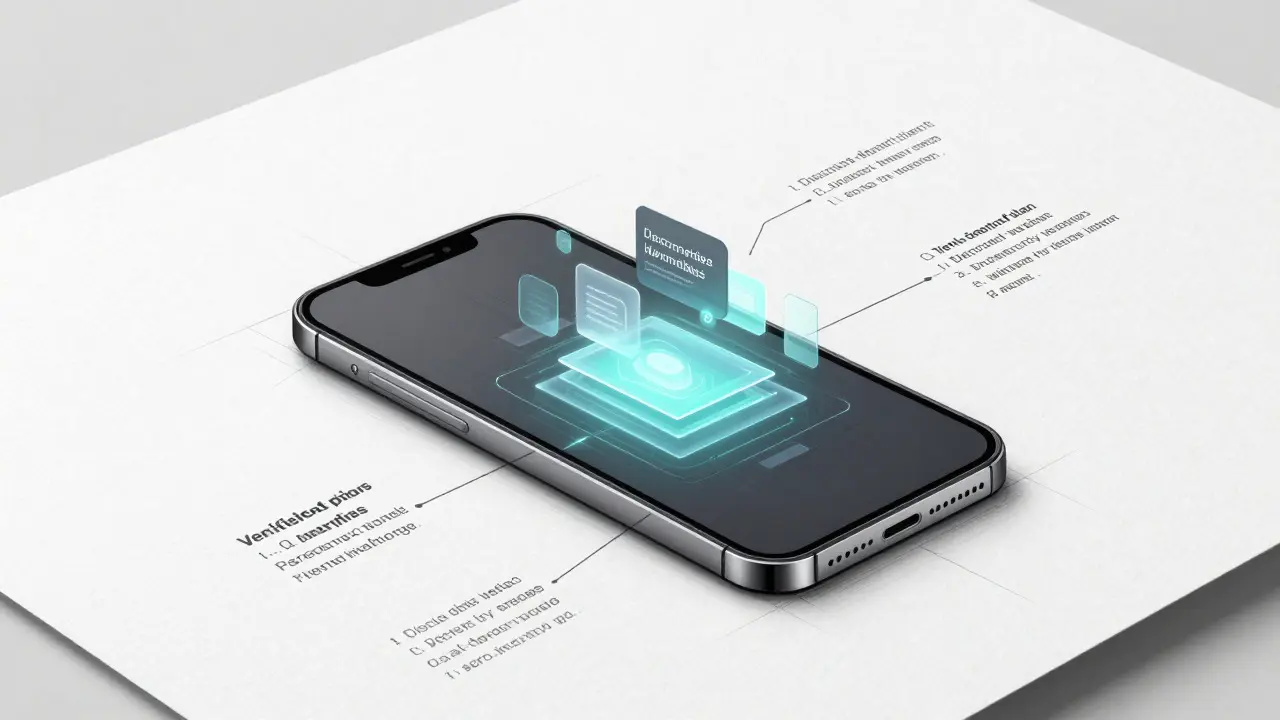
Think about the last time you signed up for a new service. You likely filled out a form with your name, email, date of birth, and maybe even uploaded a photo of your ID. Then you created a password, hoping it wasn’t one you’d used before. Now, imagine that same process, but instead of handing over your data to a company’s server, you prove who you are instantly, without revealing anything more than necessary. That is the promise of decentralized identity.
For decades, we have relied on centralized giants-social media platforms, banks, and government databases-to manage our digital selves. These entities hold the keys to our online lives. If their servers go down, we are locked out. If they get hacked, our data is exposed. But a shift is happening. Driven by blockchain technology and cryptographic standards, decentralized identity (DID) puts the control back in your hands. It is not just a tech trend; it is a fundamental restructuring of how trust works online.
What Is Decentralized Identity?
To understand the benefits, you first need to grasp what decentralized identity actually is. Unlike traditional systems where a central authority issues and verifies credentials, decentralized identity relies on Self-Sovereign Identity (SSI). In this model, you are the issuer, holder, and verifier of your own identity data.
The architecture rests on two main pillars defined by the World Wide Web Consortium (W3C): Decentralized Identifiers (DIDs) are unique codes that link to your digital presence without relying on a central registry, and Verifiable Credentials are digital equivalents of physical documents like driver’s licenses or university degrees. These credentials live in a digital wallet on your phone or device. When you need to prove something, you present a cryptographically signed credential from your wallet to a verifier. The beauty? The verifier checks the signature against a distributed ledger, ensuring authenticity without ever seeing your raw personal data.
Privacy Through Zero-Knowledge Proofs
The most compelling benefit of decentralized identity is privacy. Traditional verification often requires oversharing. To buy alcohol online, you might have to upload your entire passport, exposing your address, full name, and ID number to a retailer that has no business knowing those details. This violates the principle of data minimization.
Decentralized identity solves this using zero-knowledge proofs (ZKP). ZKPs allow you to prove a statement is true without revealing the underlying information. For example, you can cryptographically prove you are over 18 years old without disclosing your exact birth date. You can prove you are a citizen of a specific country without showing your passport number. The verifier gets a simple "yes" or "no" answer backed by math, not by your private data. This shifts the paradigm from "show me everything" to "prove only what is needed."
Security Without Single Points of Failure
Data breaches are a constant headline. In 2025 alone, millions of records were compromised because centralized databases are attractive targets. If a hacker breaks into a central server, they potentially access everyone’s data at once. This is known as a single point of failure.
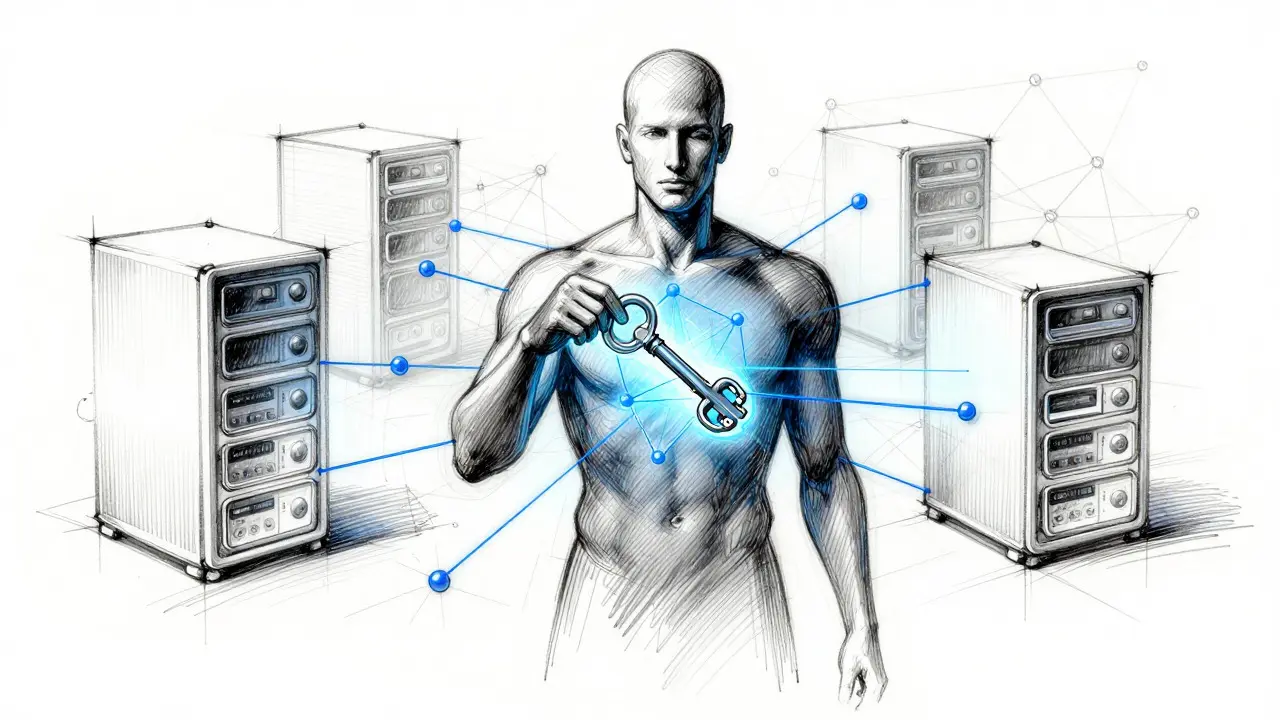
Decentralized identity eliminates this risk. Your data is not stored in a corporate database waiting to be raided. Instead, it resides in your digital wallet, encrypted with private keys that only you possess. Even if a service provider’s system is hacked, there is no user identity data to steal because they never held it in the first place. Furthermore, the distributed nature of the underlying blockchain means there is no central ledger to corrupt. Tampering with one node does not compromise the entire network. This structure aligns perfectly with Zero Trust security principles, which assume no entity is trusted by default and require continuous verification.
| Feature | Centralized Identity | Decentralized Identity |
|---|---|---|
| Data Storage | Corporate Servers | User's Digital Wallet |
| Breach Risk | High (Single Point of Failure) | Low (Distributed) |
| User Control | Limited (Terms of Service) | Full (Self-Sovereign) |
| Verification Method | Passwords & OTPs | Cryptographic Signatures & ZKPs |
| Interoperability | Siloed Systems | Open W3C Standards |
Interoperability and Seamless Experience
One of the biggest frustrations in digital life is fragmentation. You have an account on Facebook, another on Google, and yet another on your bank’s app. Each requires separate logins, passwords, and recovery processes. Decentralized identity introduces true interoperability through open standards.
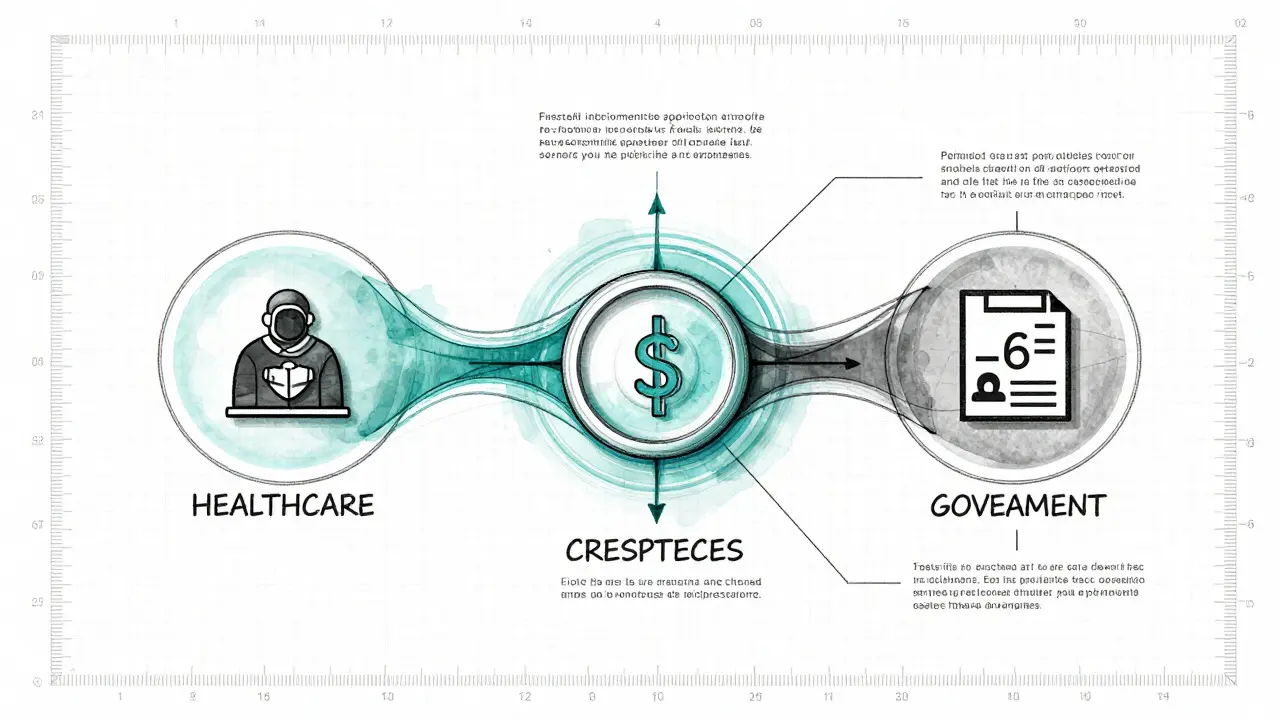
Because DIDs and Verifiable Credentials are built on W3C standards, they work across different platforms and industries. Imagine logging into a healthcare portal, a financial app, and a government service using the same set of credentials from your digital wallet. You verify your identity once, and that verification is portable. This reduces friction for users, eliminating the need to create new accounts repeatedly. For businesses, it streamlines onboarding. Instead of building complex KYC (Know Your Customer) infrastructure, they can accept verifiable credentials issued by trusted authorities, reducing administrative overhead and costs.
Regulatory Compliance Made Easier
For organizations, navigating privacy laws like the General Data Protection Regulation (GDPR) in Europe or the California Privacy Rights Act (CPRA) is a nightmare. These regulations impose strict rules on how personal data is collected, stored, and shared. Non-compliance results in massive fines.
Decentralized identity naturally aligns with these regulations. Since users retain control of their data and share only what is necessary, companies store less personally identifiable information (PII). Less data stored means less liability. If a user wants to delete their data, they simply remove the credential from their wallet; the company doesn’t need to scrub its databases. This "privacy-by-design" approach simplifies compliance audits and builds trust with consumers who are increasingly wary of data misuse.
Challenges and Real-World Adoption
Despite the clear benefits, adoption is not without hurdles. The primary challenge is user experience. Managing private keys and understanding digital wallets can be intimidating for non-technical users. If you lose your seed phrase, you could lose access to your identity forever. There is no "forgot password" button in a truly decentralized system.
However, developers are working hard to abstract this complexity. Modern digital wallets are becoming as easy to use as mobile banking apps, with biometric authentication and social recovery options. Early adopters in sectors like healthcare, finance, and government are reporting positive results. For instance, some pilot programs allow patients to share medical records securely with specialists without intermediaries, speeding up care while protecting privacy.
Another consideration is the learning curve for organizations. Integrating DID protocols into legacy systems requires technical investment. But the long-term savings in security maintenance, breach mitigation, and compliance costs often outweigh the initial setup expenses. As major tech companies explore these solutions to reduce their liability exposure, the ecosystem is maturing rapidly.
The Future of Digital Trust
We are moving toward a world where data is recognized as a valuable asset, often more valuable than oil. Companies like Meta generate billions annually from user data analysis. Decentralized identity disrupts this model by giving users ownership of their data. In the future, you might even monetize your own identity data, choosing who accesses it and under what terms.
The trajectory is clear. With increasing regulatory pressure and growing awareness of centralized vulnerabilities, decentralized identity is not just an alternative; it is becoming a necessity. It offers a robust framework for privacy, security, and efficiency that traditional systems struggle to match. By embracing self-sovereign identity, we can build a digital landscape that respects individual autonomy while enabling seamless global interaction.
Is decentralized identity completely anonymous?
Not necessarily. While it enhances privacy by minimizing data sharing, decentralized identity allows for pseudonymity. You can prove attributes about yourself (like age or citizenship) without revealing your real-world name. However, if you choose to link your DID to your legal name, it becomes identifiable. The key is that you decide what to reveal.
What happens if I lose my digital wallet?
If you lose access to your private keys and have no backup, you may lose access to your decentralized identity and associated credentials. This is why secure backups, such as seed phrases or social recovery mechanisms, are critical. Newer wallet solutions are implementing user-friendly recovery options to mitigate this risk.
How do zero-knowledge proofs work in practice?
Zero-knowledge proofs use cryptography to validate a claim without exposing the data behind it. For example, a protocol can mathematically verify that your birth year is before 2006 (making you over 18) without transmitting your actual birth date. The verifier receives a cryptographic proof that the condition is met, ensuring accuracy without privacy loss.
Are decentralized identities compatible with existing systems?
Yes, through W3C standards. Many organizations are integrating DID resolvers and verifiable credential validators into their current authentication frameworks. This allows them to accept decentralized credentials alongside traditional login methods during the transition period.
Who issues verifiable credentials?
Trusted issuers issue verifiable credentials. These can be governments (for passports), universities (for degrees), employers (for employment history), or banks (for credit scores). The issuer signs the credential cryptographically, allowing anyone to verify its authenticity against the issuer's public key on the distributed ledger.