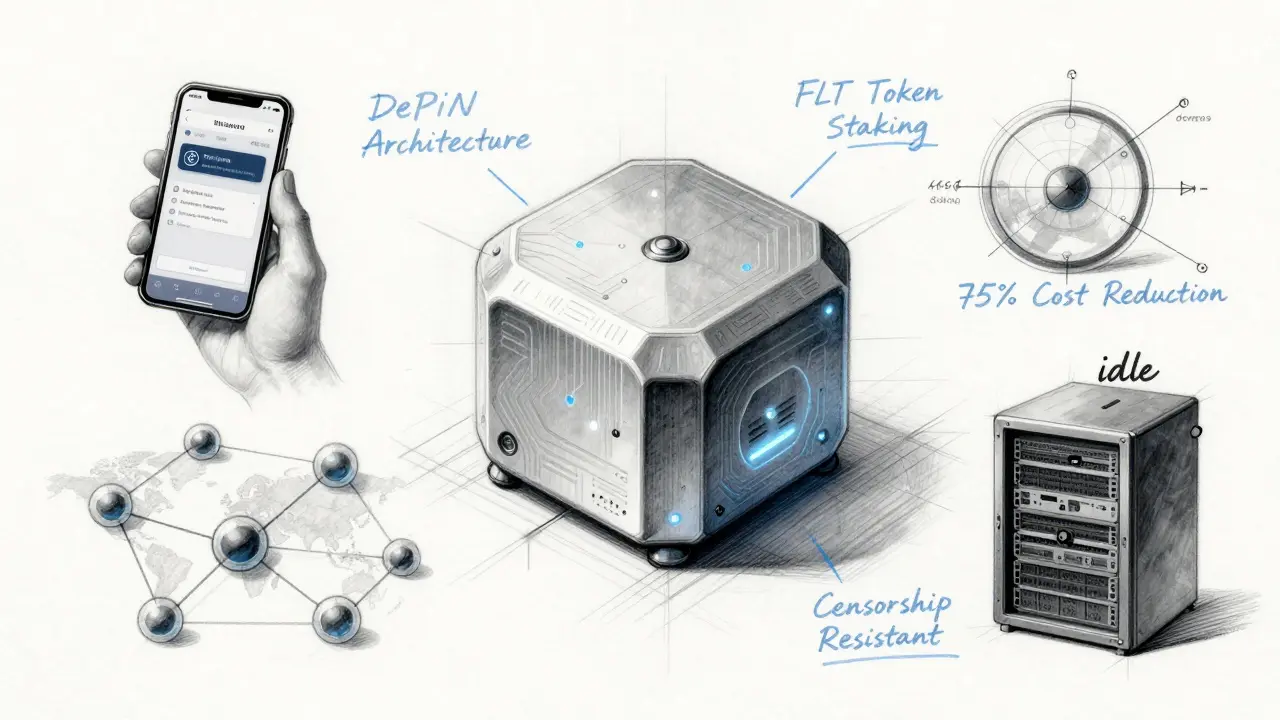
Imagine running a website or an AI model without ever paying Amazon AWS or Microsoft Azure. Sounds too good to be true? That is exactly the promise behind Fluence, a platform built on the concept of decentralized physical infrastructure networks (DePIN). Instead of renting servers from giant tech corporations, Fluence lets you tap into unused computing power from people and businesses around the world. It turns idle hardware into a global, censorship-resistant cloud.
If you have heard about the massive outages that hit major cloud providers in recent years, you know how fragile our digital reliance on centralized systems can be. Fluence aims to fix that single point of failure. But what exactly is the FLT token, and is it worth your attention in 2026? Let’s break down the technology, the economics, and the risks so you can decide if this fits your portfolio or tech stack.
How Fluence Actually Works
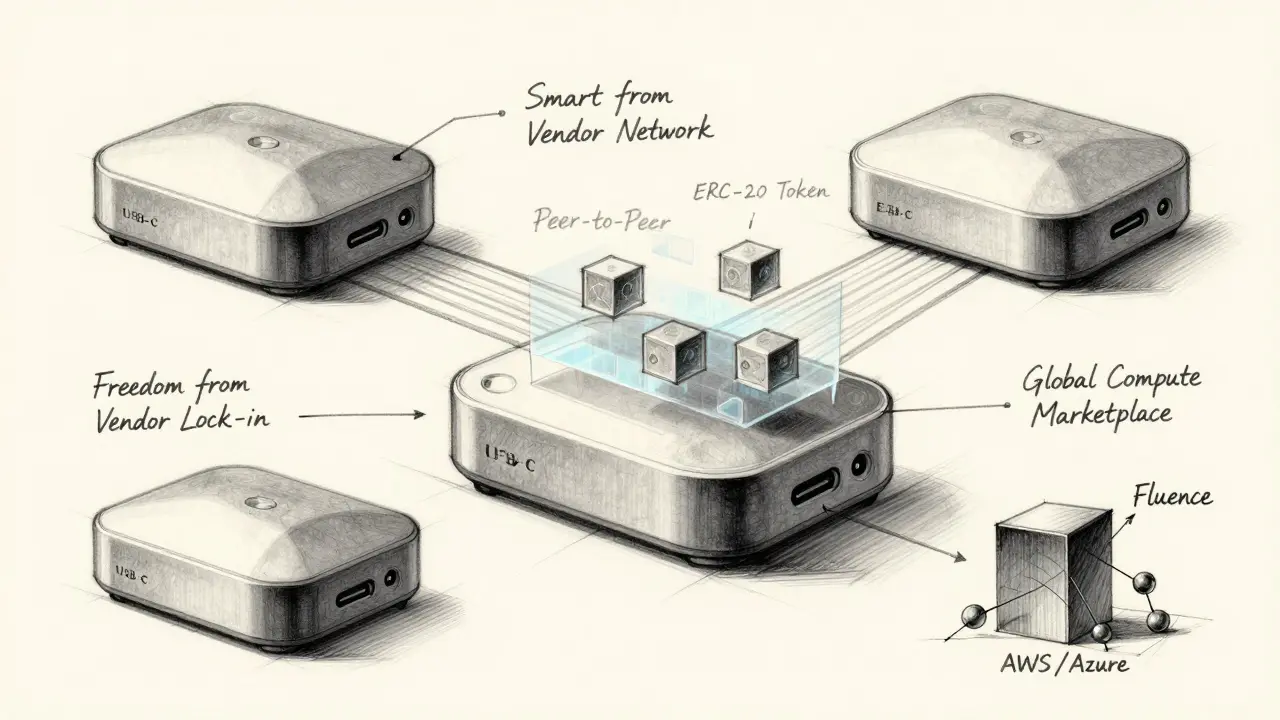
At its core, Fluence is a peer-to-peer network. Think of it like Airbnb, but for computer processing power instead of spare bedrooms. In the traditional cloud model, companies like Google or Amazon own massive data centers. You rent space there, and they set the price and the rules. With Fluence, anyone with compatible hardware can become a node provider. They connect their machines to the Fluence network, making their compute resources available to developers who need them.
This setup creates a marketplace. Developers get access to cheaper computing power because they are not paying for the overhead of a corporate monopoly. Hardware owners get paid to monetize equipment that might otherwise sit idle. The entire system runs on smart contracts, ensuring that payments are automatic and transparent. No middlemen, no hidden fees, and no vendor lock-in. If one node goes offline, the network routes the task to another, keeping your application running smoothly.
The Role of the FLT Token
You cannot use the Fluence network without its native currency: the FLT token. This is an ERC-20 token built on the Ethereum blockchain, which means it works seamlessly with wallets like MetaMask and exchanges like MEXC. The FLT token serves three critical functions within the ecosystem:
- Paying for Compute: When you deploy an application on Fluence, you pay node operators in FLT. This keeps the cost of services low compared to traditional fiat-based cloud billing.
- Staking for Security: Node operators must stake FLT tokens to join the network. This acts as a bond. If a node fails to perform or acts maliciously, the staked tokens can be slashed (penalized). This ensures high reliability and trustless operation.
- Governance: Holders of FLT can vote on proposals that shape the future of the protocol. This includes decisions on fee structures, upgrades, and partnerships.
As of late 2024, the total supply was capped at 1 billion FLT tokens. Understanding the distribution is key. A portion went to public sales, while significant chunks were allocated to investors, the team, and liquidity pools. Many of these allocations had vesting periods, meaning tokens were released slowly over time to prevent immediate market flooding. Always check the current circulating supply versus the total supply when analyzing potential inflation pressure.
Why Choose Fluence Over Traditional Cloud?
The biggest selling point for Fluence is cost. By cutting out the corporate middleman, Fluence claims to offer enterprise-grade infrastructure at roughly 75% lower costs than centralized giants. For startups and small businesses burning through cash on server bills, that is a huge difference.
Beyond price, there is the issue of censorship resistance. Centralized providers can shut down your service if they disagree with your content or if pressured by governments. Fluence’s decentralized architecture makes it incredibly difficult for any single entity to censor applications. Your code runs across thousands of independent nodes globally, making it resilient to takedown attempts.
| Feature | Fluence (FLT) | AWS / Azure / Google Cloud |
|---|---|---|
| Cost Structure | ~75% lower; pay-per-use in crypto | Higher; complex pricing tiers |
| Censorship Resistance | High (decentralized nodes) | Low (centralized control) |
| Reliability (Uptime) | ~92.7% (as of 2024 data) | 99.99% SLA guaranteed |
| Support | Community-driven, Discord/Telegram | Dedicated 24/7 enterprise support |
| Vendor Lock-in | None (open source) | High (proprietary tools) |
However, it is not all sunshine. Traditional clouds offer Service Level Agreements (SLAs) that guarantee near-perfect uptime. Fluence, being newer and decentralized, has reported uptime around 92.7%. For a hobby project, that is fine. For a hospital’s life-support system database, it is not. You trade absolute reliability for freedom and cost savings.
Who Is Fluence For?
Not every app belongs on Fluence. If you are building a latency-sensitive game server or handling highly regulated financial transactions that require strict geographic data residency, traditional cloud might still be safer. However, Fluence shines in specific scenarios:
- Decentralized AI/ML Workloads: Training models requires massive compute. Splitting these tasks across a global network reduces bottlenecks and costs.
- Blockchain Applications: dApps often need off-chain computation. Fluence integrates natively with Web3 ecosystems, making it a natural fit.
- Censorship-Sensitive Content: News platforms, whistleblowing tools, or political organizing apps benefit from the inability of any single party to take them down.
- Cost-Conscious Startups: Early-stage companies can stretch their runway further by using cheaper compute resources.
Risks and Challenges to Watch
Before you buy FLT or build on the network, you need to look at the downsides. The decentralized computing space is competitive. Rivals like Render Network (focused on GPU rendering), Akash Network, and io.net are also fighting for market share. Fluence holds a smaller slice of the pie compared to these established players.
Adoption is still early. As of late 2024, only a few hundred enterprise customers were documented. Most users are developers experimenting with the tech. This means the developer experience is improving but not yet polished. Documentation can be sparse, and debugging distributed applications is harder than troubleshooting a single server. Expect a learning curve of 3-4 weeks if you are new to distributed systems.
Regulatory uncertainty also looms. While FLT is classified as a utility token under frameworks like the EU’s MiCA, the US SEC remains skeptical of many crypto assets. Changes in regulation could impact how easily you can trade or use the token. Always do your own research and consult legal advice if you are integrating this into a business.
Is FLT a Good Investment?
I am not a financial advisor, but I can tell you what the metrics say. FLT experienced significant volatility. After launching in early 2024, it saw a spike followed by a sharp correction, dropping over 85% from its all-time high by year-end. This is typical for high-risk DePIN projects. The value of FLT is tied directly to the usage of the network. If more developers build on Fluence, demand for compute rises, which increases demand for FLT. If the network stays empty, the token struggles.
Look at the fundamentals: Is the number of active nodes growing? Are real applications being deployed? Community sentiment on platforms like Reddit and Discord shows mixed feelings-optimism about the tech, but frustration with support response times and documentation gaps. These are signs of a growing pains phase. Invest only what you can afford to lose, and consider dollar-cost averaging rather than going all-in at once.
Getting Started with Fluence
If you want to try it out, here is the path:
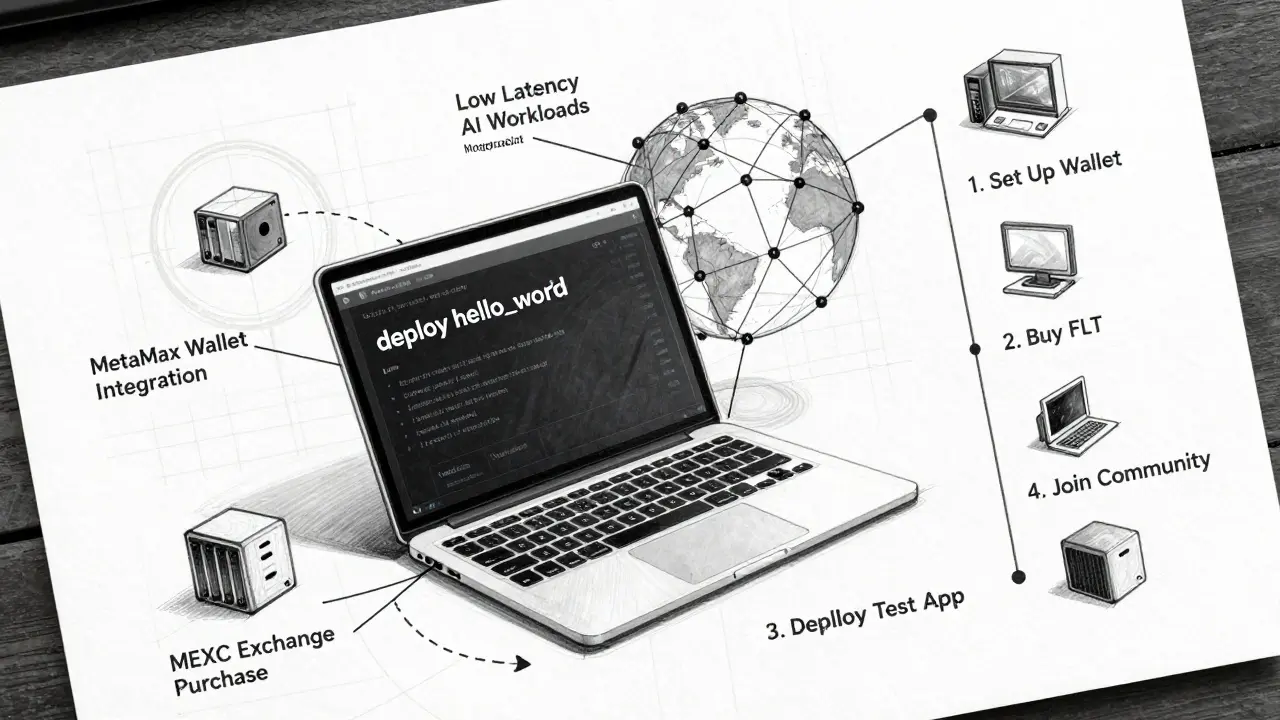
- Set Up a Wallet: Install MetaMask or a similar Ethereum-compatible wallet.
- Buy FLT: Purchase FLT on an exchange like MEXC or Uniswap. Transfer it to your wallet.
- Explore the Dashboard: Visit the Fluence web interface to see available nodes and pricing.
- Deploy a Test App: Use the CLI tools to deploy a simple "Hello World" application. This helps you understand the deployment process without risking mainnet funds.
- Join the Community: Get help on Discord or Telegram. Since official support is slow, community members are often your best resource for troubleshooting.
Fluence represents a bold experiment in reimagining the internet’s backbone. It won’t replace AWS overnight, but for those seeking lower costs and greater sovereignty, it offers a compelling alternative. The technology is promising, but the execution is still maturing. Keep an eye on their roadmap, especially integrations with AI frameworks and zero-knowledge proofs, as these could be major growth drivers in 2026 and beyond.
What is the minimum amount of FLT needed to start staking?
The exact minimum stake can vary based on current network parameters and validator requirements. Typically, you need enough FLT to cover gas fees and meet the baseline threshold set by the protocol, which is designed to prevent spam nodes. Check the latest Fluence documentation or dashboard for the precise current figure, as it may adjust dynamically.
Can I run a Fluence node on my home computer?
Yes, technically you can. However, to be competitive and earn rewards, your hardware needs to meet certain performance standards. High-speed internet, reliable uptime, and sufficient CPU/RAM are essential. Home connections often lack the stability required for consistent payouts, so dedicated servers or VPS instances are recommended for serious node operators.
How does Fluence compare to Render Network (RNDR)?
Render Network specializes specifically in GPU rendering for graphics and video production. Fluence is more general-purpose, handling diverse computational workloads including AI training, web hosting, and blockchain computations. If you need heavy graphical rendering, Render might be better. For broader compute needs, Fluence offers more flexibility.
Is Fluence safe from hackers?
Like any software, it has vulnerabilities. Fluence uses smart contracts and cryptographic verification to enhance security. However, decentralized networks rely on the honesty of participants, enforced by staking penalties. While robust, no system is 100% immune. Always keep your private keys secure and stay updated on security patches released by the Fluence Labs team.
Where can I buy FLT tokens?
FLT is available on several cryptocurrency exchanges, including MEXC, Uniswap, and other decentralized trading platforms. Availability may vary by region due to local regulations. Always verify the contract address (0x236501327e701692a281934230af0b6be8df3353) to avoid scams involving fake tokens.