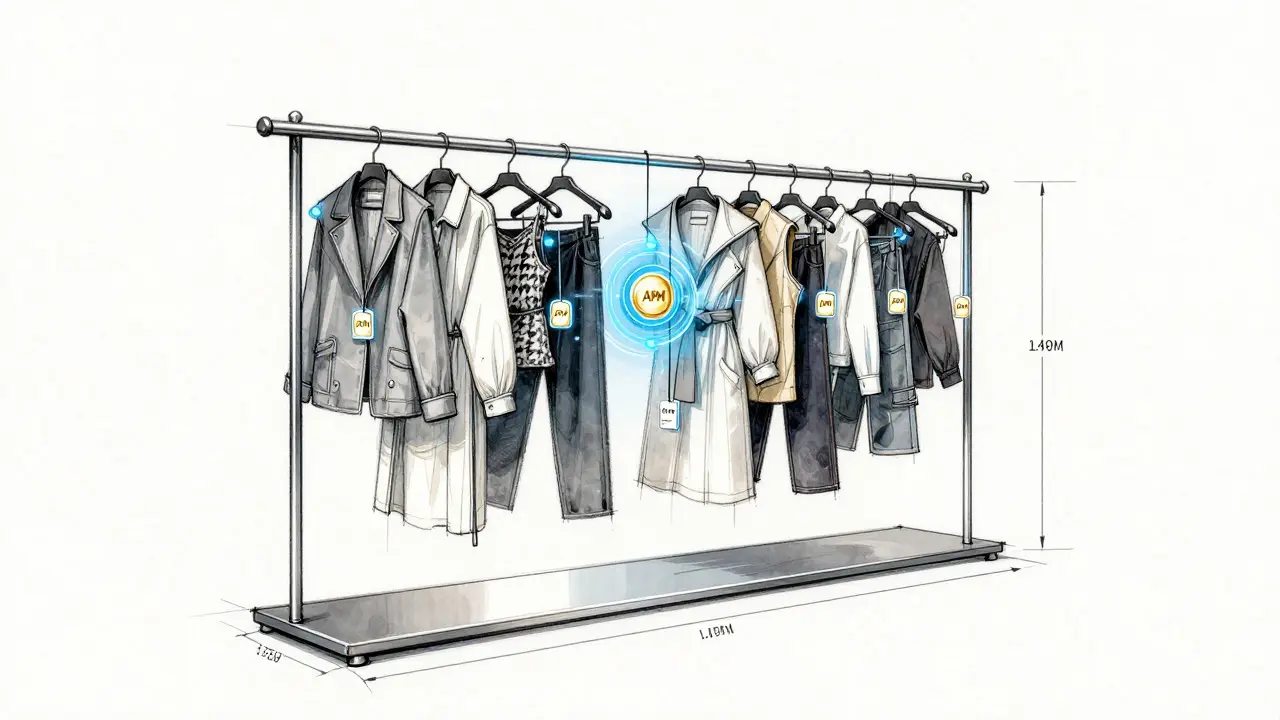
Imagine walking through the bustling wholesale fashion markets of Seoul’s Dongdaemun district. You buy thousands of dollars worth of clothing for your boutique back home. Instead of just getting a receipt, you receive digital tokens that give you loyalty points, discounts, and maybe even free transport. That is the core idea behind apM Coin, also known as APM. It is a blockchain-based reward and payment token designed specifically for Korea’s wholesale fashion ecosystem.
If you have stumbled upon this ticker on a crypto chart, you might be wondering if it is the next big thing or just another forgotten project from years ago. The truth is somewhere in between. APM is not a general-purpose currency like Bitcoin or Ethereum. It is a niche utility token tied to specific physical locations: the apM, apM Place, and apM Luxe malls. To understand whether APM holds any value for you, we need to look past the hype and examine its real-world function, its technical setup, and its stark market reality.
The Real-World Purpose: Bridging Fashion and Blockchain
Most cryptocurrency projects start with a whitepaper full of buzzwords but no actual product. APM is different because it was built to solve a very specific problem in a very specific industry. The Dongdaemun Design Plaza area is one of the world’s largest wholesale fashion hubs. Thousands of small business owners, designers, and international buyers operate here daily. Transactions are often fast, cash-heavy, and lack transparent record-keeping.
The team behind apM Coin wanted to digitize this process. Their goal is to optimize offline and online B-to-B transactions by linking real-world purchases to on-chain rewards. When a buyer shops at these malls, their spending can generate APM tokens. These tokens act as membership points. You can use them for future discounts, access exclusive member areas, or potentially unlock perks like free transportation within the mall complex, as hinted at in their marketing materials.
This makes APM a "utility token" rather than a speculative investment vehicle. Its value is supposed to come from how useful it is inside the apM ecosystem. If more wholesalers accept it and more buyers earn it, the demand should theoretically rise. However, the success of this model depends entirely on adoption rates within those specific Korean malls, which remains somewhat opaque to the outside world.
Technical Foundation: How APM Works
Under the hood, apM Coin operates on the Ethereum blockchain. This means it uses the same security and infrastructure that powers thousands of other decentralized applications. Specifically, APM behaves as a standard fungible token, likely following the ERC-20 protocol, which is the industry standard for Ethereum-based assets.
The project utilizes a "reward layer" built on the OpenEthereum platform. This allows for decentralized distribution of rewards based on user engagement. Instead of a central company keeping a private ledger of who has how many points, the blockchain records these transactions publicly. This transparency is meant to build trust between wholesalers and buyers, reducing disputes over loyalty balances.
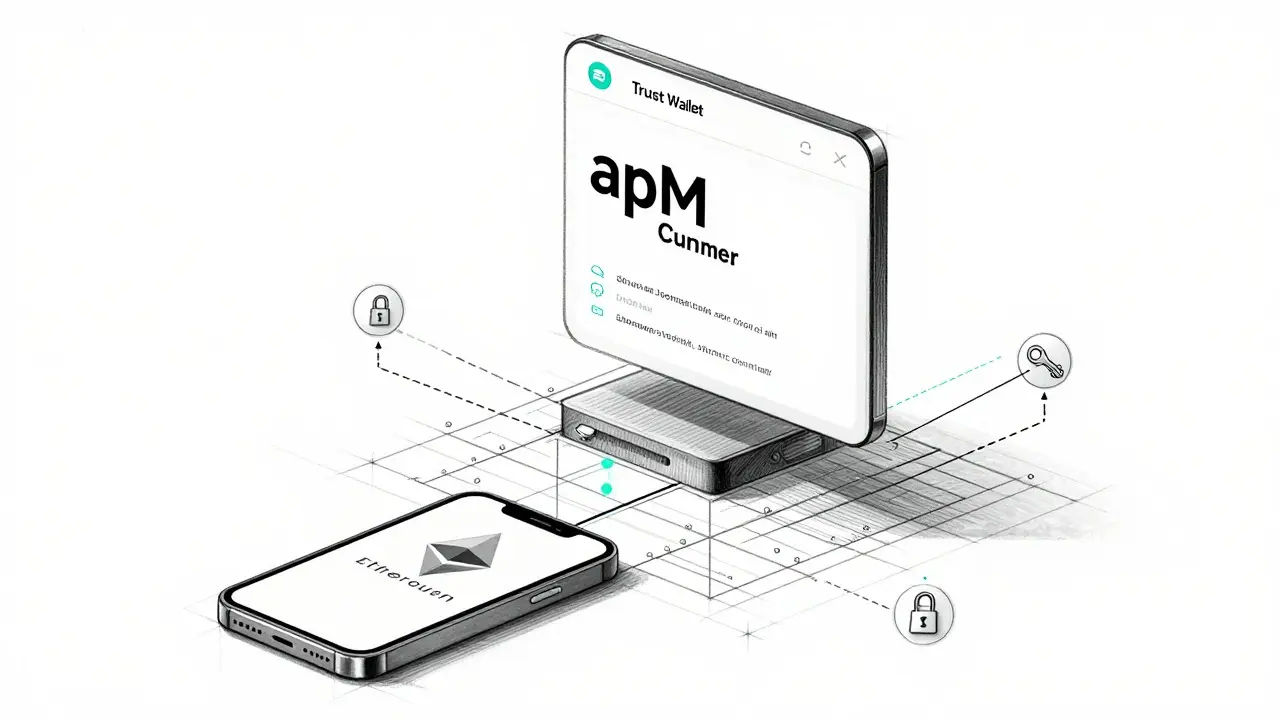
Because it lives on Ethereum, holding APM requires an Ethereum-compatible wallet. You cannot store it in a simple email account or a basic bank app. You need a digital wallet that supports Ethereum tokens. Popular options include Atomic Wallet and Trust Wallet. These wallets provide you with a unique address where you can send and receive APM, along with a 12-word seed phrase that acts as your master key. If you lose that phrase, you lose your coins forever. There is no customer service hotline to call for recovery.
Market Reality: A Micro-Cap Asset
Here is where things get tricky for investors. While the concept sounds innovative, the market data tells a story of extreme volatility and low liquidity. As of mid-2026, APM is classified as a micro-cap altcoin. Its market capitalization hovers in the range of tens of thousands to under a million US dollars, depending on the data source. For context, major cryptocurrencies like Bitcoin or Ethereum have market caps in the trillions. Even smaller established coins usually sit in the billions.
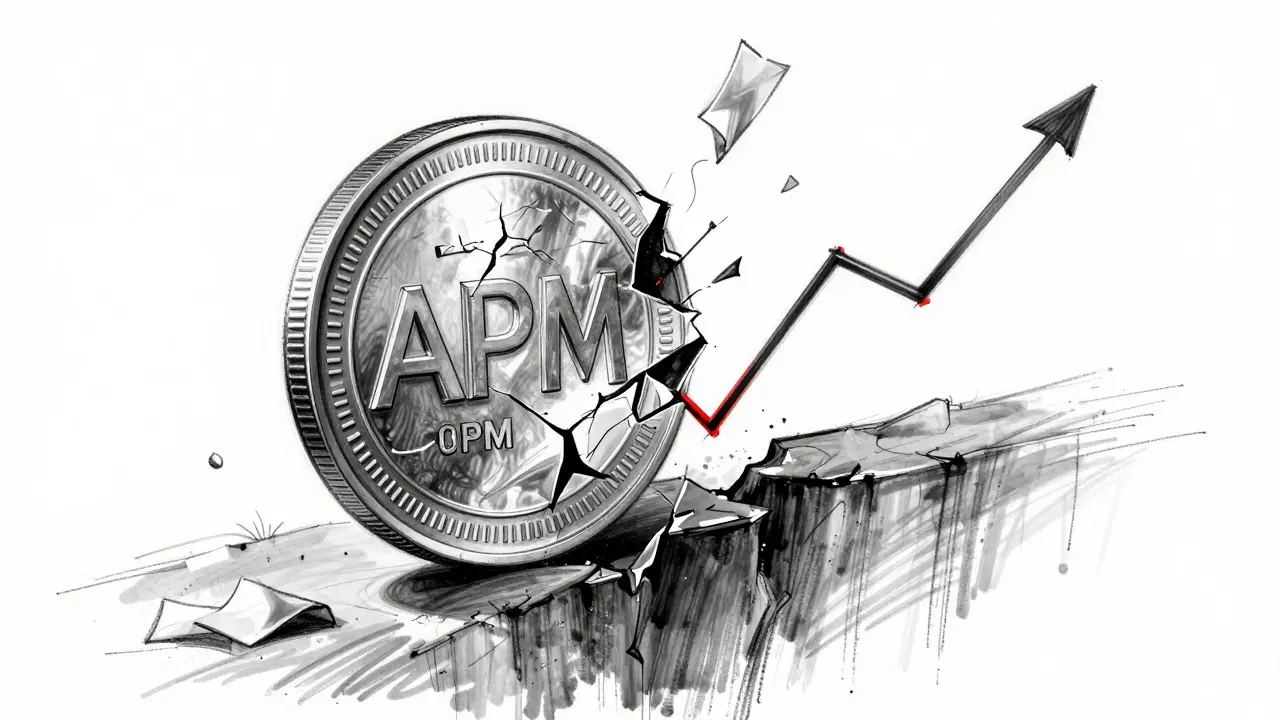
Let’s look at the numbers. Data aggregators show conflicting figures due to the thin trading volume, but the trend is clear. The token reached an all-time high of approximately $1.07 USD in March 2020. Today, it trades for fractions of a cent-often around $0.00003 to $0.00007 USD. This represents a decline of nearly 99.9% from its peak. Such a drop indicates that early speculation faded quickly, and the token has struggled to maintain price stability.
Liquidity is extremely low. On some days, the total trading volume across all exchanges might only be a few hundred or thousand dollars. This means that if you try to sell a large amount of APM, you could crash the price instantly because there are not enough buyers waiting in the order books. Conversely, buying a significant amount could spike the price artificially. This makes APM a highly risky asset for anyone looking to park money for short-term gains.
| Metric | Value / Status |
|---|---|
| Blockchain | Ethereum |
| All-Time High | $1.07 USD (March 2020) |
| Current Price Range | $0.00003 - $0.00007 USD |
| Market Cap Rank | ~#3074 (Micro-Cap) |
| Primary Use Case | Rewards/Loyalty in Dongdaemun Malls |
| Wallet Compatibility | Atomic Wallet, Trust Wallet, MetaMask |
How to Buy and Store APM
If you still want to acquire APM, perhaps to test the ecosystem or support the project, the process is straightforward but requires some technical know-how. You generally cannot buy APM directly with US Dollars or Euros on major centralized exchanges like Coinbase or Binance in a single click. Instead, you usually need to go through a decentralized exchange (DEX).
- Set up a Web3 Wallet: Download an app like Trust Wallet or Atomic Wallet. Create a new wallet and securely write down your 12-word recovery phrase. Keep this offline.
- Buy Ethereum (ETH): Purchase ETH on a major centralized exchange (like Binance or Kraken) using fiat currency.
- Transfer ETH to Your Wallet: Send the ETH from the exchange to your personal wallet address. Make sure you are sending it on the Ethereum network.
- Connect to a DEX: Use your wallet to connect to a decentralized exchange such as Uniswap or PancakeSwap (if bridged).
- Swap for APM: Find the APM token contract address. Paste it into the swap interface and trade your ETH for APM. Be aware of high slippage due to low liquidity.
Once you have the tokens, they sit in your wallet. Remember, since APM is a micro-cap token, the transaction fees (gas fees) on the Ethereum network might sometimes cost more than the value of the APM you are buying. This is a common pitfall for traders of low-value tokens.
Future Outlook: AI and Stablecoins
The project team is not standing still. Recent communications highlight a roadmap that includes "AI-Powered Innovation." They aim to integrate artificial intelligence to help fashion buyers analyze trends and manage inventory more efficiently. Additionally, there are promises of "Stablecoin payments coming soon." This suggests they plan to introduce a stablecoin (a crypto pegged to the US Dollar) to handle actual retail settlements, thereby avoiding the volatility of APM itself when paying for clothes. This is a smart move, as no merchant wants to accept a payment that loses half its value overnight.
However, execution is key. Many crypto projects promise AI integration without delivering tangible products. Until we see active usage metrics-such as the number of daily active users in the apM malls or the volume of transactions settled via APM-the long-term viability remains uncertain. The token currently serves more as a proof-of-concept than a widely adopted financial instrument.
Is APM Worth Your Attention?
For the average crypto investor looking for quick profits, APM is likely too risky and illiquid. The near-total collapse from its 2020 highs shows that momentum can vanish quickly. For fashion industry professionals operating in South Korea, however, it offers a glimpse into how blockchain can streamline loyalty programs and B2B relationships. If you are a buyer frequenting Dongdaemun, earning APM tokens could eventually provide tangible benefits like discounts or VIP access.
Treat APM as a speculative experiment rather than a core portfolio holding. Always do your own research, keep your seed phrases safe, and never invest more than you can afford to lose in the volatile world of micro-cap cryptocurrencies.
What is the main purpose of apM Coin (APM)?
apM Coin is primarily a utility and reward token designed for the wholesale fashion ecosystem in Seoul's Dongdaemun district. It serves as a loyalty point system for buyers shopping at apM, apM Place, and apM Luxe malls, offering benefits like discounts and membership perks.
Which blockchain does APM run on?
APM operates on the Ethereum blockchain. It functions as an Ethereum-based token, compatible with standard Ethereum wallets like Trust Wallet and Atomic Wallet.
Why is the price of APM so low compared to its all-time high?
APM experienced a massive speculative bubble in early 2020, reaching an all-time high of $1.07. Since then, it has lost nearly 99.9% of its value due to low liquidity, limited adoption outside its niche market, and the general cooling of the crypto market for micro-cap altcoins.
Can I buy APM directly with US Dollars?
Generally, no. APM is not widely listed on major centralized exchanges with direct fiat pairs. Most users must buy Ethereum (ETH) first and then swap it for APM using a decentralized exchange (DEX) like Uniswap.
Is APM a good investment for beginners?
Probably not. As a micro-cap token with extremely low liquidity and high volatility, APM carries significant risk. Beginners are better suited for established cryptocurrencies with deeper markets and clearer use cases until they gain more experience.


Ed Wallace
6 August, 2026 . 12:19 PM
It is fascinating to see how blockchain technology attempts to bridge the physical and digital worlds in such a specific niche like Dongdaemun fashion. The concept of tying loyalty points to an immutable ledger is philosophically intriguing because it questions the nature of value itself. Is the value in the token or the trust between the buyer and seller? This project seems to be a small experiment in that larger question.
Ed Mitchell
7 August, 2026 . 04:08 AM
This entire narrative is likely a fabricated scheme designed to launder money through obscure micro-cap tokens while keeping the real profits off the books. The 'utility' aspect is merely a smokescreen for what is essentially a pump-and-dump operation orchestrated by insiders who know the liquidity is too thin for average investors to escape with their capital intact.
Ken G
8 August, 2026 . 22:31 PM
people need to wake up and realize this is just another way for corporations to control your spending habits under the guise of innovation. they want you locked into their ecosystem so you cant leave easily. its classic corporate greed disguised as tech progress
Emma Smith
10 August, 2026 . 05:52 AM
i mean if we look at the paradigm shift here its clear that the decentralization aspect is key but also the integration of AI suggests a deeper layer of data harvesting than most realize. the stablecoin part is interesting though because it stabilizes the volatility which is usually the main selling point of crypto but here it serves commerce instead. do you think the gas fees will ever become negligible enough for small transactions?
Erica Johnson
10 August, 2026 . 15:18 PM
Let's be honest about the technical side here. Using Ethereum for a loyalty program with transaction values often less than a cent is practically absurd when gas fees can exceed $5. It makes zero economic sense unless the team has some hidden subsidy mechanism not mentioned in the post. Most people don't even know how to set up MetaMask properly let alone manage slippage on a DEX swap for a micro-cap token. 😒
Marcia Albert
11 August, 2026 . 08:00 AM
I just find the whole idea of getting free transport in a mall for buying clothes kind of charmingly outdated yet weirdly futuristic at the same time. It feels like a sci-fi novel plot where the city runs on tokens but the rewards are still very mundane like bus rides. I guess that is the reality of utility tokens though, grounded in boring real-world perks rather than moon shots.
Nick Darring
12 August, 2026 . 20:51 PM
You guys are all missing the bigger picture here because you are focused on the price action which is irrelevant for a true utility token. The fact that it dropped 99% doesn't matter if the adoption in Seoul increases tenfold because the supply might be burning or staking mechanisms could kick in later. People always forget that early adopters suffer short term pain for long term gain and this is clearly a long game play by the developers who understand the local market dynamics better than any outsider looking at charts from New York.
Alex Di Mango
14 August, 2026 . 16:06 PM
It is really interesting to see how different communities approach these niche projects. Some see a scam, others see innovation. I think the key is to remain open-minded but cautious. If you are in the fashion industry, it might actually be useful. If you are just a speculator, it is probably too risky. We should respect both perspectives without judging each other too harshly.
Joshua Hofford
14 August, 2026 . 18:56 PM
As someone who has traveled to Asia extensively, the Dongdaemun markets are incredible hubs of creativity and chaos. Integrating blockchain there makes sense culturally because there is already a high tolerance for new payment methods and digital innovation. It would be cool to see if this model spreads to other wholesale districts around the world. Maybe it starts a trend for localized utility tokens in other industries.
Lorraine Surringer
15 August, 2026 . 08:18 AM
honestly i feel like everyone is overthinking the investment side of this. it is supposed to be a reward system not a get rich quick scheme. why does everything have to be about profit? sometimes things are just meant to make daily life slightly more convenient for the people using them. maybe the value is in the convenience not the chart 📉
Pernelia Wahkan
17 August, 2026 . 01:29 AM
The description of the wallet setup is crucial because many beginners overlook the importance of the seed phrase. Losing those twelve words means losing access forever which is a terrifying prospect for anyone holding assets. It highlights the double-edged sword of decentralization: total freedom comes with total responsibility. There is no bank manager to call when you mess up.
Michael Mostyn
17 August, 2026 . 14:55 PM
One must consider the regulatory implications of such a token in South Korea. The country has strict financial regulations regarding virtual assets. If APM is classified as a security rather than a utility token, the legal landscape could change drastically. This adds another layer of risk that is not explicitly detailed in the market analysis provided.
Amor Jordan
18 August, 2026 . 21:32 PM
I am worried about the environmental impact of running these transactions on Ethereum even with the move to proof-of-stake. Every small discount redeemed creates a record on the chain. While the energy usage is lower now, it still feels excessive for something as simple as a loyalty point. I hope they consider greener alternatives in the future.
Eden Tadesse
20 August, 2026 . 03:10 AM
i tried to buy some last week and the slippage was crazy. lost half my eth just trying to swap. maybe ill try again when the volume picks up a bit. thanks for the info tho
Eric Zehr
21 August, 2026 . 18:08 PM
The potential for AI integration in inventory management is genuinely exciting. If fashion buyers can use historical data from the blockchain to predict trends more accurately, that adds significant value beyond just the token itself. It transforms the token from a mere currency into a key component of a sophisticated business intelligence tool. That is a compelling argument for its long-term survival.